Lesson · Grade 9 · Science
Mitosis and Meiosis Side by Side
- Grade 9
- Science
- 1 min 47 s
- British Columbia
- BC9-SC-06
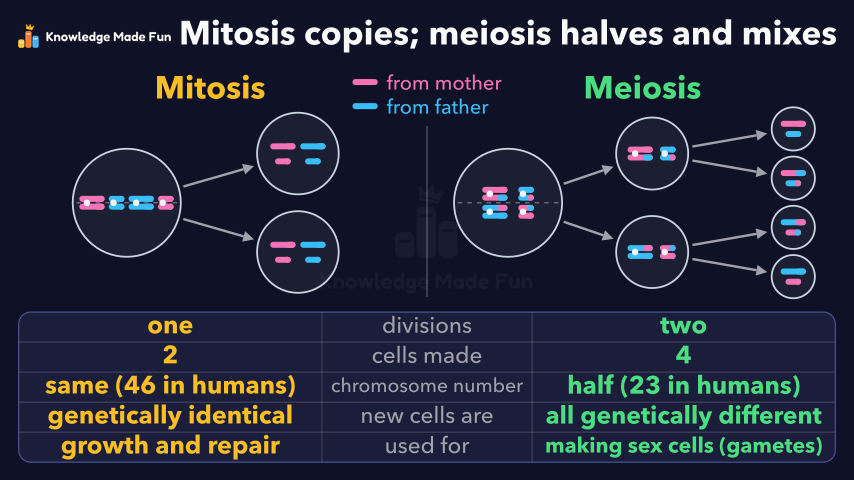
One cell with four chromosomes in two matching pairs divides two ways at once: mitosis lines them up one by one and pulls the copies apart into two identical cells. Meiosis pairs the partners, swaps pieces, splits the pairs and then the copies into four different cells with half the chromosomes, while a table fills in one division or two, 2 or 4 cells, the same number or half (46 or 23 in humans), identical or all different, and growth and repair or sex cells.
Anyone can watch two lessons on the website without an account. Signing in is free, no payment and no card, and opens three a day; Plus has no limit.
Loading
In one sentence
The question this lesson answers
Your cells divide in two ways: mitosis and meiosis. Let's run them side by side.
Both start with a cell with four chromosomes, strands of DNA that carry genes.
Transcript
What the lesson says
Your cells divide in two ways: mitosis and meiosis. Let's run them side by side.
Both start with a cell with four chromosomes, strands of DNA that carry genes.
They come in matching pairs: one from the mother and one from the father.
First, each chromosome is copied, and the two copies stay joined.
In mitosis, the chromosomes line up one by one across the middle.
The copies are pulled apart and the cell splits: one division, two cells.
In meiosis, the matching chromosomes first join up in pairs.
The partners swap small pieces, which mixes up the genes.
The pairs line up across the middle, and the first division pulls each pair apart.
So each new cell has one chromosome from each pair: two, not four.
Then the second division pulls the copies apart: two divisions, four cells.
So meiosis is not mitosis twice: the chromosomes are copied only once, and the first division splits the pairs.
Mitosis keeps the chromosome number the same, and meiosis halves it: in humans, 46 and 23.
Mitosis makes genetically identical cells, with the same genes. Meiosis makes cells that are all genetically different.
Mitosis is for growth and repair. Meiosis makes sex cells, also called gametes.
Mitosis copies a cell exactly; meiosis halves the chromosomes and mixes the genes.
Curriculum
Where this fits
- British Columbia, Grade 9
Science, Biology: sexual reproduction: meiosisBC9-SC-06
Previous: Meiosis: Making Sex Cells with Half the ChromosomesNext: Asexual or Sexual Reproduction: Fast Copies or New Variety
The outcomes and strands follow the British Columbia curriculum.
Keep going
 1 min 3 s
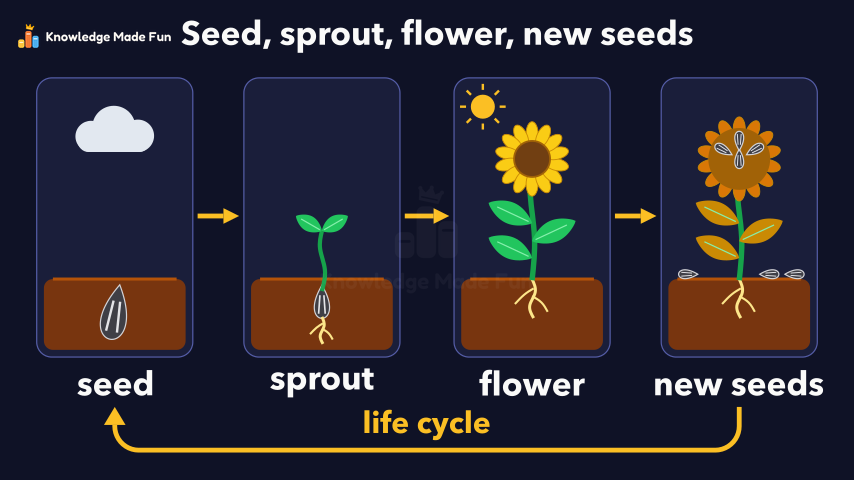
A Sunflower's Life Cycle: Seed, Sprout, Flower, Seed
Kindergarten · 1 min 3 s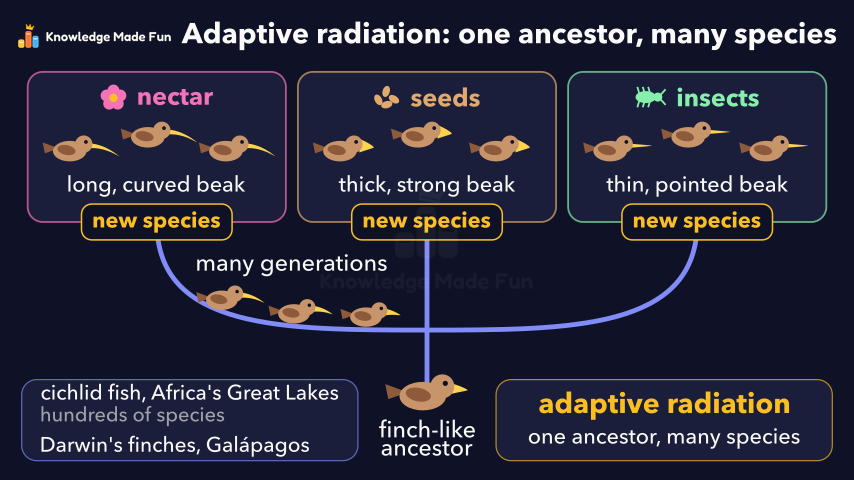 1 min 48 s
Adaptive radiation: one ancestor, many species
Grade 10 · 1 min 48 s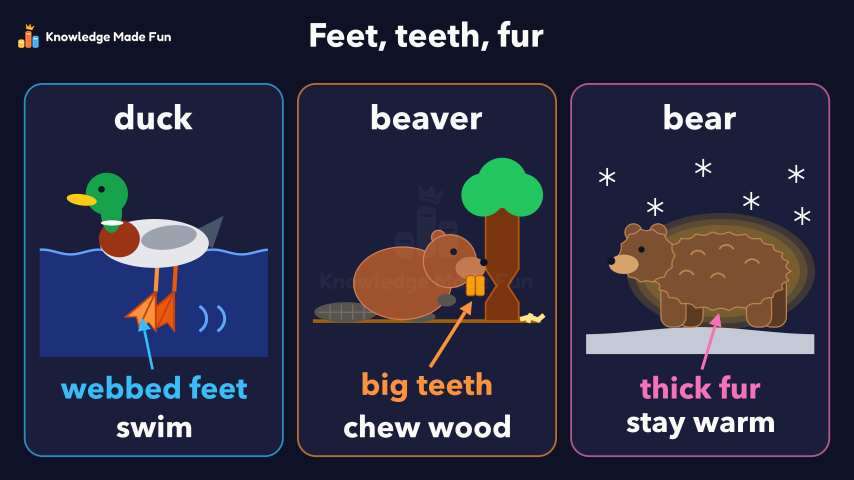 52 s
Animal Bodies That Help Them Live: Feet, Teeth and Fur
Kindergarten · 52 s 1 min 3 s
Animal senses beyond ours: echolocation, ultraviolet light, heat and magnetism
Grade 4 · 1 min 3 s 1 min 44 s
Antibodies and Memory Cells: The Body's Targeted Defence
Grade 8 · 1 min 44 s 1 min 44 s
Artificial selection: people choose the traits
Grade 10 · 1 min 44 s 1 min 4 s
Biodiversity: The Variety of Living Things
Grade 3 · 1 min 4 s 1 min 8 s
Biomes: Sorted by Temperature and Precipitation
Grade 4 · 1 min 8 s
- All Grade 9 Science lessons
- Create a free account to watch three lessons a day, no payment and no card.