Lesson · Grade 10 · Science
Genes and Chromosomes: How DNA Is Packaged
- Grade 10
- Science
- 1 min 42 s
- British Columbia
- BC10-SC-02
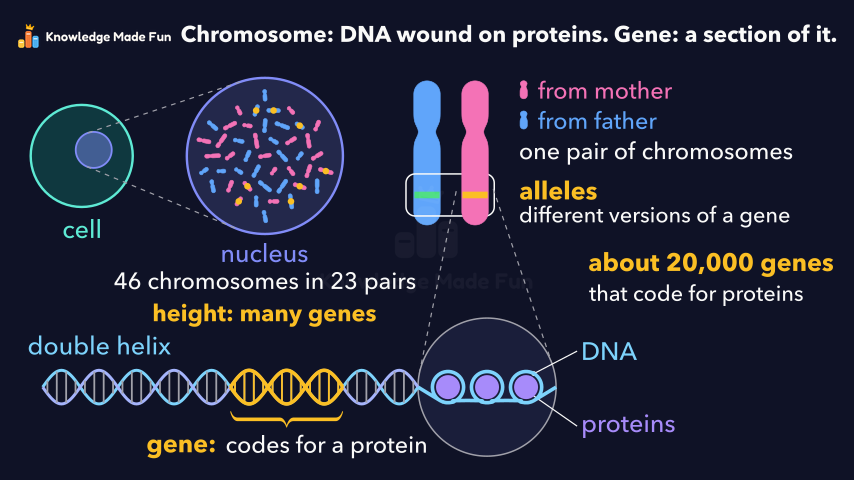
One labelled diagram zooms from a body cell to its nucleus with 46 chromosomes in 23 pairs (one of each pair from each parent), then to one chromosome as a single long DNA molecule wound around proteins, the double helix, and one gene that codes for a protein. It then shows the same gene in the same place on both chromosomes of the pair as two alleles, corrects the myth that one gene controls each trait (height involves many genes), and ends on a one-line recap.
Anyone can watch two lessons on the website without an account. Signing in is free, no payment and no card, and opens three a day; Plus has no limit.
Loading
In one sentence
The question this lesson answers
The DNA in a typical cell of your body would stretch about 2 metres end to end. How does it all fit?
Zoom in on the nucleus. It contains the cell's genetic material.
Transcript
What the lesson says
The DNA in a typical cell of your body would stretch about 2 metres end to end. How does it all fit?
Zoom in on the nucleus. It contains the cell's genetic material.
Here, the DNA is packed into structures called chromosomes.
Most human body cells have 46 chromosomes, in 23 pairs.
In each pair, one chromosome came from your mother and the other from your father.
Pull out one pair. Each chromosome is a single, very long molecule of DNA.
Zoom in further: the DNA is wound around proteins, like thread on spools, then coiled up tightly.
Unwound, the DNA is a double helix: two strands twisted around each other.
A gene is a short section of DNA that codes for a protein: it carries the instructions for making that protein.
Humans have about 20,000 genes that code for proteins, spread across the chromosomes.
Its partner, from the other parent, carries the same gene in the same place.
But the two copies can be different versions. Different versions of a gene are called alleles.
A common mistake is to think that one gene controls each trait.
In fact, many traits, like height, involve many genes.
So, a chromosome is one long DNA molecule wound around proteins, and a gene is a section of that DNA.
Curriculum
Where this fits
- British Columbia, Grade 10
Science 10, Biology: DNA structure and functionBC10-SC-02
Previous: DNA: the double helix and its four basesNext: Gene expression: from DNA to protein
The outcomes and strands follow the British Columbia curriculum.
Keep going
 1 min 3 s
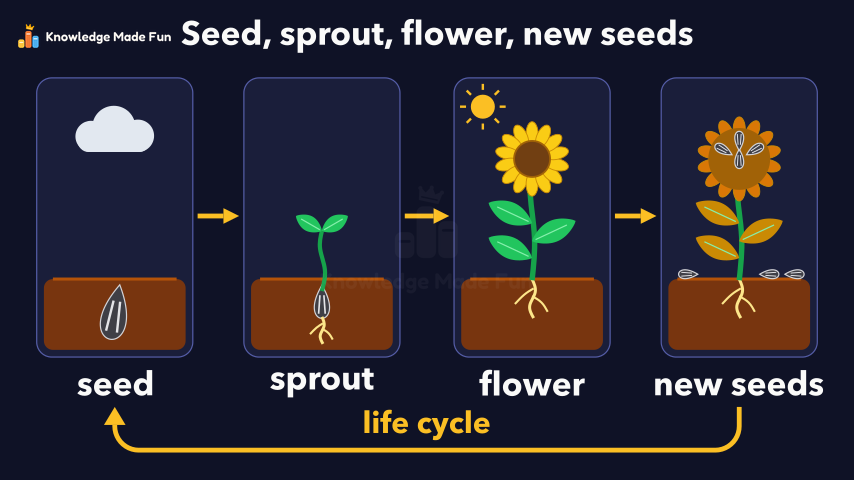
A Sunflower's Life Cycle: Seed, Sprout, Flower, Seed
Kindergarten · 1 min 3 s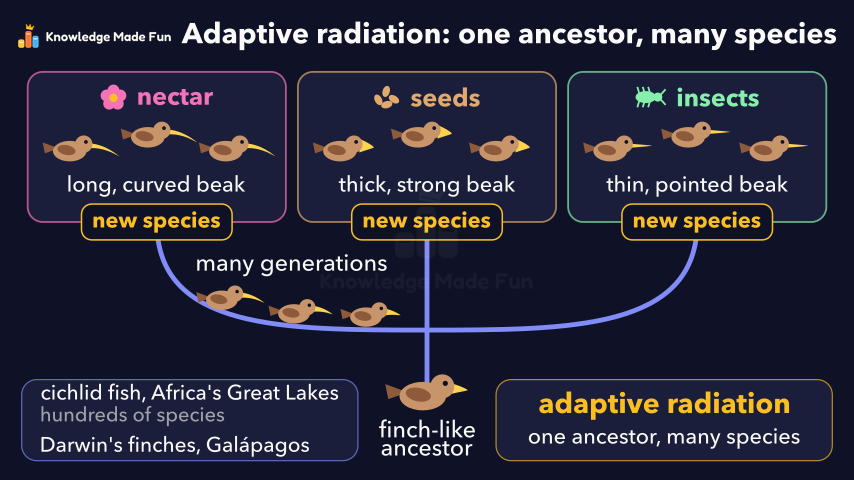 1 min 48 s
Adaptive radiation: one ancestor, many species
Grade 10 · 1 min 48 s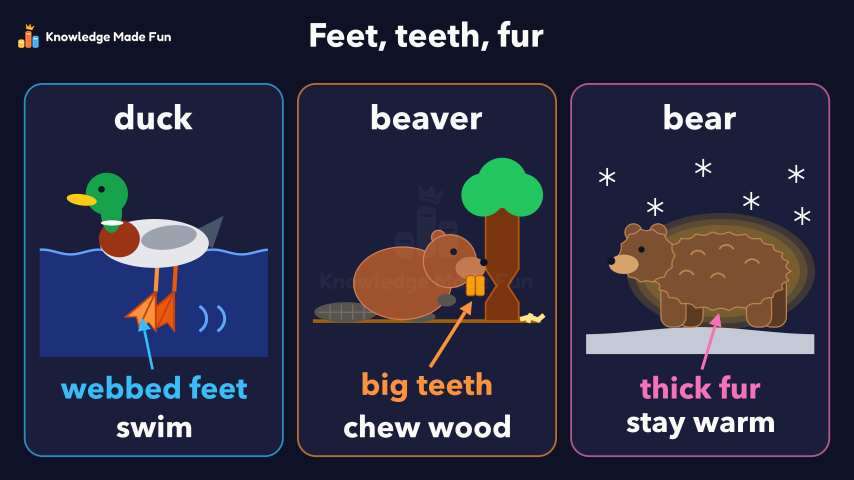 52 s
Animal Bodies That Help Them Live: Feet, Teeth and Fur
Kindergarten · 52 s 1 min 3 s
Animal senses beyond ours: echolocation, ultraviolet light, heat and magnetism
Grade 4 · 1 min 3 s 1 min 44 s
Antibodies and Memory Cells: The Body's Targeted Defence
Grade 8 · 1 min 44 s 1 min 44 s
Artificial selection: people choose the traits
Grade 10 · 1 min 44 s 1 min 4 s
Biodiversity: The Variety of Living Things
Grade 3 · 1 min 4 s 1 min 8 s
Biomes: Sorted by Temperature and Precipitation
Grade 4 · 1 min 8 s
- All Grade 10 Science lessons
- Create a free account to watch three lessons a day, no payment and no card.