Lesson · Grade 9 · Science
Cloning and Grafting: Making Copies of Living Things
- Grade 9
- Science
- 1 min 50 s
- British Columbia
- BC9-SC-04
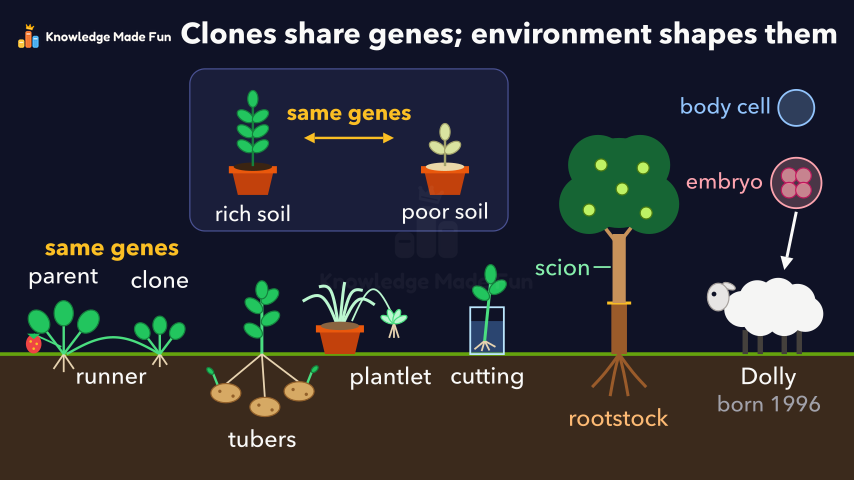
A labelled diagram builds up along one strip of ground to show forms of asexual reproduction: strawberry runners, potato tubers, spider plant plantlets, cuttings, a grafted apple tree, and Dolly the sheep cloned from an adult cell in 1996. It ends by showing that clones share their parent's genes but their environment still shapes them, using two cuttings that grow differently in rich and poor soil.
Concept: Cloning and grafting: making copies of plants and animals
Anyone can watch two lessons on the website without an account. Signing in is free, no payment and no card, and opens three a day; Plus has no limit.
Loading
In one sentence
The question this lesson answers
How can a living thing make copies of itself, with no partner?
Strawberry plants send out runners, side stems that root into new plants.
Transcript
What the lesson says
How can a living thing make copies of itself, with no partner?
Strawberry plants send out runners, side stems that root into new plants.
Each new plant is a clone: it has exactly the same genes as its parent.
This is asexual reproduction: one parent, and no sex cells, or gametes, joining.
Potato plants grow tubers, swollen underground stems that can sprout new plants.
Spider plants grow plantlets, tiny copies on long stems that can root on their own.
People make clones too. A cutting is a piece of a plant that grows its own roots.
In grafting, a shoot from one apple tree, the scion, is joined onto the roots of another, the rootstock.
Named apple varieties, like Granny Smith, are grafted this way, so every tree is a clone of one original tree.
Animals can be cloned too. Scientists took a sheep's egg cell and removed its nucleus, which holds the genes.
Then they took the nucleus from an adult sheep's body cell and put it into the egg.
The cell grew into an embryo, and in 1996 Dolly was born, the first mammal cloned from an adult cell.
These two cuttings have the same genes. But are clones identical in every way?
No. Their environment still shapes them: a cutting in rich soil grows bigger than one in poor soil.
Asexual reproduction makes clones with the same genes, but the environment still shapes them.
Curriculum
Where this fits
- British Columbia, Grade 9
Science, Biology: asexual reproduction: different formsBC9-SC-04
Previous: Fission, budding and spores: reproducing without a partnerNext: Meiosis: Making Sex Cells with Half the Chromosomes
The outcomes and strands follow the British Columbia curriculum.
Keep going
 1 min 3 s
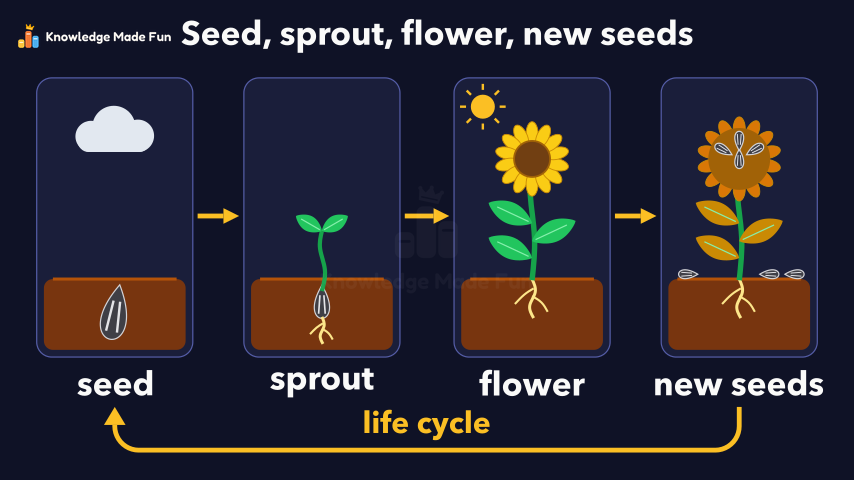
A Sunflower's Life Cycle: Seed, Sprout, Flower, Seed
Kindergarten · 1 min 3 s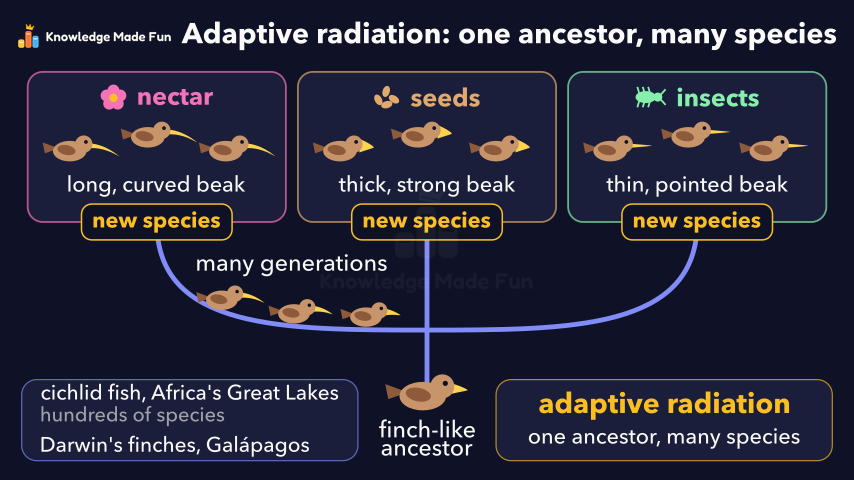 1 min 48 s
Adaptive radiation: one ancestor, many species
Grade 10 · 1 min 48 s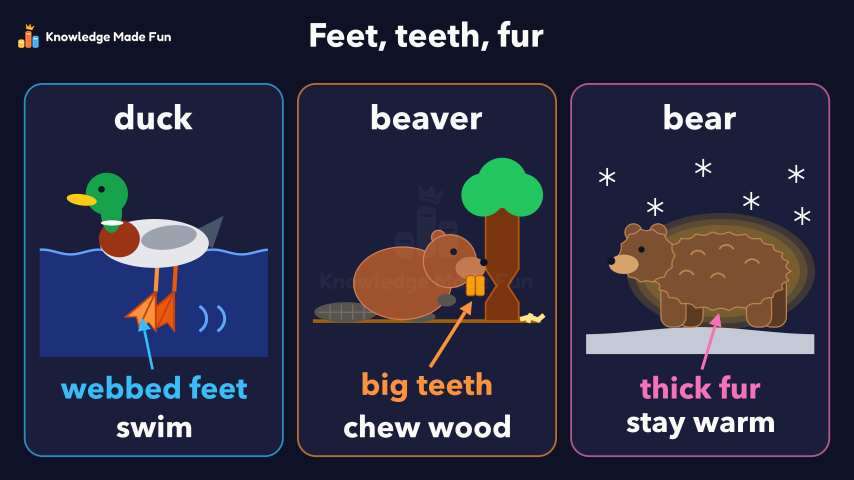 52 s
Animal Bodies That Help Them Live: Feet, Teeth and Fur
Kindergarten · 52 s 1 min 3 s
Animal senses beyond ours: echolocation, ultraviolet light, heat and magnetism
Grade 4 · 1 min 3 s 1 min 44 s
Antibodies and Memory Cells: The Body's Targeted Defence
Grade 8 · 1 min 44 s 1 min 44 s
Artificial selection: people choose the traits
Grade 10 · 1 min 44 s 1 min 4 s
Biodiversity: The Variety of Living Things
Grade 3 · 1 min 4 s 1 min 8 s
Biomes: Sorted by Temperature and Precipitation
Grade 4 · 1 min 8 s
- All Grade 9 Science lessons
- Create a free account to watch three lessons a day, no payment and no card.