Lesson · Grade 6 · Social Studies
Parliament or president: two kinds of democracy
- Grade 6
- Social Studies
- 1 min 4 s
- British Columbia
- BC6-SS-10
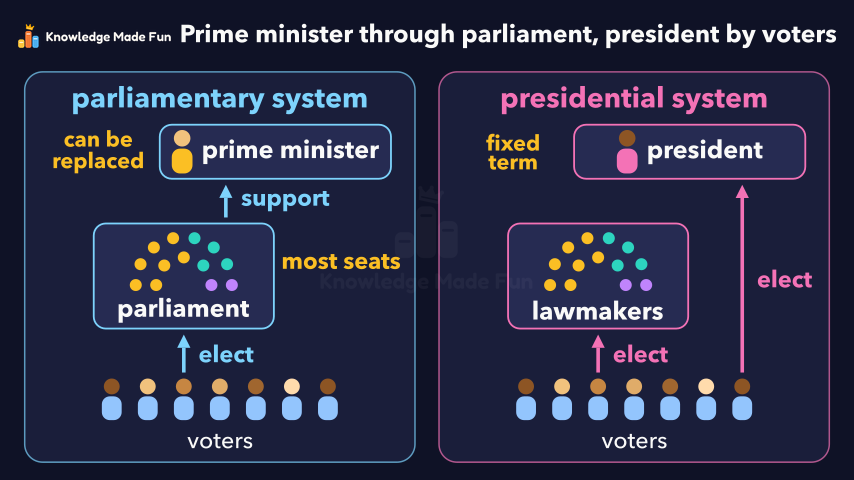
Two cards drawn the same way show voters at the bottom, elected lawmakers as a half circle of party-coloured seats, and the leader of the government at the top. On one card the leader of the party with the most seats usually becomes prime minister and needs parliament's support. On the other, voters elect a president in a separate vote for a fixed term, and the video ends on the recap "Prime minister through parliament, president by voters".
Anyone can watch two lessons on the website without an account. Signing in is free, no payment and no card, and opens three a day; Plus has no limit.
Loading
In one sentence
The question this lesson answers
In a democracy, how do voters choose the leader of the government?
Two common systems are parliamentary and presidential.
Transcript
What the lesson says
In a democracy, how do voters choose the leader of the government?
Two common systems are parliamentary and presidential.
In a parliamentary system, voters elect members of parliament to make the laws.
The leader of the party with the most seats usually becomes prime minister.
The prime minister needs the support of parliament to stay in the job.
A prime minister who loses that support can be replaced.
In a presidential system, voters also elect lawmakers to make the laws.
In a separate vote, they elect a president to lead the government.
The president is elected for a fixed term, a set number of years.
Even when lawmakers disagree, a president usually stays until the term ends.
Both are democracies, because voters choose their government in elections.
So a prime minister is chosen through parliament, and a president by the voters.
Curriculum
Where this fits
- British Columbia, Grade 6
Social Studies, Governance: different systems of governmentBC6-SS-10
Previous: Democracy, Monarchy and Dictatorship: Who Holds the Power?Next: How Elections Work: Parties, Voting and Representation
The outcomes and strands follow the British Columbia curriculum.
Keep going
 1 min 9 s
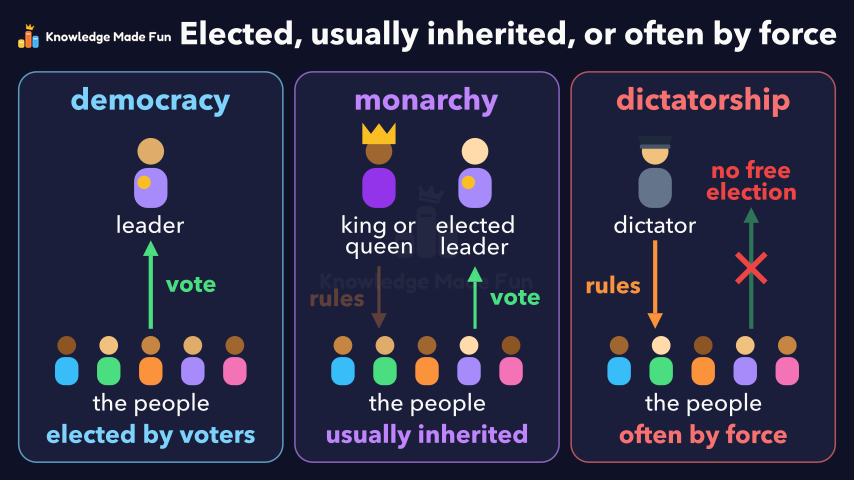
Democracy, Monarchy and Dictatorship: Who Holds the Power?
Grade 6 · 1 min 9 s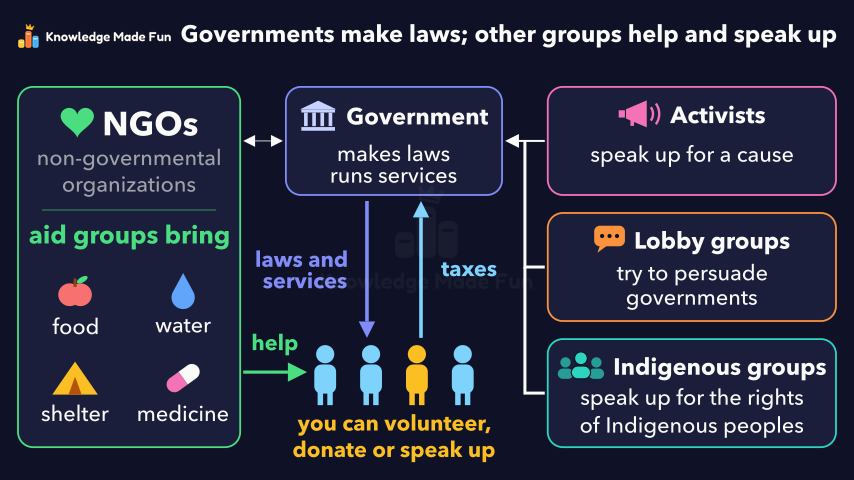 1 min 3 s
Governments, NGOs and Aid Groups: Who Does What
Grade 6 · 1 min 3 s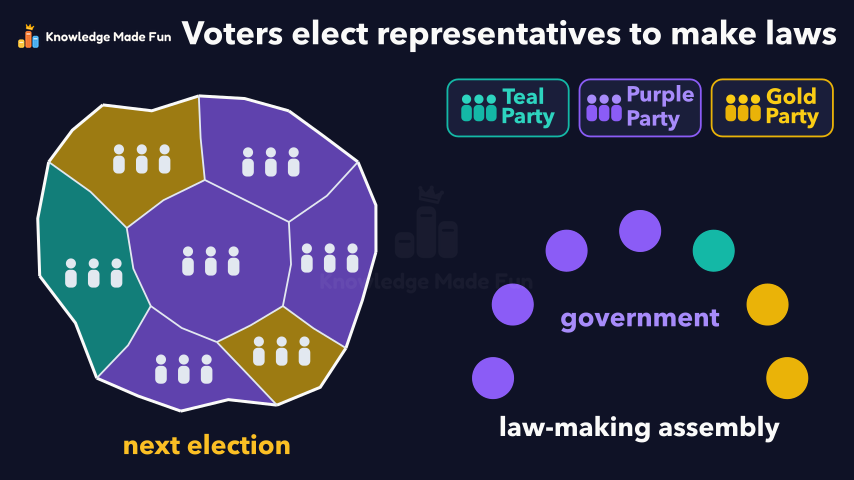 1 min 16 s
How Elections Work: Parties, Voting and Representation
Grade 6 · 1 min 16 s 1 min 15 s
The United Nations: what it is and what it does
Grade 6 · 1 min 15 s 1 min 9 s
Bias and Sensationalism: One Story, Three Headlines
Grade 6 · 1 min 9 s 1 min 20 s
Countries Working Together on Global Problems
Grade 6 · 1 min 20 s 1 min 15 s
Globalization: How Countries Depend on Each Other
Grade 6 · 1 min 15 s 1 min 11 s
How News and Rumours Spread on Social Media
Grade 6 · 1 min 11 s
- All Grade 6 Social Studies lessons
- Create a free account to watch three lessons a day, no payment and no card.