Lesson · Grade 6 · Social Studies
How Elections Work: Parties, Voting and Representation
- Grade 6
- Social Studies
- 1 min 16 s
- British Columbia
- BC6-SS-11
A made-up country with seven voting areas shows how candidates from different parties compete, how voters mark ballots in secret, and how the candidate with the most votes wins an area and represents everyone in it. Each winner takes a seat in a law-making assembly, the party with the most seats often forms the government, and voters can keep or change their representatives at the next election.
Anyone can watch two lessons on the website without an account. Signing in is free, no payment and no card, and opens three a day; Plus has no limit.
Loading
In one sentence
The question this lesson answers
How does an election work?
In a democracy, citizens who are old enough can vote.
Transcript
What the lesson says
How does an election work?
In a democracy, citizens who are old enough can vote.
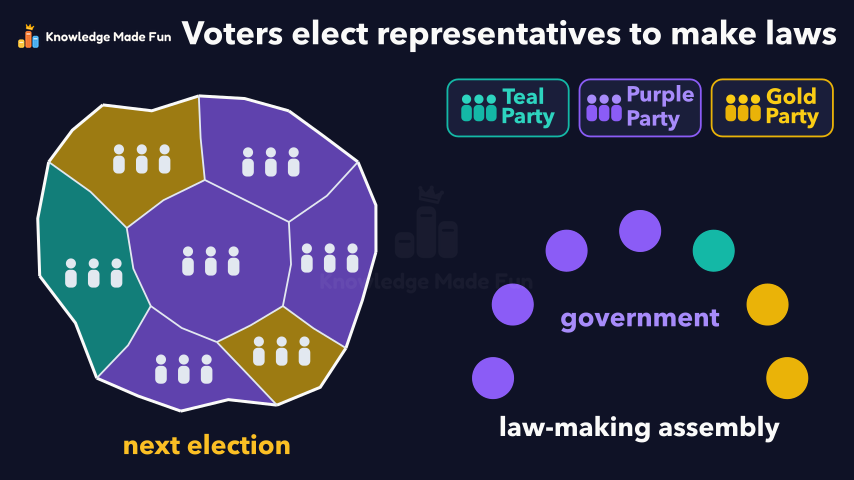
Many countries are split into voting areas.
In this country, each area elects one person to represent it.
A political party is a group of people with shared ideas.
People who run for the job are called candidates, and most belong to a party.
Voters mark a ballot in secret and put it in a ballot box.
When voting ends, the votes are counted.
Here, the candidate with the most votes wins the area.
The winner represents everyone in the area, even people who voted for someone else.
Every area elects its own representative the same way.
Each winner takes a seat in the assembly that makes the laws.
Often, the party with the most seats forms the government.
Elections come again every few years, so voters can keep or change their representatives.
In an election, voters elect representatives to make laws for them.
Curriculum
Where this fits
- British Columbia, Grade 6
Social Studies, Governance: different systems of governmentBC6-SS-11
The outcomes and strands follow the British Columbia curriculum.
Keep going
 1 min 9 s
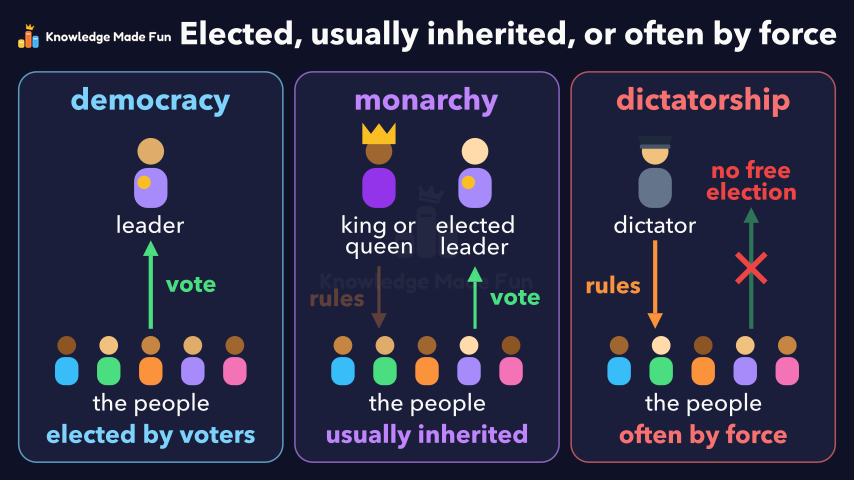
Democracy, Monarchy and Dictatorship: Who Holds the Power?
Grade 6 · 1 min 9 s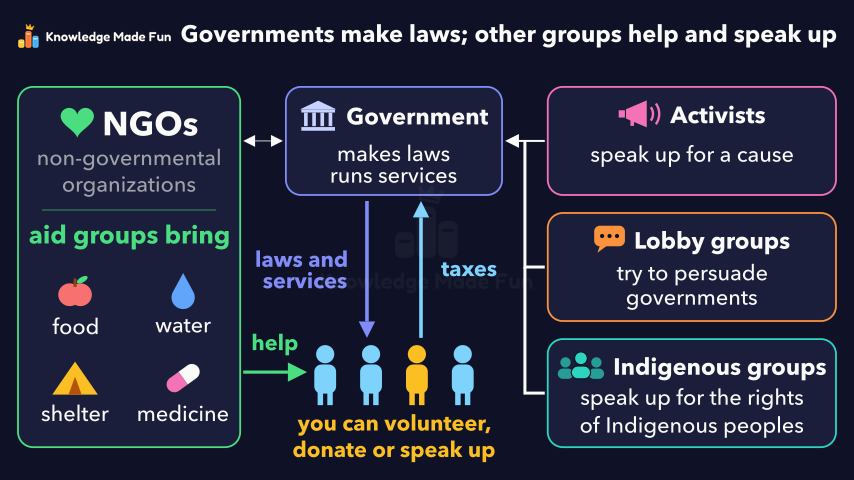 1 min 3 s
Governments, NGOs and Aid Groups: Who Does What
Grade 6 · 1 min 3 s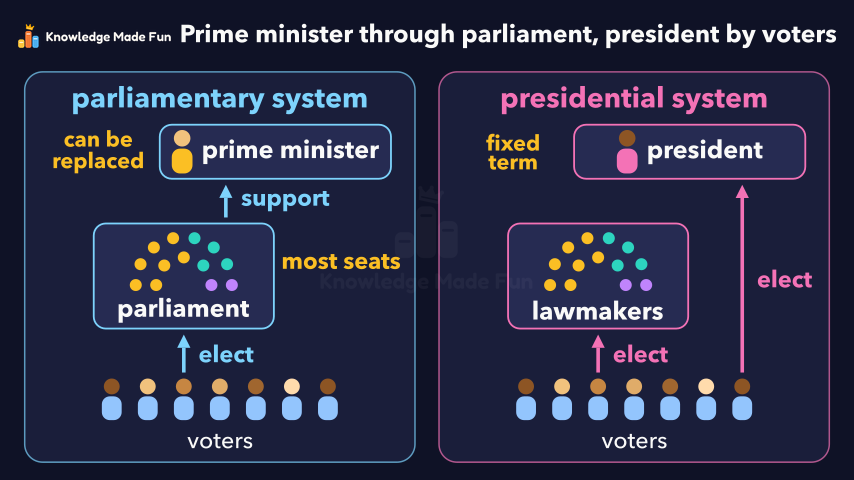 1 min 4 s
Parliament or president: two kinds of democracy
Grade 6 · 1 min 4 s 1 min 15 s
The United Nations: what it is and what it does
Grade 6 · 1 min 15 s 1 min 9 s
Bias and Sensationalism: One Story, Three Headlines
Grade 6 · 1 min 9 s 1 min 20 s
Countries Working Together on Global Problems
Grade 6 · 1 min 20 s 1 min 15 s
Globalization: How Countries Depend on Each Other
Grade 6 · 1 min 15 s 1 min 11 s
How News and Rumours Spread on Social Media
Grade 6 · 1 min 11 s
- All Grade 6 Social Studies lessons
- Create a free account to watch three lessons a day, no payment and no card.