Lesson · Grade 7 · Social Studies
Ancient Rome: How It Rose and Why the West Fell
- Grade 7
- Social Studies
- 1 min 28 s
- British Columbia
- BC7-SS-14
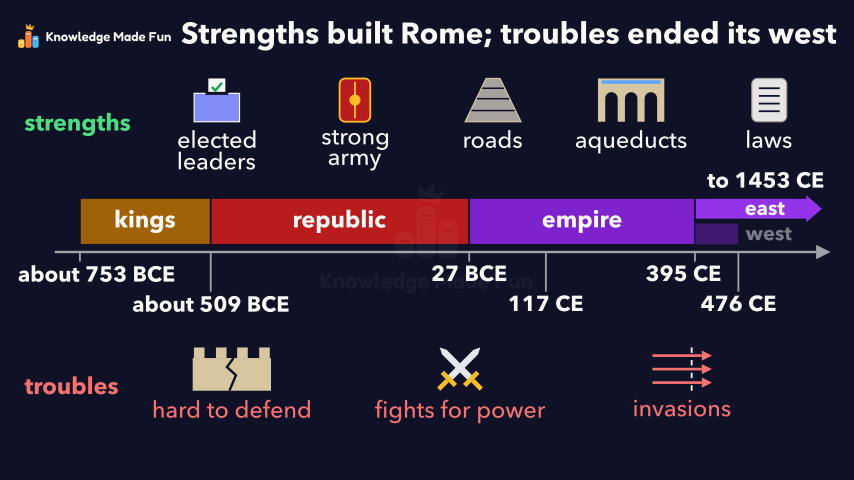
A timeline drawn to scale builds up from Rome's founding about 753 BCE through the kings, the republic (about 509 BCE) and the empire (27 BCE, largest in 117 CE), with Rome's strengths (elected leaders, a strong army, roads, aqueducts and laws) collecting above the line. It then shows the troubles below the line (hard to defend, fights for power, invasions), the split in 395 CE, the end of the western empire in 476 CE and the eastern Byzantine Empire lasting until 1453 CE, and closes on the recap that strengths built Rome and troubles ended its west.
Concept: Ancient Rome
Anyone can watch two lessons on the website without an account. Signing in is free, no payment and no card, and opens three a day; Plus has no limit.
Loading
In one sentence
The question this lesson answers
How did Rome grow into a huge empire, and why did its western half fall?
Rome began as a small town ruled by kings, about 753 BCE.
Transcript
What the lesson says
How did Rome grow into a huge empire, and why did its western half fall?
Rome began as a small town ruled by kings, about 753 BCE.
About 509 BCE, the Romans drove out their last king and made Rome a republic.
In the republic, male citizens voted for their leaders.
Its strong, well-trained army conquered more and more land.
In 27 BCE, Augustus became the first Roman emperor.
In 117 CE, the empire was at its largest, from Britain to Egypt.
Roman roads, aqueducts and laws spread widely across the empire.
Later, the huge empire was hard to defend, and rivals fought for power.
In 395 CE, the empire was split into a western half and an eastern half.
Germanic peoples invaded and took over much of the west.
In 476 CE, the last western emperor was removed, and the western empire ended.
The eastern half, later called the Byzantine Empire, lasted until 1453 CE.
Strengths like its army and laws built Rome, and troubles brought down its western half.
Curriculum
Where this fits
- British Columbia, Grade 7
Social Studies, Ancient world to the 7th century: features and characteristics of civilizations and factors that led to their rise and fallBC7-SS-14
Previous: Ancient Greece: How the City-States Rose and FellNext: The Maya: How Their Cities Rose and Fell
The outcomes and strands follow the British Columbia curriculum.
Keep going
 1 min 23 s
Ancient China and the Yellow River
Grade 7 · 1 min 23 s 1 min 28 s
Ancient Egypt and the Nile
Grade 7 · 1 min 28 s 1 min 27 s
Ancient Greece: How the City-States Rose and Fell
Grade 7 · 1 min 27 s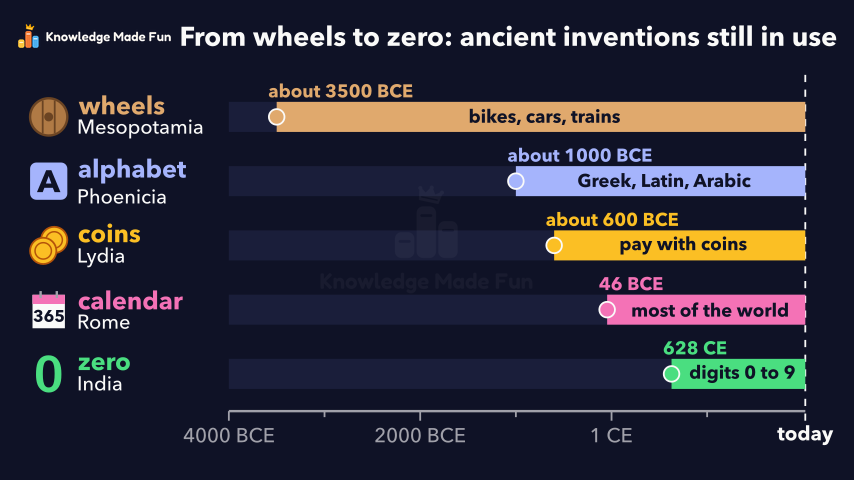 1 min 13 s
Ancient Inventions We Still Use
Grade 7 · 1 min 13 s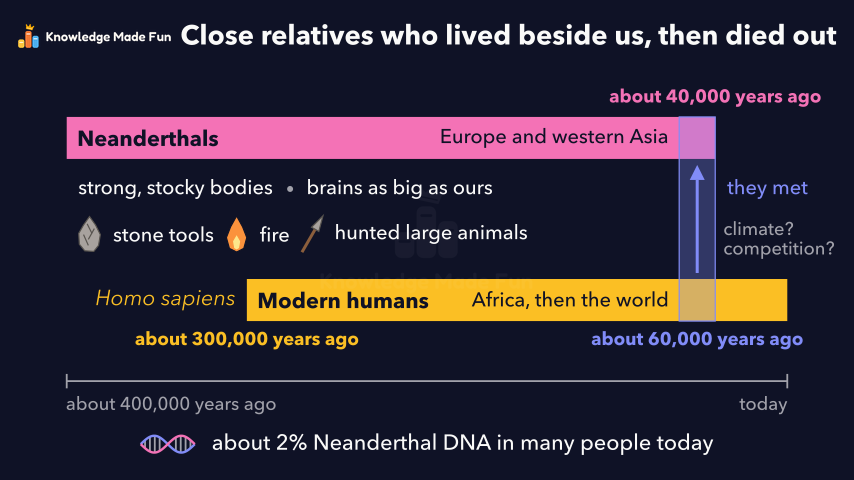 1 min 31 s
Early humans and Neanderthals: our close relatives
Grade 7 · 1 min 31 s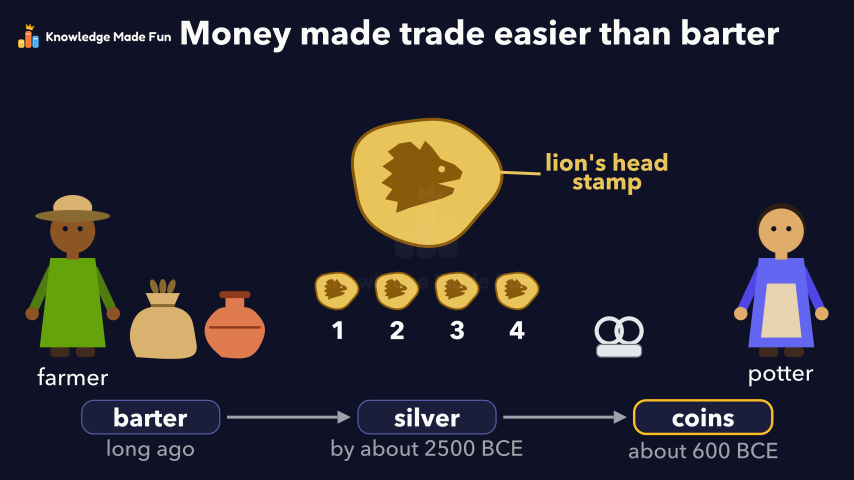 1 min 9 s
From Barter to Money
Grade 7 · 1 min 9 s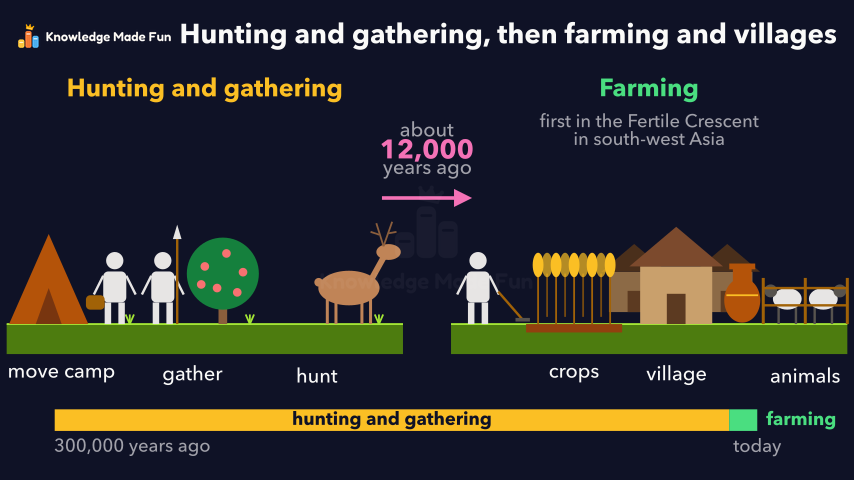 1 min 33 s
From Hunting and Gathering to Farming
Grade 7 · 1 min 33 s 1 min 21 s
From Stone Tools to Metal
Grade 7 · 1 min 21 s
- All Grade 7 Social Studies lessons
- Create a free account to watch three lessons a day, no payment and no card.