Lesson · Grade 7 · Social Studies
The Maya: How Their Cities Rose and Fell
- Grade 7
- Social Studies
- 1 min 20 s
- British Columbia
- BC7-SS-15
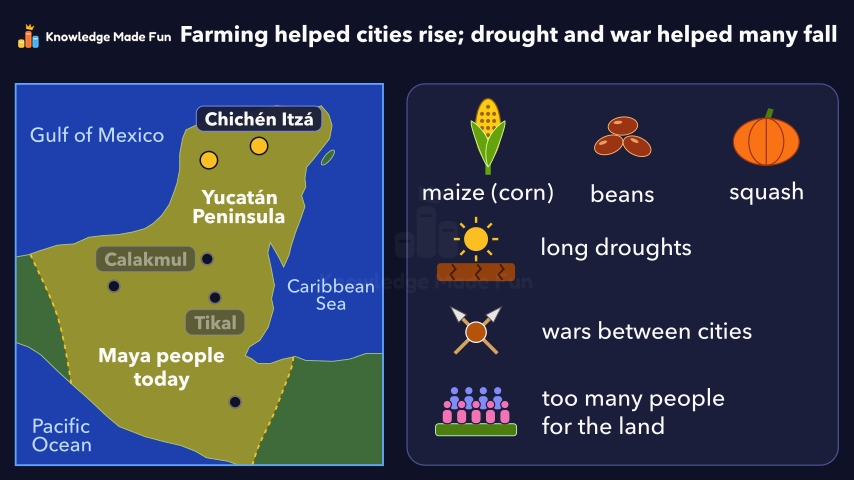
On a map of the Yucatán Peninsula and the lands around it, Maya farming of maize, beans and squash lets villages grow into city-states such as Tikal and Calakmul. Those cities were at their height from about 250 to 900 CE and had stone pyramid temples, glyph writing and numbers with a shell for zero. Many southern cities were then abandoned from about 800 to 900 CE, probably because of long droughts, wars and too many people for the land, while northern cities like Chichén Itzá grew strong and millions of Maya people still live in the region today.
Concept: The Maya
Anyone can watch two lessons on the website without an account. Signing in is free, no payment and no card, and opens three a day; Plus has no limit.
Loading
In one sentence
The question this lesson answers
How did the great cities of the Maya rise and fall?
The Maya lived on and around the Yucatán Peninsula.
Transcript
What the lesson says
How did the great cities of the Maya rise and fall?
The Maya lived on and around the Yucatán Peninsula.
Maya farmers grew maize, or corn, along with beans and squash.
Extra food let villages grow into big cities, like Tikal and Calakmul.
Maya cities were at their height from about 250 to 900 CE.
There was no single empire: each city-state had its own ruler.
Big cities had tall stone pyramids with temples on top.
Scribes wrote with glyphs, signs that stand for words and sounds.
Their numbers used a dot for one, a bar for five and a shell for zero.
From about 800 to 900 CE, many cities in the south were abandoned.
Experts think long droughts, wars between cities and too many people for the land all played a part.
Meanwhile, some northern cities, like Chichén Itzá, grew strong.
The Maya did not vanish: millions of Maya people live in this region today.
Farming helped Maya cities rise, and drought and war helped many of them fall.
Curriculum
Where this fits
- British Columbia, Grade 7
Social Studies, Ancient world to the 7th century: features and characteristics of civilizations and factors that led to their rise and fallBC7-SS-15
Previous: Ancient Rome: How It Rose and Why the West FellNext: The First Writing: Cuneiform and Hieroglyphs
The outcomes and strands follow the British Columbia curriculum.
Keep going
 1 min 23 s
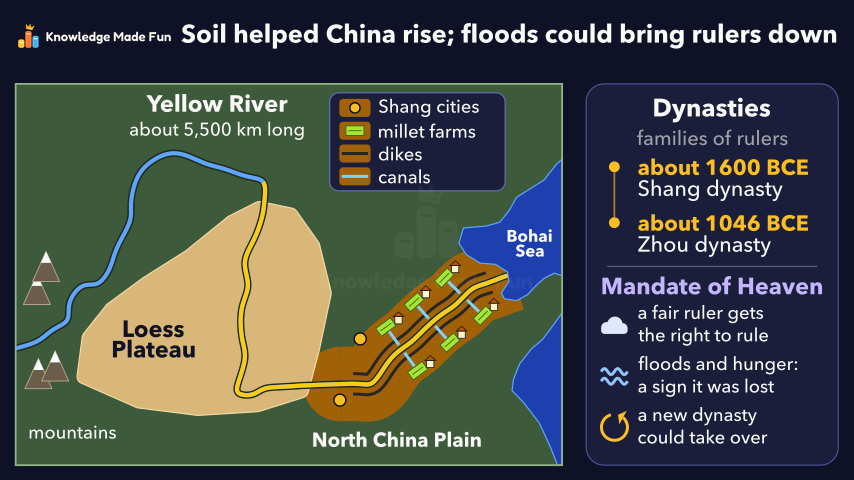
Ancient China and the Yellow River
Grade 7 · 1 min 23 s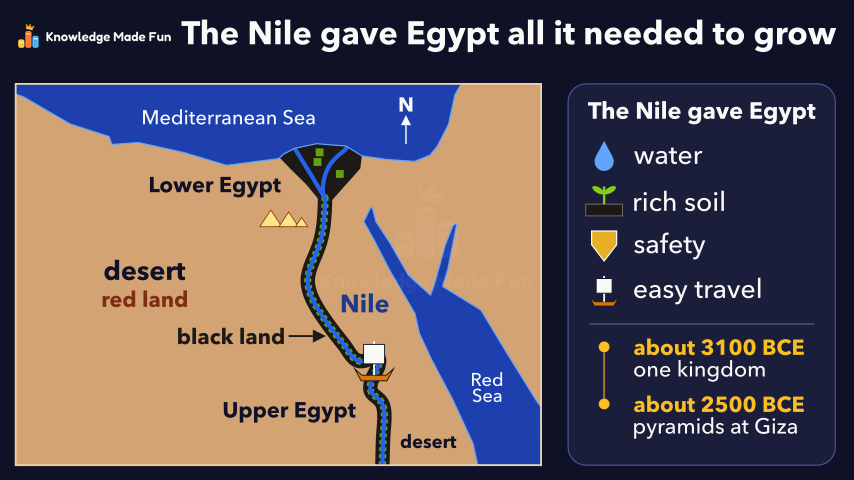 1 min 28 s
Ancient Egypt and the Nile
Grade 7 · 1 min 28 s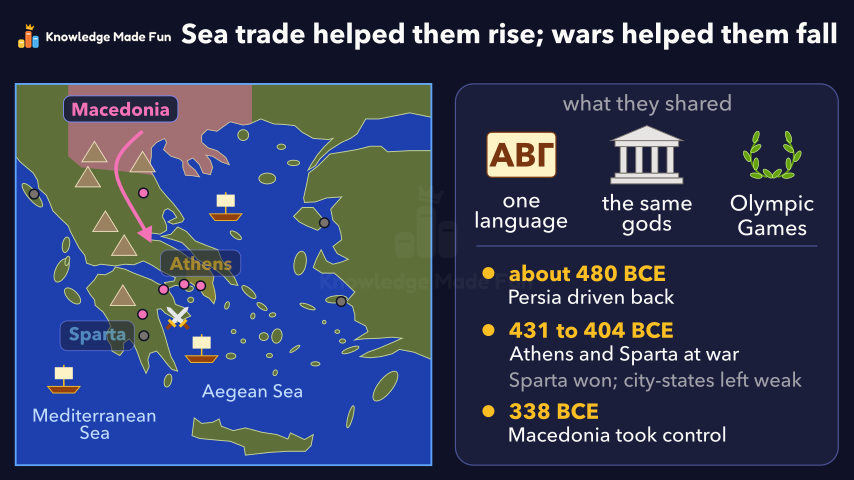 1 min 27 s
Ancient Greece: How the City-States Rose and Fell
Grade 7 · 1 min 27 s 1 min 13 s
Ancient Inventions We Still Use
Grade 7 · 1 min 13 s 1 min 28 s
Ancient Rome: How It Rose and Why the West Fell
Grade 7 · 1 min 28 s 1 min 31 s
Early humans and Neanderthals: our close relatives
Grade 7 · 1 min 31 s 1 min 9 s
From Barter to Money
Grade 7 · 1 min 9 s 1 min 33 s
From Hunting and Gathering to Farming
Grade 7 · 1 min 33 s
- All Grade 7 Social Studies lessons
- Create a free account to watch three lessons a day, no payment and no card.