Lesson · Grade 7 · Social Studies
Ancient Inventions We Still Use
- Grade 7
- Social Studies
- 1 min 13 s
- British Columbia
- BC7-SS-18
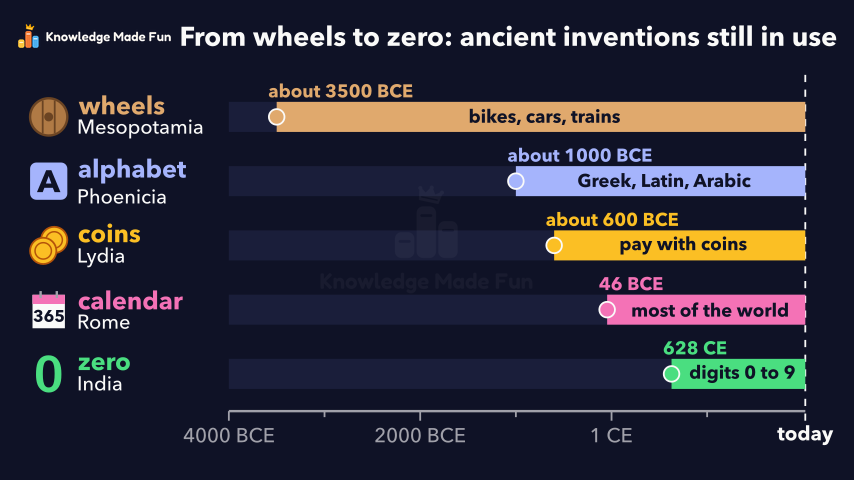
A to-scale timeline from 4000 BCE to today gives five ancient inventions a lane each: wheels (Mesopotamia), the alphabet (Phoenicia), coins (Lydia), the calendar (Rome) and zero (India). A dot marks when each one began, then a bar runs from there to today, showing how we still use it: bikes and cars, the Greek, Latin and Arabic alphabets, paying with coins, the calendar most of the world uses, and the digits 0 to 9.
Anyone can watch two lessons on the website without an account. Signing in is free, no payment and no card, and opens three a day; Plus has no limit.
Loading
In one sentence
The question this lesson answers
What do we still use today that began in the ancient world?
Here is a timeline from 4000 BCE to today.
Transcript
What the lesson says
What do we still use today that began in the ancient world?
Here is a timeline from 4000 BCE to today.
By about 3500 BCE, people in Mesopotamia were using wheels.
Wheels still carry our bikes, cars and trains.
About 1000 BCE, the Phoenicians wrote with an alphabet of 22 letters.
The Greek, Latin and Arabic alphabets all grew from it.
About 600 BCE, the kingdom of Lydia made some of the first coins.
We still pay with coins today.
In 46 BCE, Julius Caesar set up a 365-day calendar with leap years.
Most of the world uses a slightly changed version of it today.
In 628 CE, the Indian mathematician Brahmagupta wrote rules for zero as a number.
The digits 0 to 9 that we use grew from Indian numerals.
From wheels to zero, these ancient inventions are still in use today.
Curriculum
Where this fits
- British Columbia, Grade 7
Social Studies, Ancient world to the 7th century: scientific, philosophical, and technological developmentsBC7-SS-18
Previous: The First Writing: Cuneiform and HieroglyphsNext: The Silk Road: How Goods and Ideas Travelled
The outcomes and strands follow the British Columbia curriculum.
Keep going
 1 min 23 s
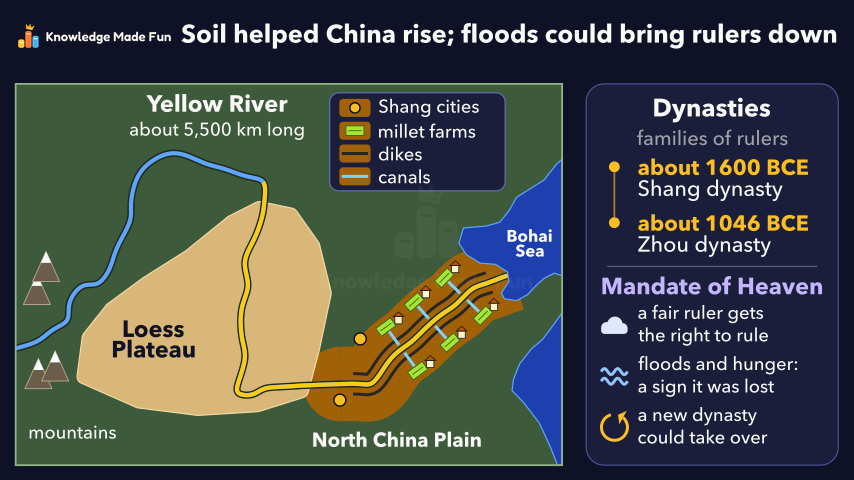
Ancient China and the Yellow River
Grade 7 · 1 min 23 s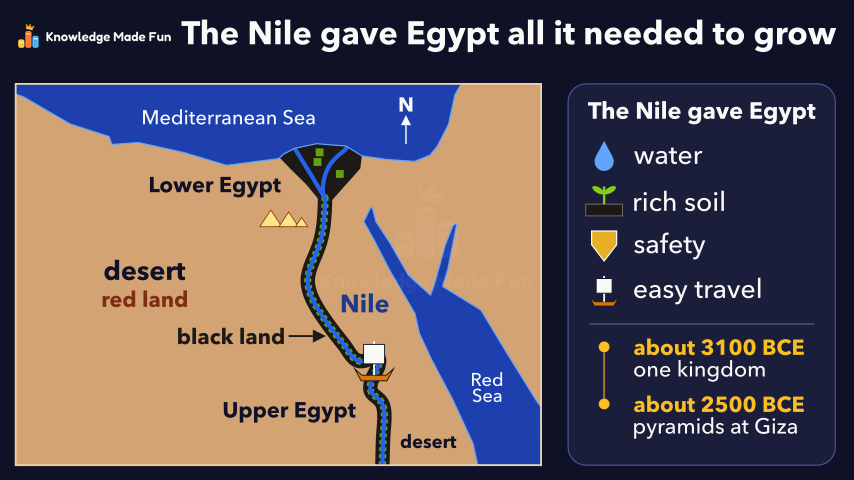 1 min 28 s
Ancient Egypt and the Nile
Grade 7 · 1 min 28 s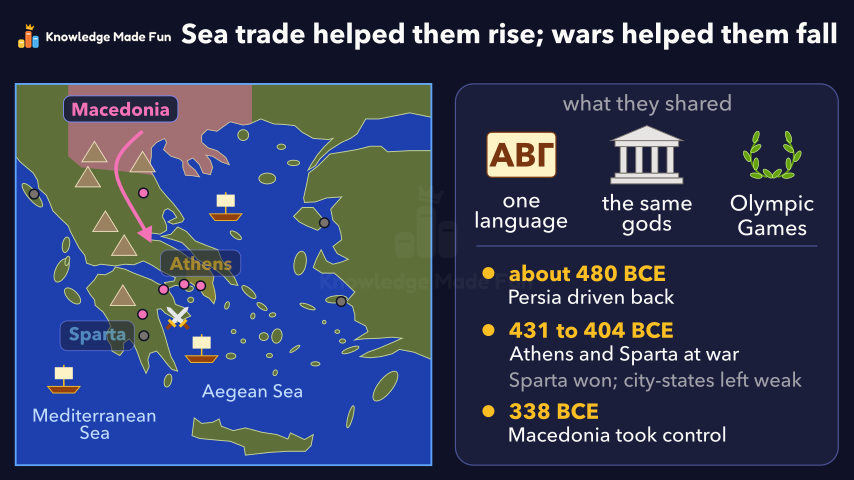 1 min 27 s
Ancient Greece: How the City-States Rose and Fell
Grade 7 · 1 min 27 s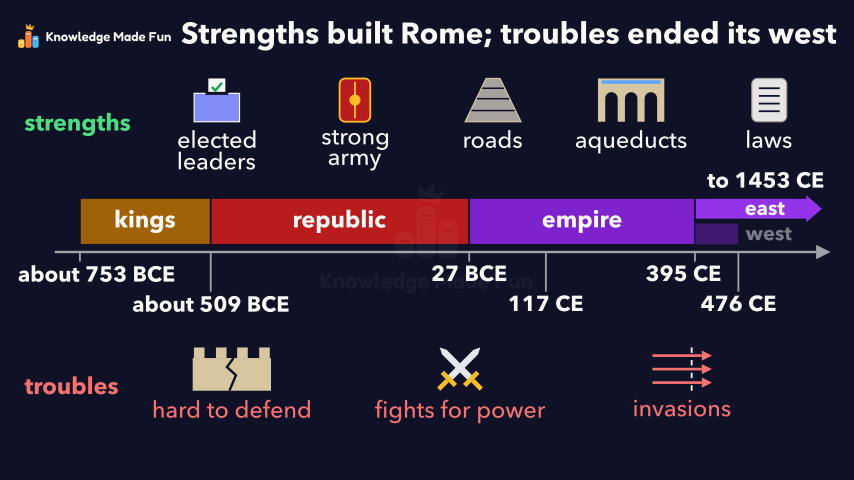 1 min 28 s
Ancient Rome: How It Rose and Why the West Fell
Grade 7 · 1 min 28 s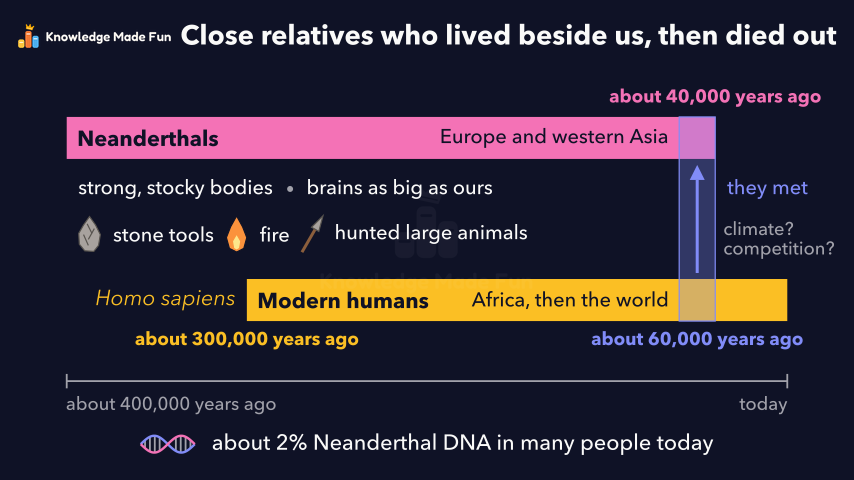 1 min 31 s
Early humans and Neanderthals: our close relatives
Grade 7 · 1 min 31 s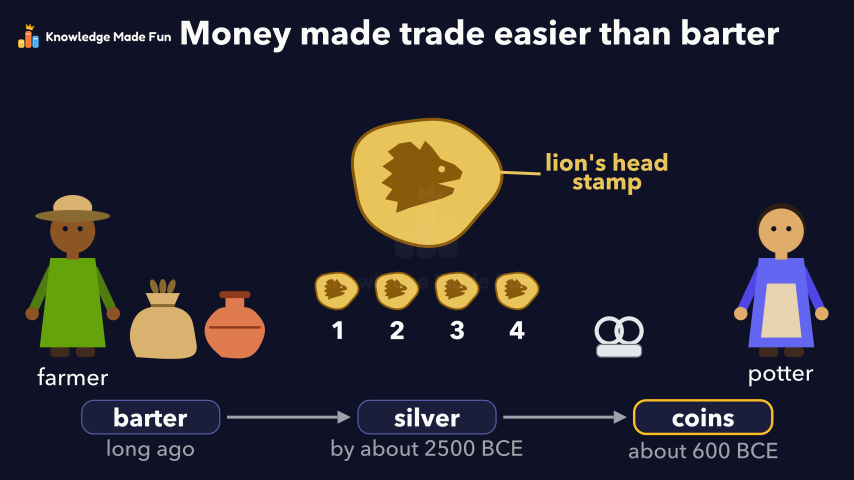 1 min 9 s
From Barter to Money
Grade 7 · 1 min 9 s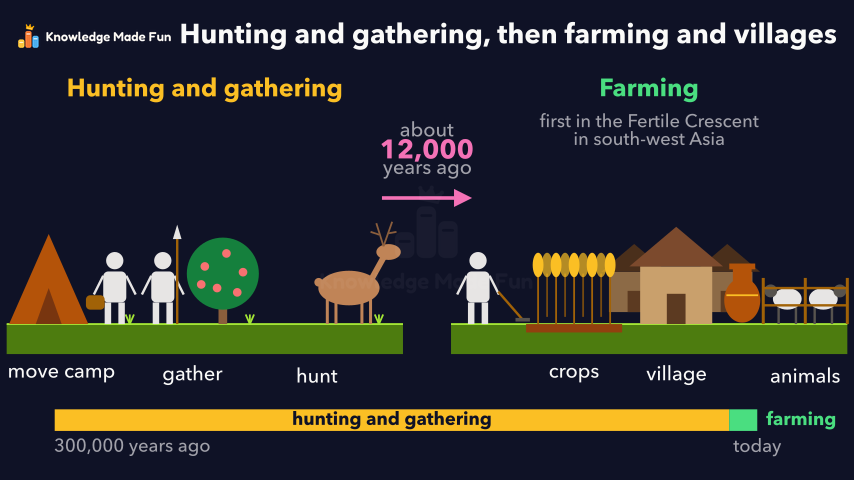 1 min 33 s
From Hunting and Gathering to Farming
Grade 7 · 1 min 33 s 1 min 21 s
From Stone Tools to Metal
Grade 7 · 1 min 21 s
- All Grade 7 Social Studies lessons
- Create a free account to watch three lessons a day, no payment and no card.