Lesson · Grade 7 · Social Studies
From Stone Tools to Metal
- Grade 7
- Social Studies
- 1 min 21 s
- British Columbia
- BC7-SS-03
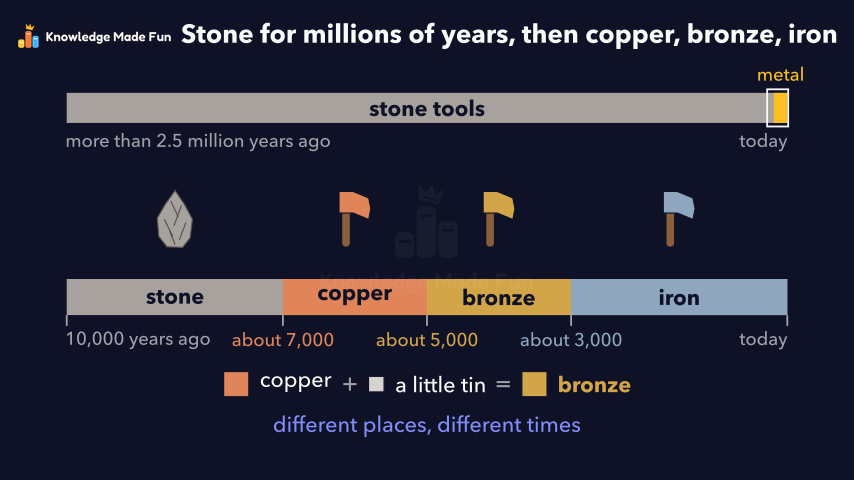
One timeline at two scales tells the story: a top bar of all tool-making time, from chipped stone tools more than 2.5 million years old to today, with metal only a thin sliver at the end, and that sliver stretched into a second bar of the last 10,000 years. The bottom bar fills in step by step with copper from about 7,000 years ago, bronze (copper plus a little tin) from about 5,000 and iron from about 3,000, each with a tool built from shapes, a note that these changes came at different times in different places, and the recap "Stone for millions of years, then copper, bronze, iron."
Anyone can watch two lessons on the website without an account. Signing in is free, no payment and no card, and opens three a day; Plus has no limit.
Loading
In one sentence
The question this lesson answers
Before there were metals, what did people make their tools from?
The oldest tools we know of are chipped stone, more than 2.5 million years old.
Transcript
What the lesson says
Before there were metals, what did people make their tools from?
The oldest tools we know of are chipped stone, more than 2.5 million years old.
A sharp stone edge could cut meat, scrape hides and shape wood.
Compared with that, metal tools are new, just a thin sliver at the end of the timeline.
Let us stretch out the last 10,000 years to see what happened.
About 7,000 years ago, people learned to melt copper out of rock.
Melted metal can be poured into a mould, so it can take any shape.
But copper is soft, so a copper edge soon bends and goes blunt.
About 5,000 years ago, people mixed copper with a little tin to make bronze.
Bronze is much harder than copper, so a bronze edge stays sharp.
About 3,000 years ago, people learned to work iron, and it slowly replaced bronze.
Iron is found in many more places than tin, and it makes strong tools.
These changes came at different times in different parts of the world.
Stone for millions of years, then copper, bronze and iron.
Curriculum
Where this fits
- British Columbia, Grade 7
Social Studies, Ancient world to the 7th century: anthropological origins of humansBC7-SS-03
Previous: Early humans and Neanderthals: our close relativesNext: From Hunting and Gathering to Farming
The outcomes and strands follow the British Columbia curriculum.
Keep going
 1 min 23 s
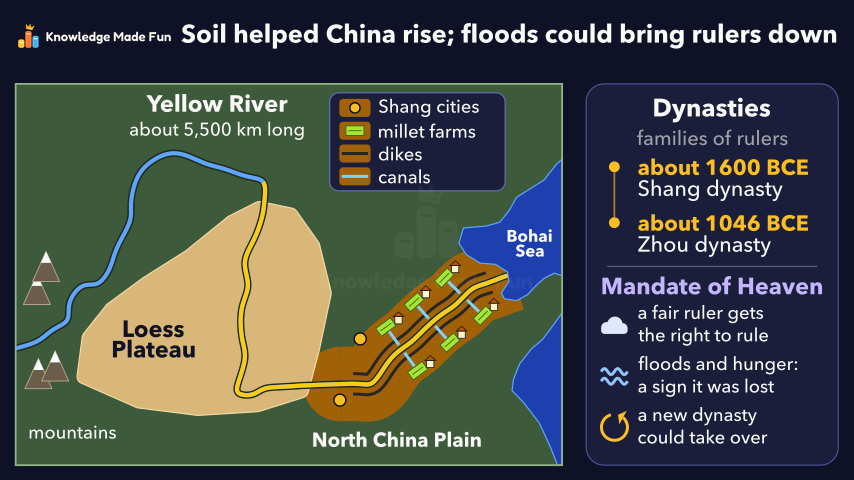
Ancient China and the Yellow River
Grade 7 · 1 min 23 s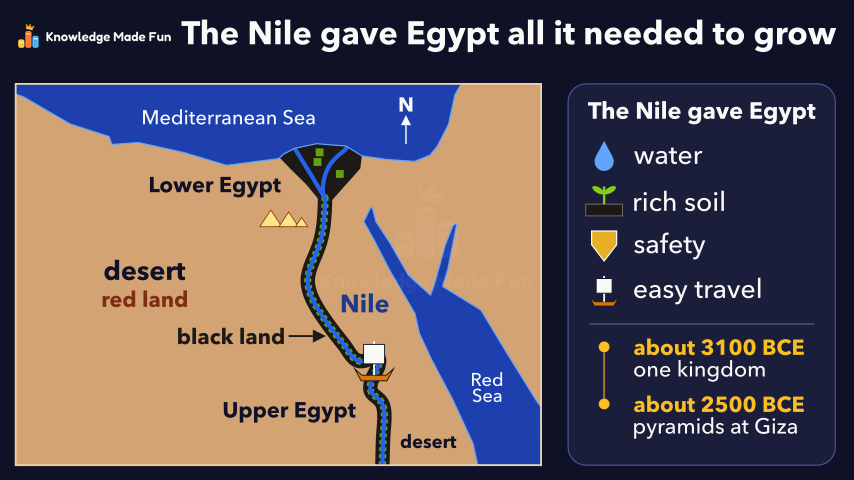 1 min 28 s
Ancient Egypt and the Nile
Grade 7 · 1 min 28 s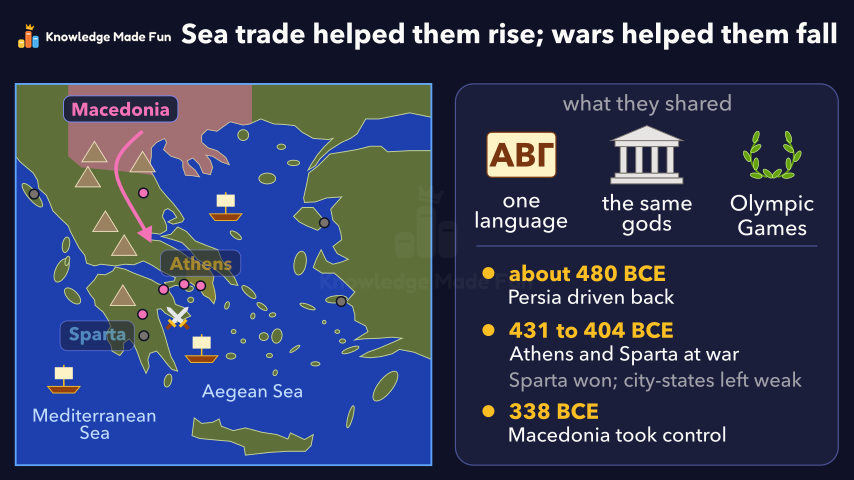 1 min 27 s
Ancient Greece: How the City-States Rose and Fell
Grade 7 · 1 min 27 s 1 min 13 s
Ancient Inventions We Still Use
Grade 7 · 1 min 13 s 1 min 28 s
Ancient Rome: How It Rose and Why the West Fell
Grade 7 · 1 min 28 s 1 min 31 s
Early humans and Neanderthals: our close relatives
Grade 7 · 1 min 31 s 1 min 9 s
From Barter to Money
Grade 7 · 1 min 9 s 1 min 33 s
From Hunting and Gathering to Farming
Grade 7 · 1 min 33 s
- All Grade 7 Social Studies lessons
- Create a free account to watch three lessons a day, no payment and no card.