Lesson · Grade 7 · Social Studies
Early humans and Neanderthals: our close relatives
- Grade 7
- Social Studies
- 1 min 31 s
- British Columbia
- BC7-SS-02
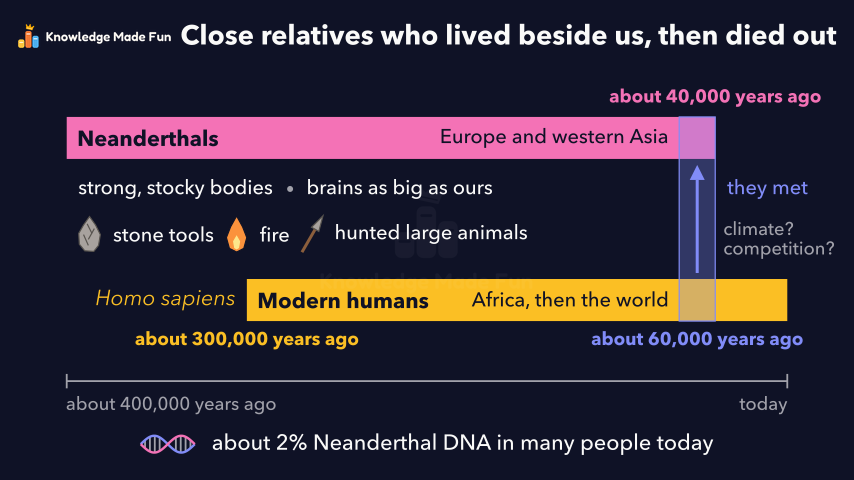
A two-lane timeline of the last 400,000 years shows Neanderthals in Europe and western Asia from about 400,000 to about 40,000 years ago above modern humans from about 300,000 years ago in Africa to today, with rows naming their stocky bodies, big brains, stone tools, fire and hunting. A shaded band marks the time after modern humans spread out of Africa about 60,000 years ago, when the two groups met and lived side by side, then the Neanderthal bar ends, the reasons are shown as open questions, and a DNA line notes that many people today carry about 2 percent Neanderthal DNA.
Concept: Early humans and Neanderthals
Anyone can watch two lessons on the website without an account. Signing in is free, no payment and no card, and opens three a day; Plus has no limit.
Loading
In one sentence
The question this lesson answers
Have modern humans always been the only kind of human on Earth?
No, there were others. This timeline covers the last 400,000 years, with today at the right.
Transcript
What the lesson says
Have modern humans always been the only kind of human on Earth?
No, there were others. This timeline covers the last 400,000 years, with today at the right.
Neanderthals were another kind of human, living from about 400,000 years ago.
They lived across Europe and western Asia.
They had strong, stocky bodies that suited the cold, and brains as big as ours.
They made stone tools, used fire and hunted large animals.
Meanwhile our own species, Homo sapiens, began in Africa about 300,000 years ago.
Neanderthals were not the species we came from, but our close relatives, like cousins on the human family tree.
When modern humans spread out of Africa about 60,000 years ago, the two groups met.
They lived side by side for thousands of years, and some had children together.
Then, about 40,000 years ago, the Neanderthals died out.
No one knows exactly why, but a changing climate and competition with modern humans may have played a part.
But they are not completely gone, because many people today carry about 2 percent Neanderthal DNA.
Neanderthals were our close relatives, who lived beside us and then died out about 40,000 years ago.
Curriculum
Where this fits
- British Columbia, Grade 7
Social Studies, Ancient world to the 7th century: anthropological origins of humansBC7-SS-02
Previous: Where Humans Began: Out of AfricaNext: From Stone Tools to Metal
The outcomes and strands follow the British Columbia curriculum.
Keep going
 1 min 23 s
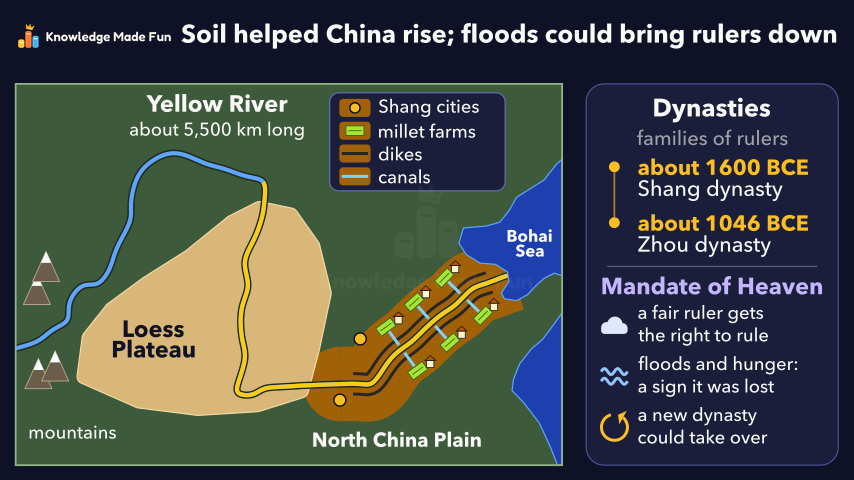
Ancient China and the Yellow River
Grade 7 · 1 min 23 s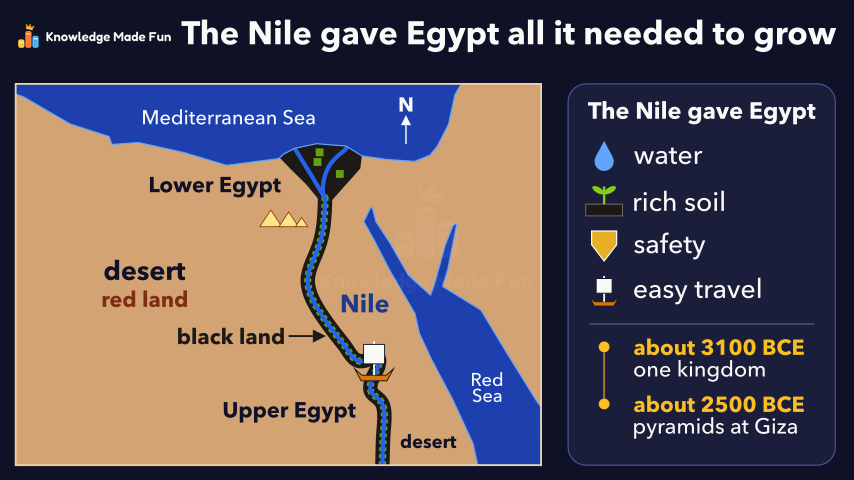 1 min 28 s
Ancient Egypt and the Nile
Grade 7 · 1 min 28 s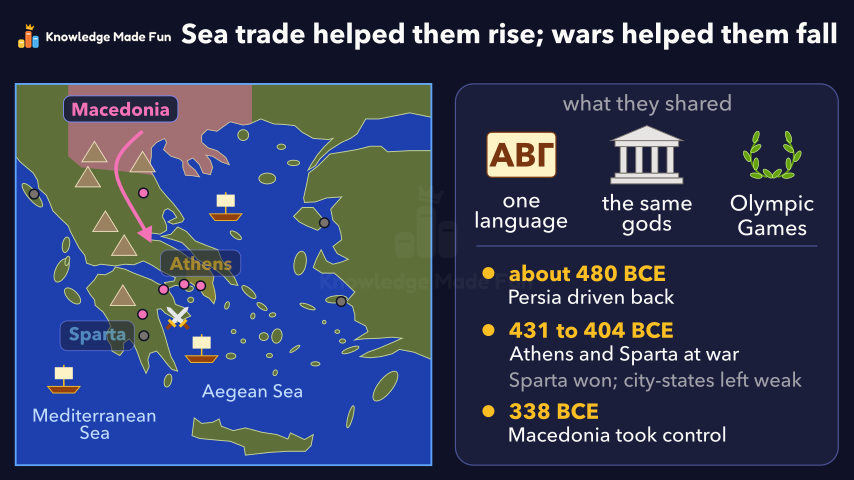 1 min 27 s
Ancient Greece: How the City-States Rose and Fell
Grade 7 · 1 min 27 s 1 min 13 s
Ancient Inventions We Still Use
Grade 7 · 1 min 13 s 1 min 28 s
Ancient Rome: How It Rose and Why the West Fell
Grade 7 · 1 min 28 s 1 min 9 s
From Barter to Money
Grade 7 · 1 min 9 s 1 min 33 s
From Hunting and Gathering to Farming
Grade 7 · 1 min 33 s 1 min 21 s
From Stone Tools to Metal
Grade 7 · 1 min 21 s
- All Grade 7 Social Studies lessons
- Create a free account to watch three lessons a day, no payment and no card.