Lesson · Grade 7 · Science
Why Iron Rusts
- Grade 7
- Science
- 1 min 9 s
- British Columbia
- BC7-SC-19
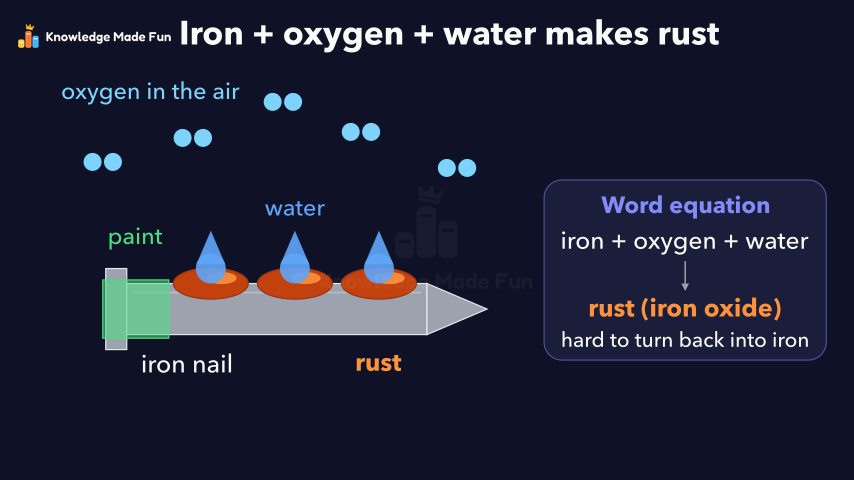
A shiny iron nail is drawn, then oxygen molecules appear in the air above it and water drops settle on its surface. The three react, orange rust bumps grow under the drops, a word equation panel shows iron + oxygen + water making rust (iron oxide) as a chemical change, and a coat of paint shows how keeping water and air away stops it.
Anyone can watch two lessons on the website without an account. Signing in is free, no payment and no card, and opens three a day; Plus has no limit.
Loading
In one sentence
The question this lesson answers
Why does a shiny iron nail slowly turn orange and crumbly? Let us find out.
The air around the nail contains oxygen.
Transcript
What the lesson says
Why does a shiny iron nail slowly turn orange and crumbly? Let us find out.
The air around the nail contains oxygen.
Rain or damp air leaves water on the iron.
Slowly, over days and weeks, the iron, the oxygen and the water react together.
A new substance forms on the surface. We call it rust.
Rust is iron oxide. Iron atoms have joined with oxygen atoms.
This is a chemical change, because a new substance has been made.
Rust is orange brown and flaky. It is not shiny or strong like iron.
And you cannot easily turn the rust back into iron.
Rust needs both water and oxygen. Take either one away and the iron stays shiny.
A coat of paint or oil keeps water and air away, so the iron underneath does not rust.
Iron plus oxygen plus water makes rust. That is a chemical change.
Curriculum
Where this fits
- British Columbia, Grade 7
Science, Chemistry: chemical changesBC7-SC-19
Previous: Atoms rearrange: vinegar and baking sodaNext: Signs of a chemical change
The outcomes and strands follow the British Columbia curriculum.
Keep going
 1 min 40 s
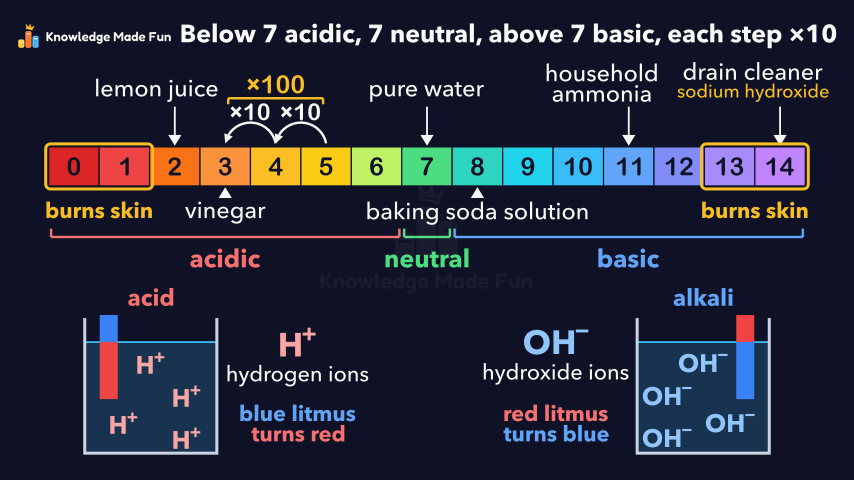
Acids and bases: the pH scale
Grade 10 · 1 min 40 s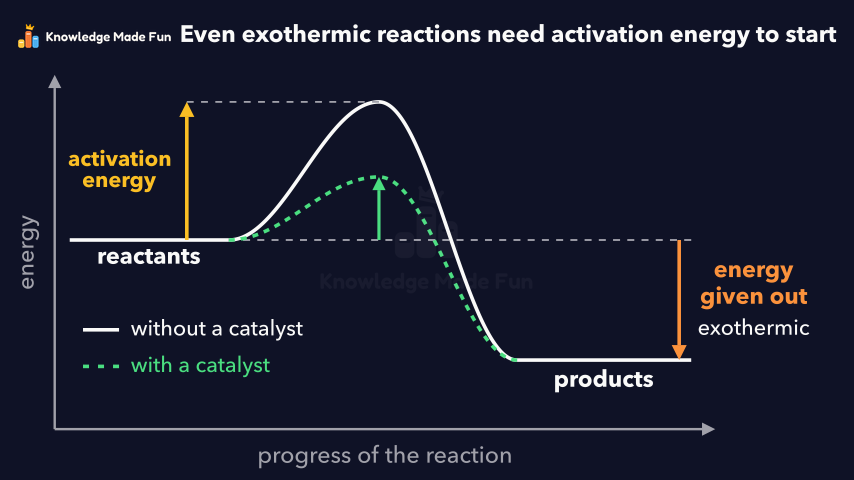 1 min 39 s
Activation energy: the push a reaction needs to start
Grade 10 · 1 min 39 s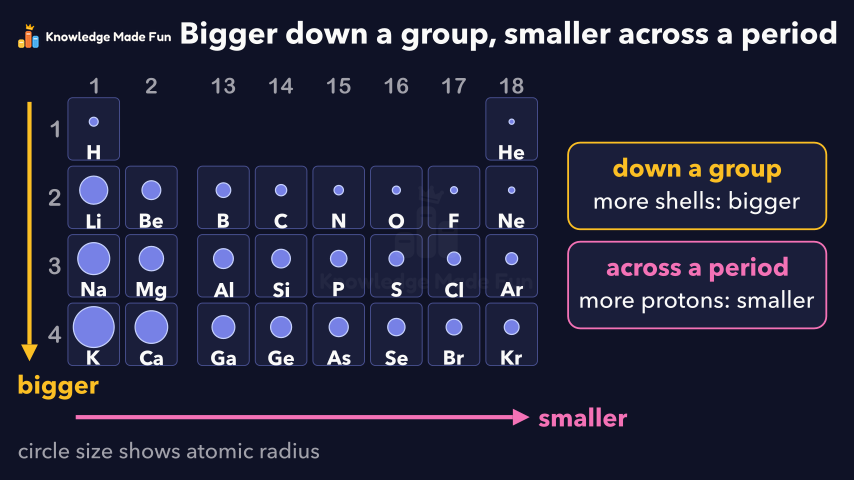 1 min 54 s
Atomic Size: Bigger Down a Group, Smaller Across a Period
Grade 9 · 1 min 54 s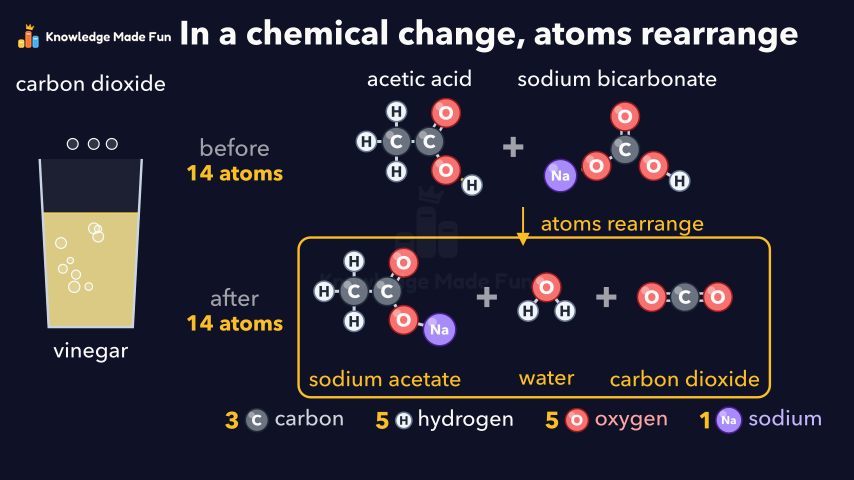 1 min 18 s
Atoms rearrange: vinegar and baking soda
Grade 7 · 1 min 18 s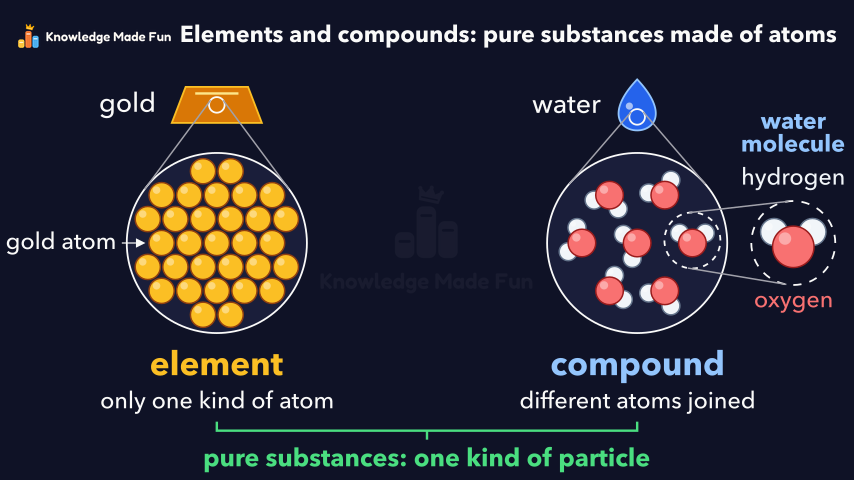 1 min 16 s
Atoms: What Everything Is Made Of
Grade 7 · 1 min 16 s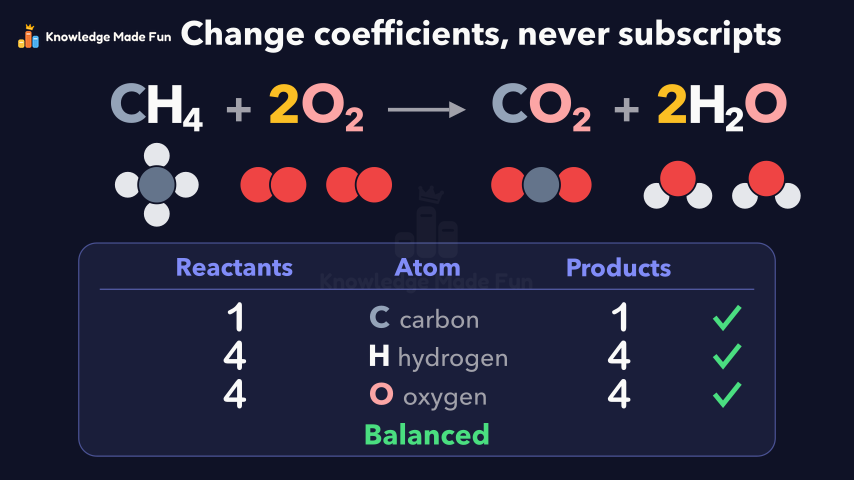 2 min 3 s
Balancing Chemical Equations
Grade 10 · 2 min 3 s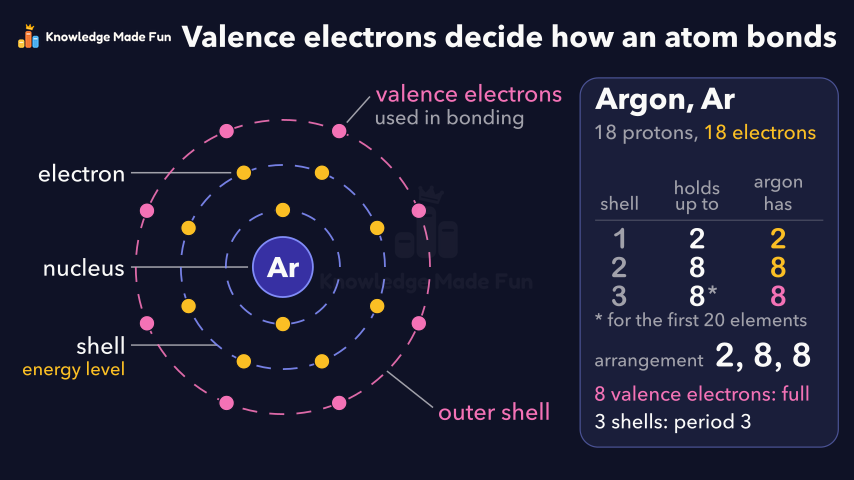 1 min 54 s
Bohr Diagrams: Electrons in Shells and Valence Electrons
Grade 9 · 1 min 54 s 1 min 45 s
Brownian motion: evidence that molecules exist
Grade 8 · 1 min 45 s
- All Grade 7 Science lessons
- Create a free account to watch three lessons a day, no payment and no card.