Lesson · Grade 11 · Chemistry
Valence electrons: the outer electrons that bond
- Grade 11
- Chemistry
- 2 min 7 s
- British Columbia
- BC11-SC-04
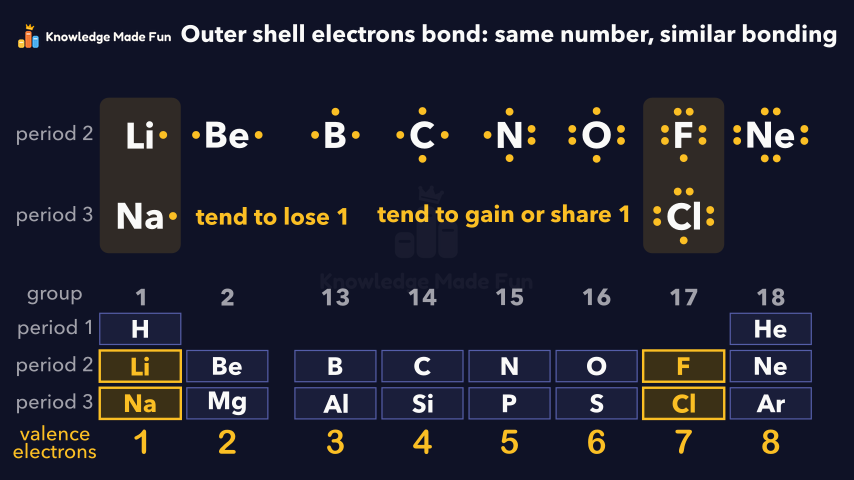
Bohr diagrams of sodium, magnesium, carbon, nitrogen, oxygen, chlorine and helium pick out the outer shell, and each element lights up in its group on the periodic table: groups 1 and 2 have 1 and 2 valence electrons, groups 13 to 18 have 3 to 8, and helium has 2. Lewis dot symbols for lithium to neon then show that, apart from helium, elements in the same group have the same number of valence electrons and so bond in similar ways.
Anyone can watch two lessons on the website without an account. Signing in is free, no payment and no card, and opens three a day; Plus has no limit.
Loading
In one sentence
The question this lesson answers
When atoms bond, which of their electrons take part?
A Bohr diagram shows electrons in rings called shells, around the nucleus.
Transcript
What the lesson says
When atoms bond, which of their electrons take part?
A Bohr diagram shows electrons in rings called shells, around the nucleus.
Sodium has 11 electrons. They fill the shells 2, then 8, then 1.
Electrons in the outer shell are called valence electrons: the ones lost, gained or shared in bonding.
A column of the periodic table is a group, and a row is a period. Sodium is in group 1, with 1 valence electron.
Magnesium has 2, 8, 2: 2 valence electrons, in group 2.
Carbon has 2, 4: 4 valence electrons, in group 14.
Nitrogen has 2, 5: 5 valence electrons, in group 15.
Oxygen has 2, 6: 6 valence electrons, in group 16.
Chlorine has 2, 8, 7: 7 valence electrons, in group 17.
Groups 1 and 2 have 1 and 2 valence electrons, and groups 13 to 18 have 3 to 8.
Helium is the exception: in group 18, but with only 2 electrons in its one shell.
A Lewis dot symbol shows just the valence electrons, as dots around the symbol.
From lithium to neon, the dots go 1, 2, 3, 4, 5, 6, 7, 8. We place one on each side before any pair up.
Apart from helium, elements in a group have the same number of valence electrons: sodium has 1, like lithium, and chlorine 7, like fluorine.
So they bond in similar ways: lithium and sodium tend to lose 1 electron, fluorine and chlorine to gain or share 1.
Valence electrons are the outer electrons that bond, and the same number means similar bonding.
Curriculum
Where this fits
- British Columbia, Grade 11
Chemistry 11, Atoms and electrons: valence electrons and Lewis structuresBC11-SC-04
The outcomes and strands follow the British Columbia curriculum.
Keep going
 2 min 3 s
Electrons in Orbitals: The Quantum Mechanical Model
Grade 11 · 2 min 3 s 2 min 19 s
Writing Electron Configurations
Grade 11 · 2 min 19 s 1 min 40 s
Acids and bases: the pH scale
Grade 10 · 1 min 40 s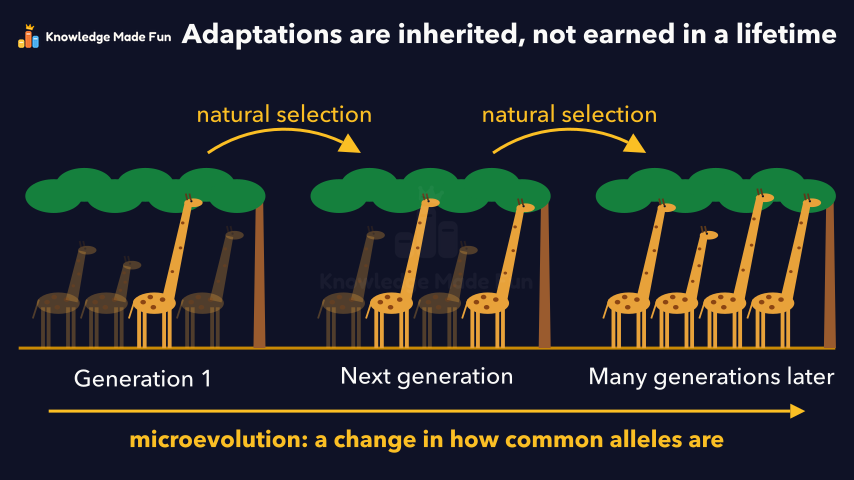 1 min 39 s
Adaptations Are Inherited, Not Earned in a Lifetime
Grade 11 · 1 min 39 s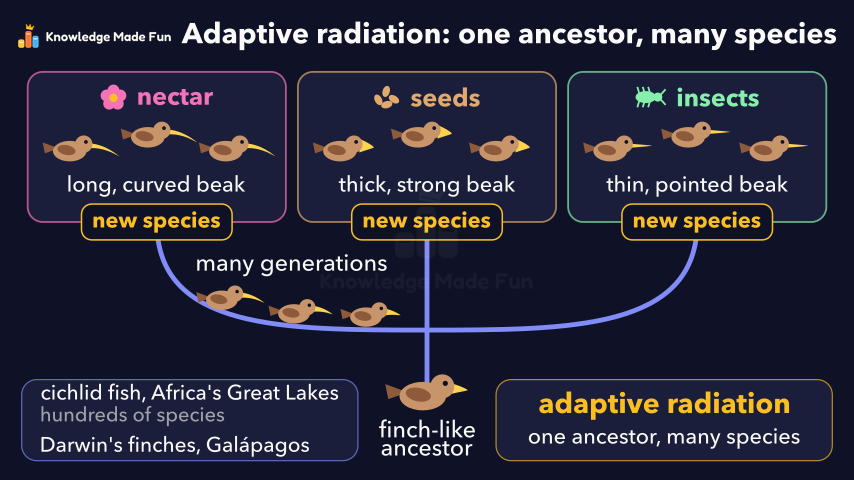 1 min 48 s
Adaptive radiation: one ancestor, many species
Grade 10 · 1 min 48 s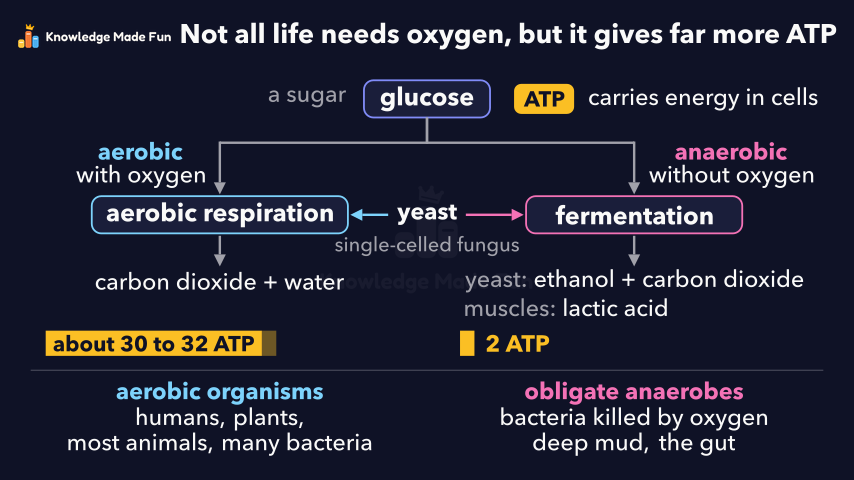 1 min 39 s
Aerobic and anaerobic organisms
Grade 11 · 1 min 39 s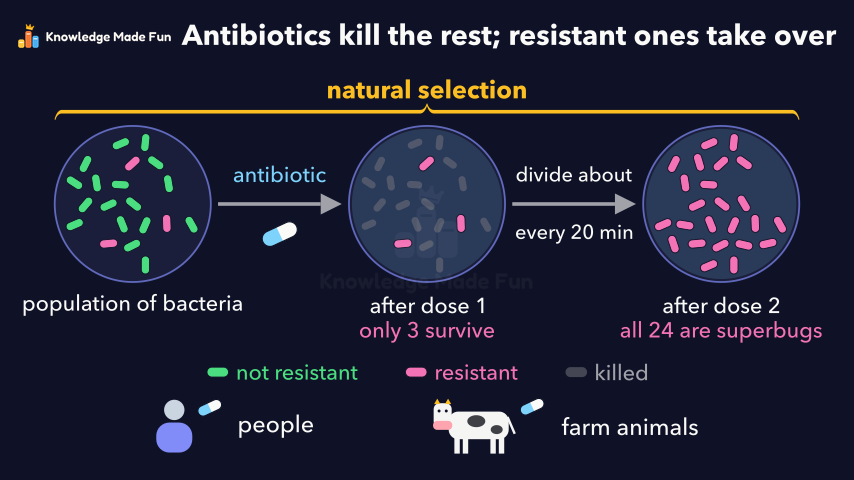 1 min 37 s
Antibiotic resistance: how superbugs evolve
Grade 8 · 1 min 37 s 1 min 35 s
Antibiotics kill bacteria, not viruses
Grade 8 · 1 min 35 s
- All Grade 11 Chemistry lessons
- Create a free account to watch three lessons a day, no payment and no card.