Lesson · Grade 10 · Science
Synthesis and Decomposition: Atoms Rearrange
- Grade 10
- Science
- 1 min 52 s
- British Columbia
- BC10-SC-19
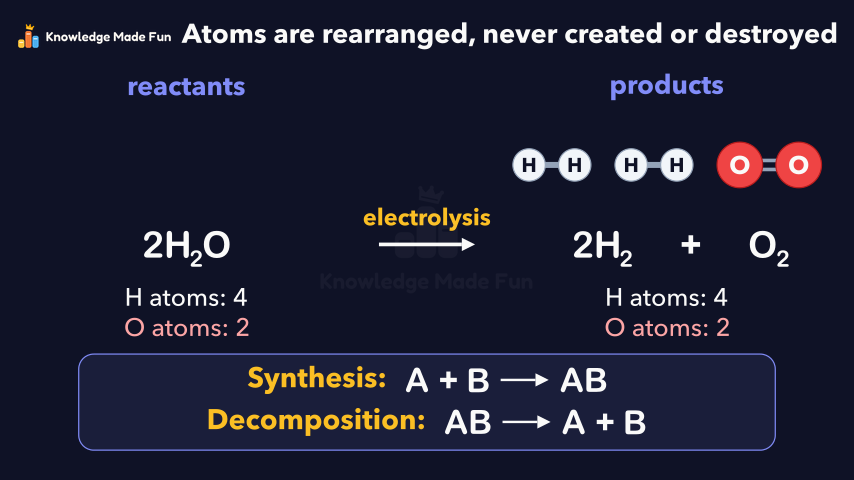
Hydrogen and oxygen atoms, drawn as coloured balls, swap partners to make water (2H₂ + O₂ → 2H₂O, a synthesis reaction). Electrolysis then splits the water back into hydrogen and oxygen (a decomposition reaction). Counting 4 hydrogen and 2 oxygen atoms on both sides shows that atoms are only rearranged in a reaction, never created or destroyed.
Concept: Synthesis and decomposition reactions
Anyone can watch two lessons on the website without an account. Signing in is free, no payment and no card, and opens three a day; Plus has no limit.
Loading
In one sentence
The question this lesson answers
When substances react, what happens to their atoms?
In this model, each ball is one atom: white is hydrogen and red is oxygen.
Transcript
What the lesson says
When substances react, what happens to their atoms?
In this model, each ball is one atom: white is hydrogen and red is oxygen.
Atoms joined by chemical bonds form a molecule.
Reactants are the substances we start with: here, two hydrogen molecules and one oxygen molecule.
Count the atoms: four hydrogen and two oxygen.
In the reaction, the bonds between the atoms break.
The atoms rearrange and form new bonds, making two water molecules.
Water is the product, the new substance made.
Count again: still four hydrogen and two oxygen.
Joining two or more substances into one new substance is a synthesis reaction: A plus B gives AB.
Sodium and chlorine also join this way, making sodium chloride.
Now reverse it. An electric current splits water: this is called electrolysis.
The bonds break, and the atoms rearrange into hydrogen and oxygen.
Breaking one substance down into two or more simpler ones is a decomposition reaction: AB gives A plus B.
Hydrogen peroxide also decomposes, into water and oxygen.
A common mistake is to think atoms are destroyed when a substance breaks down.
But all four hydrogen and two oxygen atoms are still there, just rearranged.
In both synthesis and decomposition, atoms are only rearranged, never created or destroyed.
Curriculum
Where this fits
- British Columbia, Grade 10
Science 10, Chemistry: rearrangement of atoms in chemical reactionsBC10-SC-19
The outcomes and strands follow the British Columbia curriculum.
Keep going
 1 min 40 s
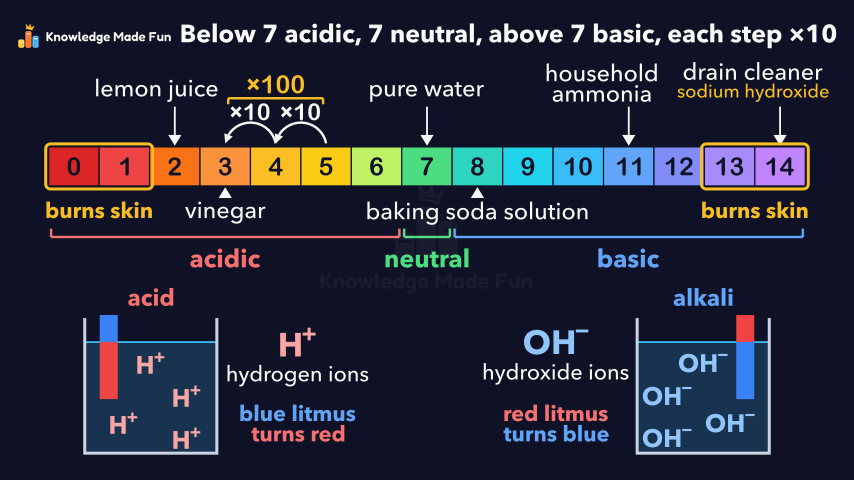
Acids and bases: the pH scale
Grade 10 · 1 min 40 s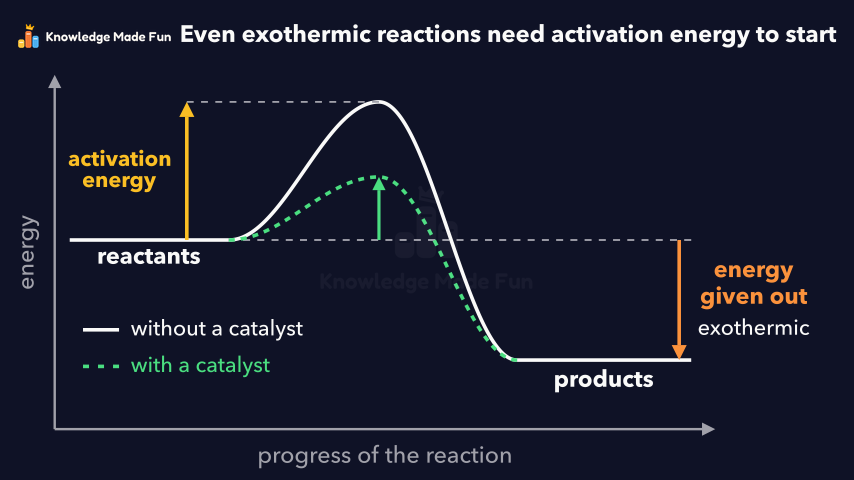 1 min 39 s
Activation energy: the push a reaction needs to start
Grade 10 · 1 min 39 s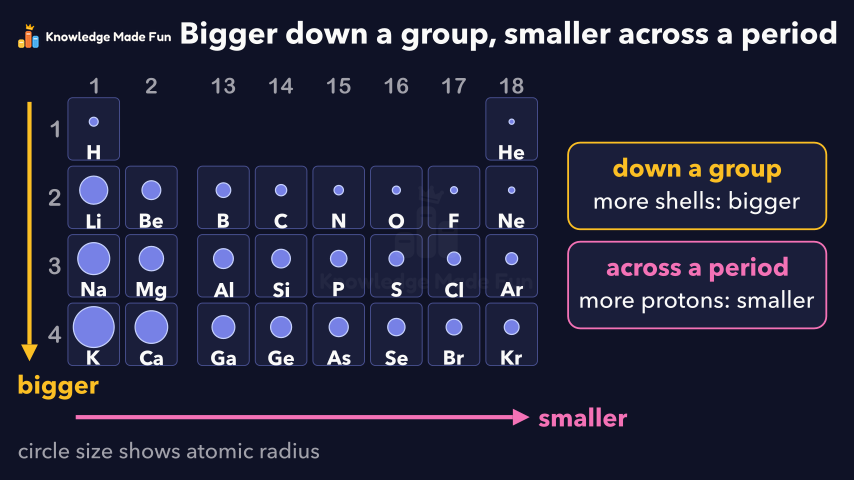 1 min 54 s
Atomic Size: Bigger Down a Group, Smaller Across a Period
Grade 9 · 1 min 54 s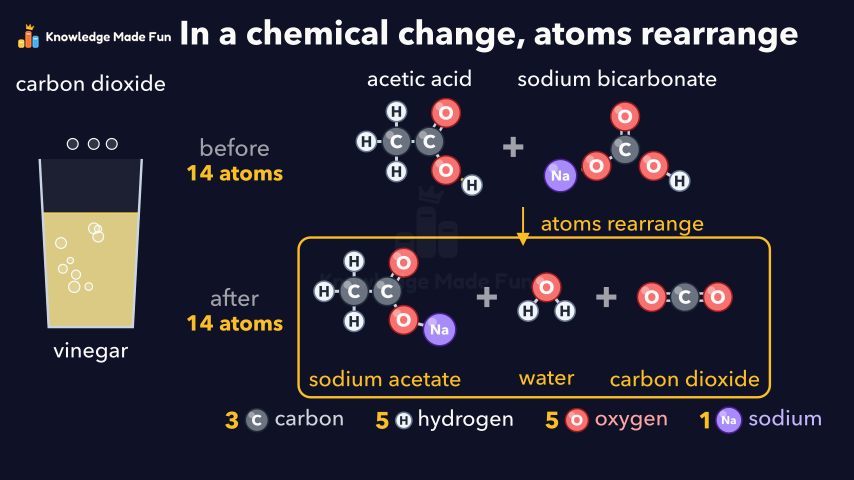 1 min 18 s
Atoms rearrange: vinegar and baking soda
Grade 7 · 1 min 18 s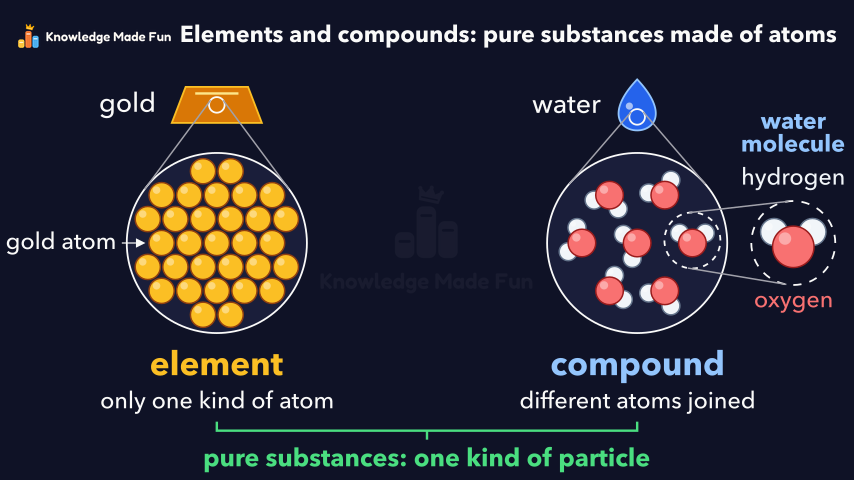 1 min 16 s
Atoms: What Everything Is Made Of
Grade 7 · 1 min 16 s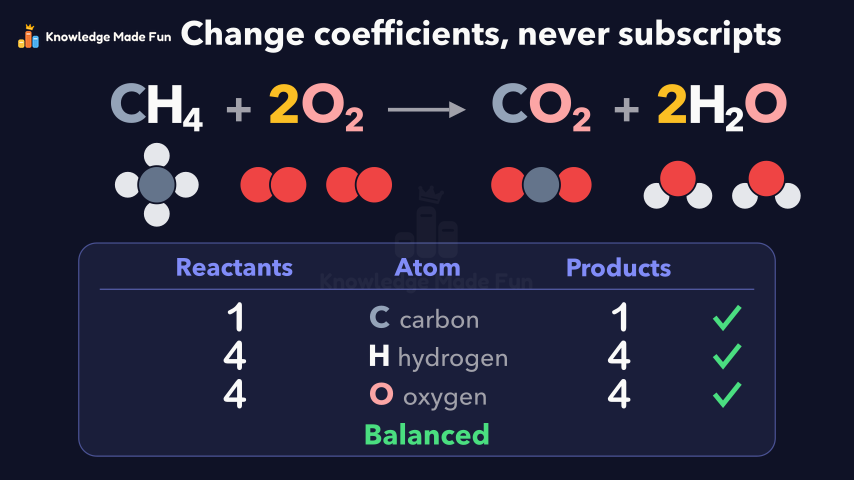 2 min 3 s
Balancing Chemical Equations
Grade 10 · 2 min 3 s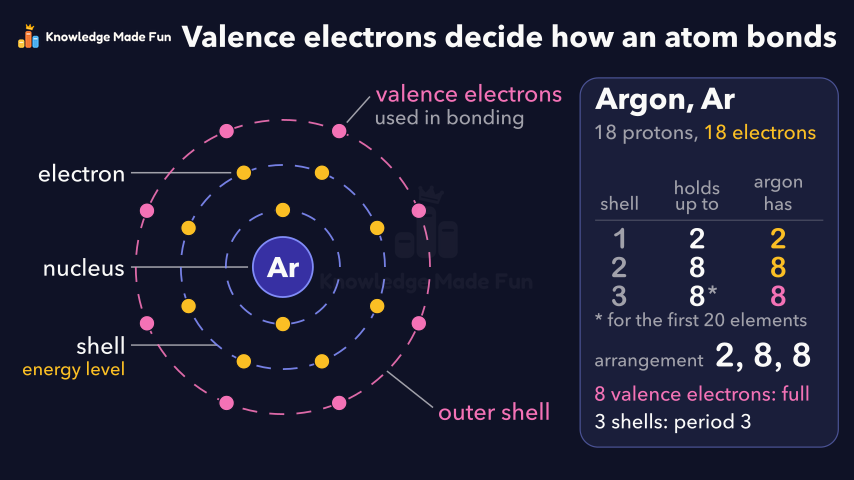 1 min 54 s
Bohr Diagrams: Electrons in Shells and Valence Electrons
Grade 9 · 1 min 54 s 1 min 45 s
Brownian motion: evidence that molecules exist
Grade 8 · 1 min 45 s
- All Grade 10 Science lessons
- Create a free account to watch three lessons a day, no payment and no card.