Lesson · Grade 11 · Chemistry
Smelting: Getting Iron Out of Ore
- Grade 11
- Chemistry
- 1 min 53 s
- British Columbia
- BC11-SC-30
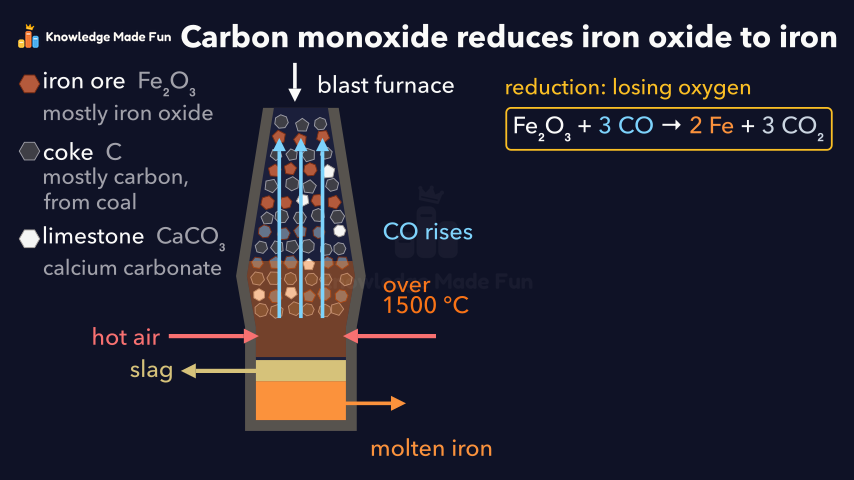
A blast furnace builds up step by step as iron ore, coke and limestone go in at the top and hot air is blasted in near the bottom; the coke burns to carbon dioxide and then carbon monoxide, which takes oxygen from the iron oxide (Fe₂O₃ + 3 CO → 2 Fe + 3 CO₂), so molten iron collects and is tapped off while limestone turns sand into slag that floats on top. The equations build up beside the diagram, the video then shows how zinc and copper sulfide ores are roasted before they are reduced, and it ends on the recap "Carbon monoxide reduces iron oxide to iron".
Concept: Smelting: getting metal out of ore
Anyone can watch two lessons on the website without an account. Signing in is free, no payment and no card, and opens three a day; Plus has no limit.
Loading
In one sentence
The question this lesson answers
How do we get a metal like iron out of rock?
An ore is a rock with enough metal to be worth extracting. Iron ore is mostly iron oxide.
Transcript
What the lesson says
How do we get a metal like iron out of rock?
An ore is a rock with enough metal to be worth extracting. Iron ore is mostly iron oxide.
Heating an ore to extract its metal is called smelting. Iron is smelted in a blast furnace.
Three raw materials go in at the top: iron ore, coke and limestone.
Coke is mostly carbon, made from coal. Limestone is calcium carbonate.
Hot air is blasted in near the bottom.
The coke burns, making carbon dioxide and heating the furnace to over 1500 degrees Celsius.
This carbon dioxide reacts with more hot coke to make carbon monoxide.
Carbon monoxide rises through the furnace and takes oxygen from the iron oxide. Losing oxygen is called reduction.
Iron oxide is reduced to iron, and carbon monoxide becomes carbon dioxide.
The iron melts, trickles down and is tapped off at the bottom.
Limestone breaks down to calcium oxide, which reacts with sand, silicon dioxide, to form slag.
Slag is a molten waste. It is less dense than iron, so it floats on top and is tapped off.
Zinc and copper ores are often sulfides. They are first roasted, or heated strongly in air, giving off sulfur dioxide.
The zinc oxide is then reduced with carbon. Copper ores go through similar steps.
So in a blast furnace, carbon monoxide from coke reduces iron oxide to molten iron.
Curriculum
Where this fits
- British Columbia, Grade 11
Chemistry 11, Reactions: local and other chemical processesBC11-SC-30
Previous: Exothermic and endothermic reactions: the sign of ΔHNext: Photosynthesis and Respiration: Two Halves of One Cycle
The outcomes and strands follow the British Columbia curriculum.
Keep going
 1 min 59 s
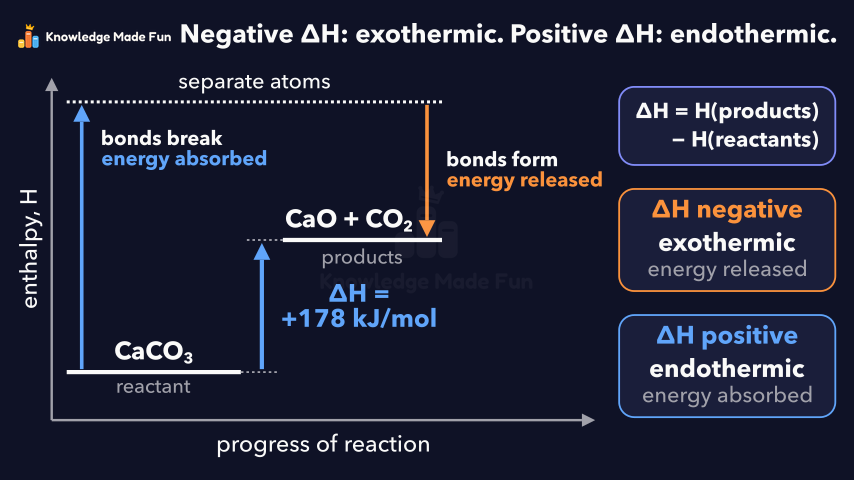
Exothermic and endothermic reactions: the sign of ΔH
Grade 11 · 1 min 59 s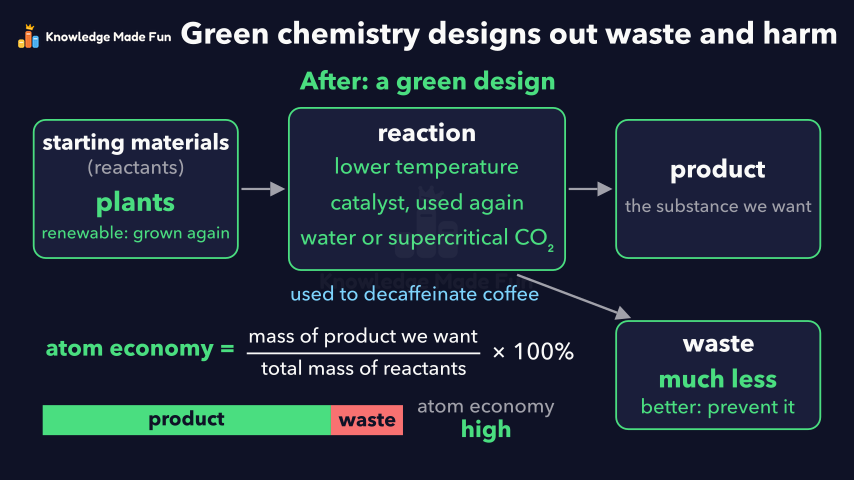 1 min 37 s
Green Chemistry: Designing Out Waste and Harm
Grade 11 · 1 min 37 s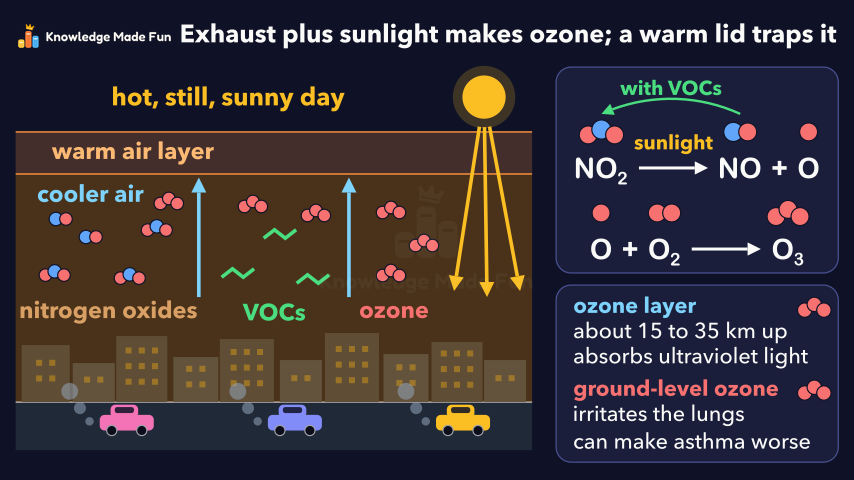 1 min 49 s
Photochemical Smog: How Exhaust and Sunlight Make Ozone
Grade 11 · 1 min 49 s 1 min 47 s
Photosynthesis and Respiration: Two Halves of One Cycle
Grade 8 · 1 min 47 s 1 min 46 s
Pulp and Paper: Freeing Wood Fibres with Chemistry
Grade 11 · 1 min 46 s 1 min 57 s
Reaction types and predicting their products
Grade 11 · 1 min 57 s 1 min 48 s
Why Food Browns When It Cooks
Grade 11 · 1 min 48 s 1 min 40 s
Acids and bases: the pH scale
Grade 10 · 1 min 40 s
- All Grade 11 Chemistry lessons
- Create a free account to watch three lessons a day, no payment and no card.