Lesson · Grade 11 · Chemistry
Why Food Browns When It Cooks
- Grade 11
- Chemistry
- 1 min 48 s
- British Columbia
- BC11-SC-34
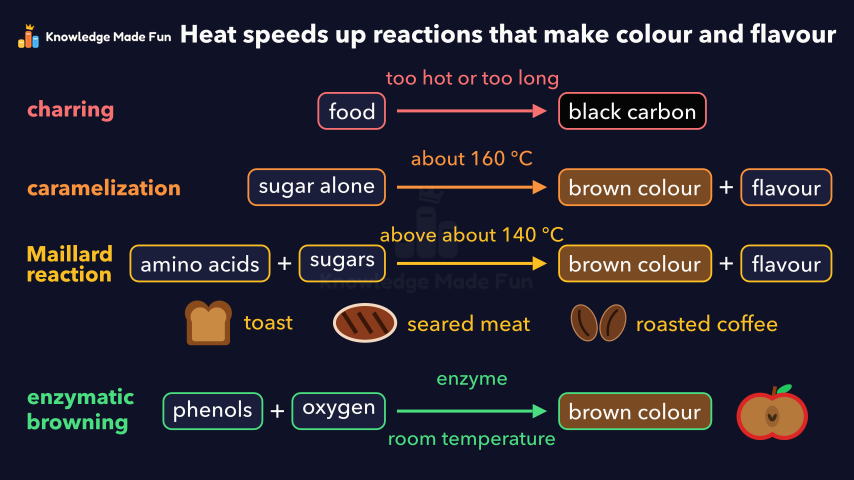
A diagram builds up one word equation at a time to show the Maillard reaction (amino acids and sugars reacting quickly above about 140 °C to make brown colour and flavour in toast, seared meat and roasted coffee) and caramelization (sugar on its own breaking down at about 160 °C). It compares these with a cut apple browning at room temperature through an enzyme, shows that charring into black, bitter carbon is burning and not browning, and ends on a one-line recap.
Concept: Food chemistry: why food browns when it cooks
Anyone can watch two lessons on the website without an account. Signing in is free, no payment and no card, and opens three a day; Plus has no limit.
Loading
In one sentence
The question this lesson answers
Bread goes into a toaster pale and comes out brown. Why does food turn brown when it cooks?
Browning is a chemical change: substances in the food react and make new substances.
Transcript
What the lesson says
Bread goes into a toaster pale and comes out brown. Why does food turn brown when it cooks?
Browning is a chemical change: substances in the food react and make new substances.
In toast, seared meat and roasted coffee, much of the brown colour comes from the Maillard reaction.
In this reaction, amino acids, the building blocks of proteins, react with sugars.
The reaction is slow when it is cooler, but fast above about 140 degrees Celsius.
It makes hundreds of new substances: some are brown and colour the food, and many add flavour.
Caramelization is a different reaction: sugar on its own breaks down at high heat.
For table sugar, this happens at about 160 degrees Celsius, and it also makes brown colour and flavour.
A cut apple also turns brown, but at room temperature, with no cooking at all.
An enzyme, a protein that speeds up a reaction, helps compounds in the apple called phenols react with oxygen from the air.
This also gives a brown colour, and it is called enzymatic browning.
But browning is not burning: food heated too hot or for too long breaks down until it is mostly black carbon.
This is called charring, and it tastes bitter.
So food browns when it cooks because heat speeds up reactions, mainly between amino acids and sugars, that make new colour and flavour.
Curriculum
Where this fits
- British Columbia, Grade 11
Chemistry 11, Reactions: local and other chemical processesBC11-SC-34
Previous: Pulp and Paper: Freeing Wood Fibres with ChemistryNext: Green Chemistry: Designing Out Waste and Harm
The outcomes and strands follow the British Columbia curriculum.
Keep going
 1 min 59 s
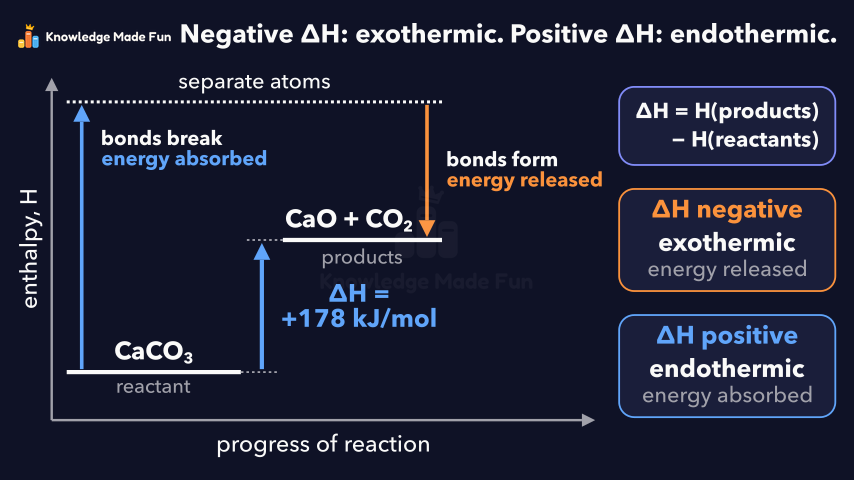
Exothermic and endothermic reactions: the sign of ΔH
Grade 11 · 1 min 59 s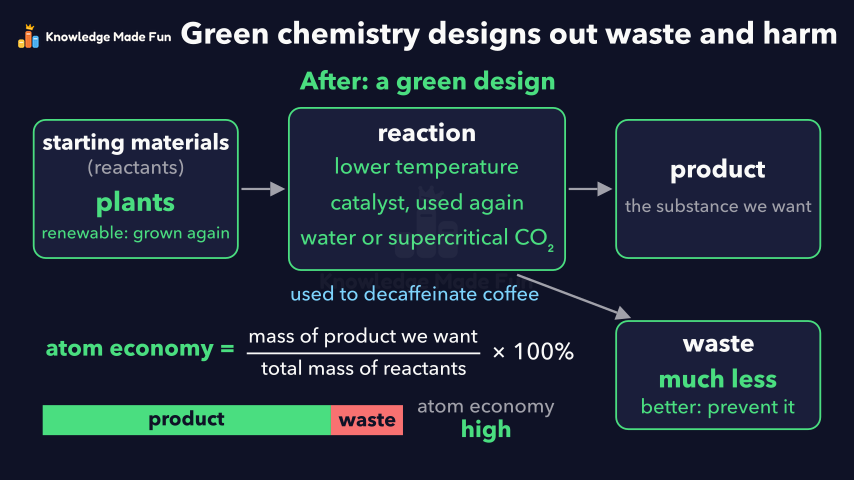 1 min 37 s
Green Chemistry: Designing Out Waste and Harm
Grade 11 · 1 min 37 s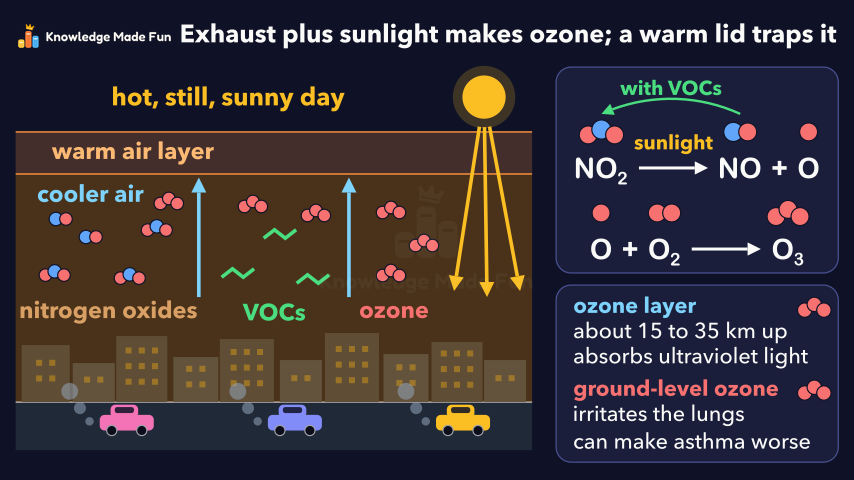 1 min 49 s
Photochemical Smog: How Exhaust and Sunlight Make Ozone
Grade 11 · 1 min 49 s 1 min 47 s
Photosynthesis and Respiration: Two Halves of One Cycle
Grade 8 · 1 min 47 s 1 min 46 s
Pulp and Paper: Freeing Wood Fibres with Chemistry
Grade 11 · 1 min 46 s 1 min 57 s
Reaction types and predicting their products
Grade 11 · 1 min 57 s 1 min 53 s
Smelting: Getting Iron Out of Ore
Grade 11 · 1 min 53 s 1 min 40 s
Acids and bases: the pH scale
Grade 10 · 1 min 40 s
- All Grade 11 Chemistry lessons
- Create a free account to watch three lessons a day, no payment and no card.