Lesson · Grade 11 · Chemistry
Green Chemistry: Designing Out Waste and Harm
- Grade 11
- Chemistry
- 1 min 37 s
- British Columbia
- BC11-SC-35
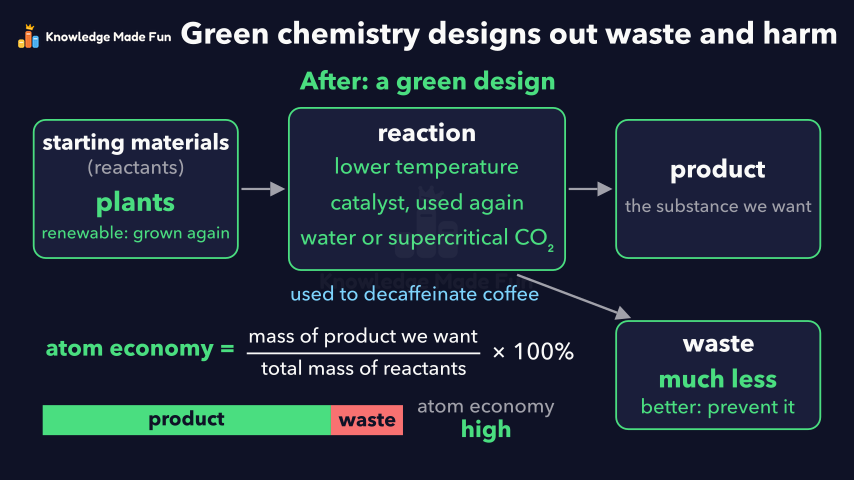
A labelled process diagram changes step by step from an older design (crude oil, a harmful solvent, high temperature, lots of waste) into a green one. It uses renewable plants, water or supercritical CO₂ as the solvent, a reusable catalyst and a lower temperature. Along the way it explains atom economy with a word formula and a product-versus-waste bar, and it ends on the idea that green chemistry prevents waste and harm from the start rather than cleaning up afterwards.
Anyone can watch two lessons on the website without an account. Signing in is free, no payment and no card, and opens three a day; Plus has no limit.
Loading
In one sentence
The question this lesson answers
How can we make useful chemicals without making waste and harm?
Here is a chemical process: starting materials, called reactants, go into a reaction, which makes the product we want.
Transcript
What the lesson says
How can we make useful chemicals without making waste and harm?
Here is a chemical process: starting materials, called reactants, go into a reaction, which makes the product we want.
In an older design, the reactants come from crude oil and react in a harmful solvent, the liquid they dissolve in, at a high temperature.
It also makes a lot of waste, which must be cleaned up.
Green chemistry designs out waste and harm from the start, because preventing waste is better than cleaning it up.
Atom economy is the mass of the product we want, divided by the total mass of the reactants, times 100 percent.
In the older design, much of the reactants' mass ends up as waste. A green design picks reactions where more atoms end up in the product.
Use safer solvents, such as water or supercritical carbon dioxide.
Supercritical carbon dioxide is held above 31 degrees Celsius and at high pressure. It is used to decaffeinate coffee.
Add a catalyst, which speeds up a reaction without being used up, so it can be used again.
With a catalyst, the reaction can run at a lower temperature, which saves energy.
And use renewable starting materials, such as plants, which can be grown again, instead of crude oil, which will run out.
Green chemistry designs out waste and harm from the start, instead of cleaning up afterwards.
Curriculum
Where this fits
- British Columbia, Grade 11
Chemistry 11, Reactions: green chemistryBC11-SC-35
The outcomes and strands follow the British Columbia curriculum.
Keep going
 1 min 59 s
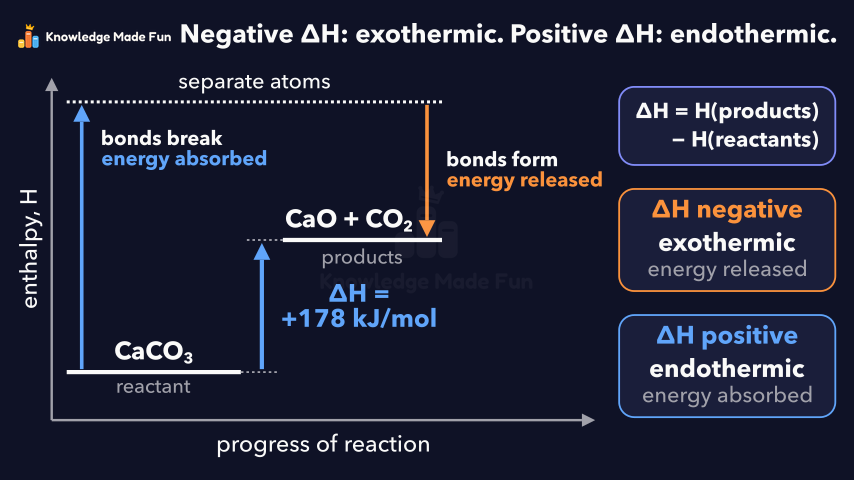
Exothermic and endothermic reactions: the sign of ΔH
Grade 11 · 1 min 59 s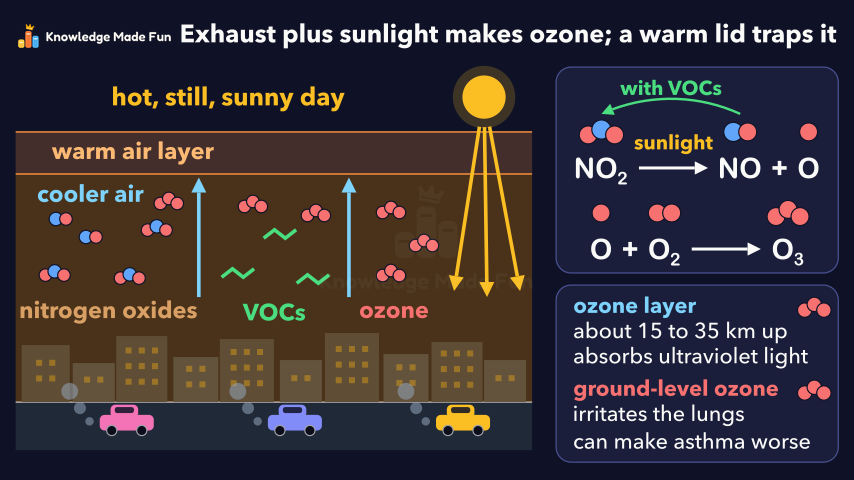 1 min 49 s
Photochemical Smog: How Exhaust and Sunlight Make Ozone
Grade 11 · 1 min 49 s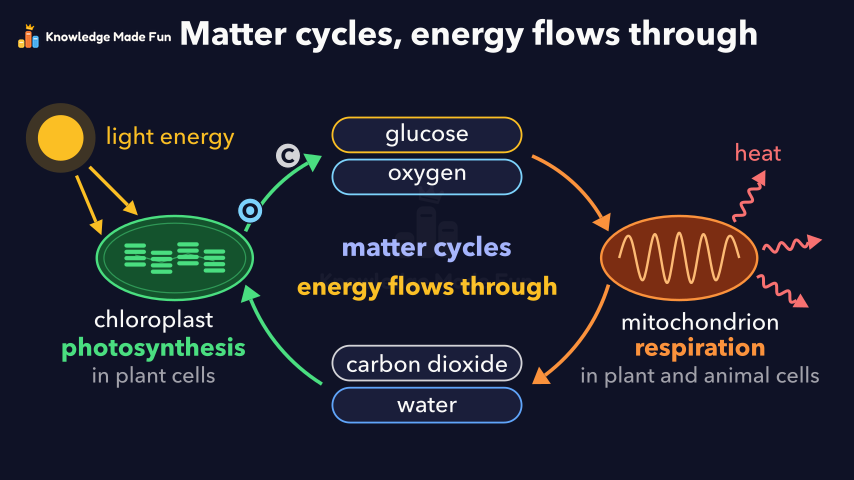 1 min 47 s
Photosynthesis and Respiration: Two Halves of One Cycle
Grade 8 · 1 min 47 s 1 min 46 s
Pulp and Paper: Freeing Wood Fibres with Chemistry
Grade 11 · 1 min 46 s 1 min 57 s
Reaction types and predicting their products
Grade 11 · 1 min 57 s 1 min 53 s
Smelting: Getting Iron Out of Ore
Grade 11 · 1 min 53 s 1 min 48 s
Why Food Browns When It Cooks
Grade 11 · 1 min 48 s 1 min 40 s
Acids and bases: the pH scale
Grade 10 · 1 min 40 s
- All Grade 11 Chemistry lessons
- Create a free account to watch three lessons a day, no payment and no card.