Lesson · Grade 10 · Science
Preventing corrosion: paint, galvanizing and sacrificial metals
- Grade 10
- Science
- 1 min 47 s
- British Columbia
- BC10-SC-51
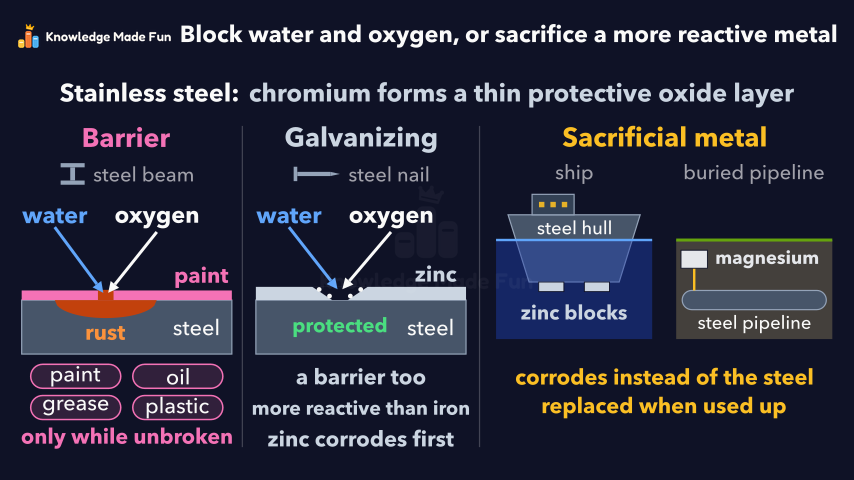
After recalling that iron rusts when it meets oxygen and water (and that salt speeds this up), the video builds one three-column chart: paint on a steel beam keeps water and oxygen out only while unbroken, the zinc coating on a galvanized nail corrodes first and protects even a scratch, and zinc or magnesium blocks on a ship's hull and a buried pipeline corrode instead of the steel and are replaced when used up. It corrects the myth that a small scratch in paint does not matter, notes that stainless steel's chromium forms a thin protective oxide layer, and ends on a one-line recap: block water and oxygen, or sacrifice a more reactive metal.
Anyone can watch two lessons on the website without an account. Signing in is free, no payment and no card, and opens three a day; Plus has no limit.
Loading
In one sentence
The question this lesson answers
How do we stop steel beams, nails and ships from rusting?
Steel is mostly iron, and iron rusts when it meets oxygen and water.
Transcript
What the lesson says
How do we stop steel beams, nails and ships from rusting?
Steel is mostly iron, and iron rusts when it meets oxygen and water.
Salt, as in sea water, makes it rust faster.
Here are three common defences: a barrier, galvanizing and a sacrificial metal.
Paint on this beam is a barrier that keeps out water and oxygen.
Paint, oil, grease and plastic are all barriers.
Many people think a small scratch in the paint does not matter.
But water and oxygen get in through the scratch, and rust spreads under the paint.
So a barrier works only while it is unbroken.
Galvanizing means coating steel with zinc, like this nail.
The zinc is a barrier too: it keeps water and oxygen out.
Zinc is also more reactive than iron: it reacts more easily.
So at a scratch, the zinc corrodes first and the steel is protected.
A sacrificial metal is a more reactive metal joined to steel, like zinc blocks on a ship's hull.
The zinc corrodes instead of the steel hull.
A buried steel pipeline can be wired to a magnesium block.
The blocks slowly corrode away, so they are replaced when used up.
Stainless steel resists rust another way: its chromium forms a thin protective oxide layer.
So, to stop rusting, block water and oxygen, or sacrifice a more reactive metal that corrodes first.
Curriculum
Where this fits
- British Columbia, Grade 10
Science 10, Chemistry: practical applications and implications of chemical processes, including First Peoples knowledgeBC10-SC-51
The outcomes and strands follow the British Columbia curriculum.
Keep going
 1 min 40 s
Acids and bases: the pH scale
Grade 10 · 1 min 40 s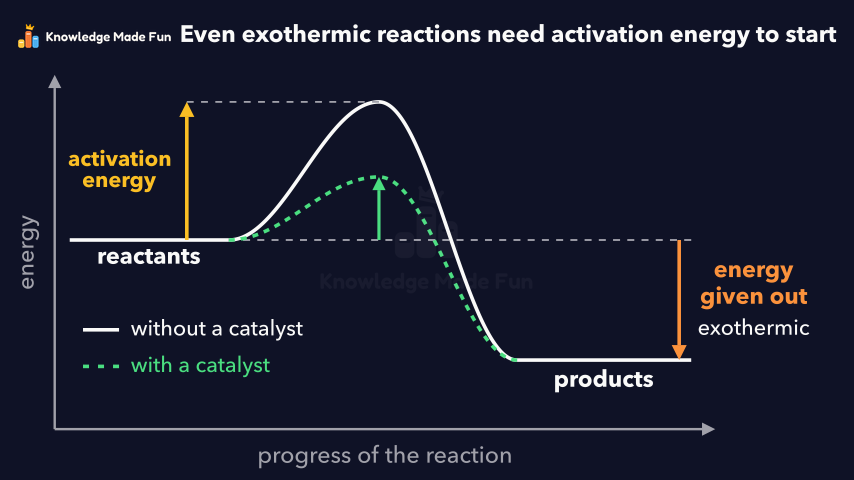 1 min 39 s
Activation energy: the push a reaction needs to start
Grade 10 · 1 min 39 s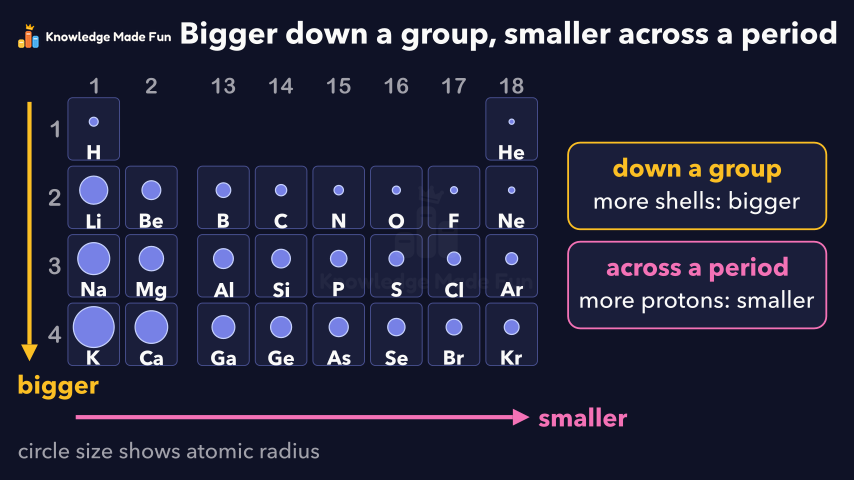 1 min 54 s
Atomic Size: Bigger Down a Group, Smaller Across a Period
Grade 9 · 1 min 54 s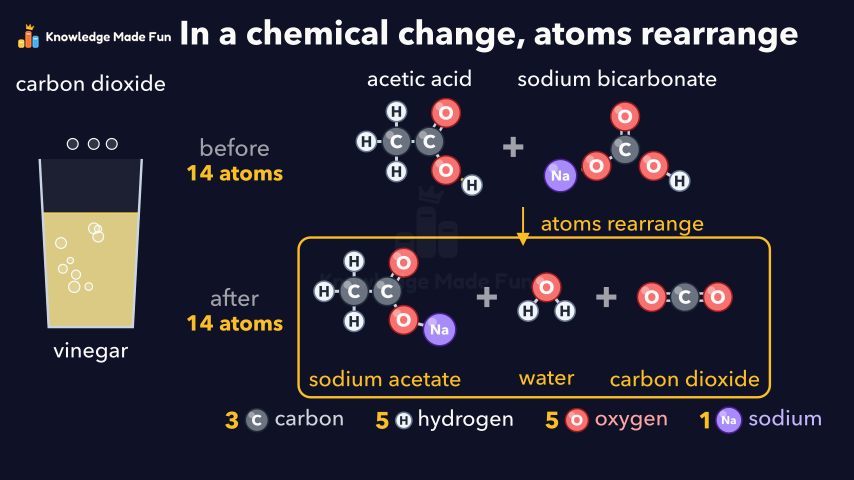 1 min 18 s
Atoms rearrange: vinegar and baking soda
Grade 7 · 1 min 18 s 1 min 16 s
Atoms: What Everything Is Made Of
Grade 7 · 1 min 16 s 2 min 3 s
Balancing Chemical Equations
Grade 10 · 2 min 3 s 1 min 54 s
Bohr Diagrams: Electrons in Shells and Valence Electrons
Grade 9 · 1 min 54 s 1 min 45 s
Brownian motion: evidence that molecules exist
Grade 8 · 1 min 45 s
- All Grade 10 Science lessons
- Create a free account to watch three lessons a day, no payment and no card.