Lesson · Grade 7 · Science
Physical change or chemical change?
- Grade 7
- Science
- 1 min 18 s
- British Columbia
- BC7-SC-17
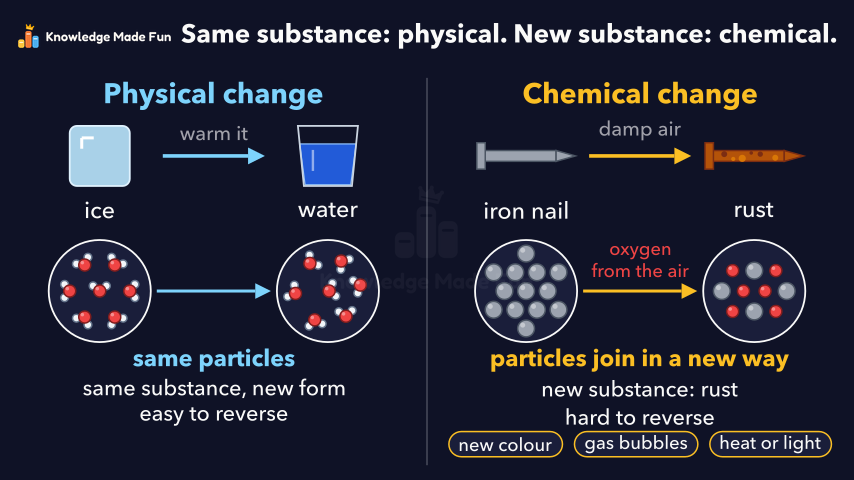
The video builds one two-column diagram: on the left, ice melts into water and a zoom into each shows the same seven water particles, only arranged differently, so the substance is unchanged and the change is physical and easy to reverse. On the right, an iron nail rusts in damp air and the zoom shows iron particles joining with oxygen from the air to form rust, a new substance, so the change is chemical and hard to reverse, with three clue tags (new colour, gas bubbles, heat or light) before the one-line recap "Same substance: physical. New substance: chemical."
Anyone can watch two lessons on the website without an account. Signing in is free, no payment and no card, and opens three a day; Plus has no limit.
Loading
In one sentence
The question this lesson answers
When something changes, is it a physical change or a chemical change? Let us look at two examples.
Here is some ice. Warm it, and it melts into water.
Transcript
What the lesson says
When something changes, is it a physical change or a chemical change? Let us look at two examples.
Here is some ice. Warm it, and it melts into water.
Zoom in on the particles. Each one is still a water particle, just moving more freely.
Only the form changed. It is still water, so this is a physical change.
Freeze the water and you get ice back. Physical changes are usually easy to reverse.
Now an iron nail. Left in damp air, it slowly turns to rust.
Zoom in again. The iron is made of iron particles.
Oxygen from the air joins with the iron, and the particles are put together in a new way.
Rust is a new substance. It is not iron any more, so this is a chemical change.
You cannot simply turn rust back into iron. Chemical changes are hard to reverse.
Clues for a chemical change: a new colour, bubbles of gas, or heat and light given off.
Same substance, physical change. New substance, chemical change.
Curriculum
Where this fits
- British Columbia, Grade 7
Science, Chemistry: chemical changesBC7-SC-17
Previous: How Crystals FormNext: Atoms rearrange: vinegar and baking soda
The outcomes and strands follow the British Columbia curriculum.
Keep going
 1 min 40 s
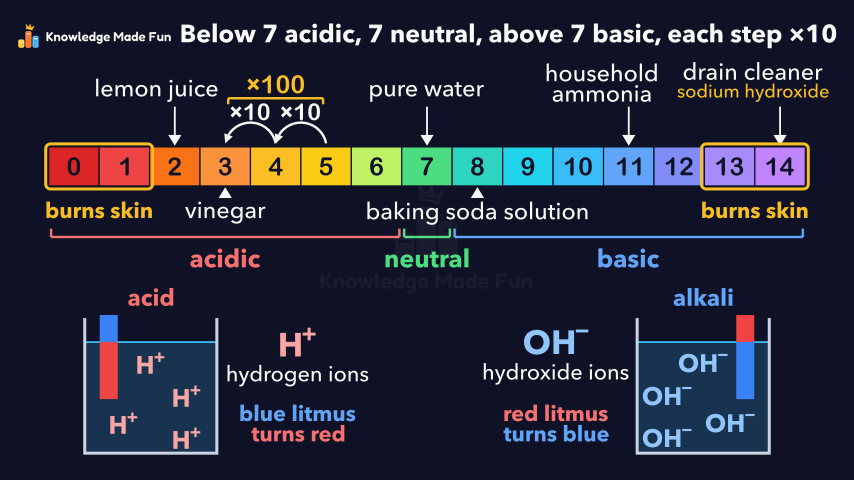
Acids and bases: the pH scale
Grade 10 · 1 min 40 s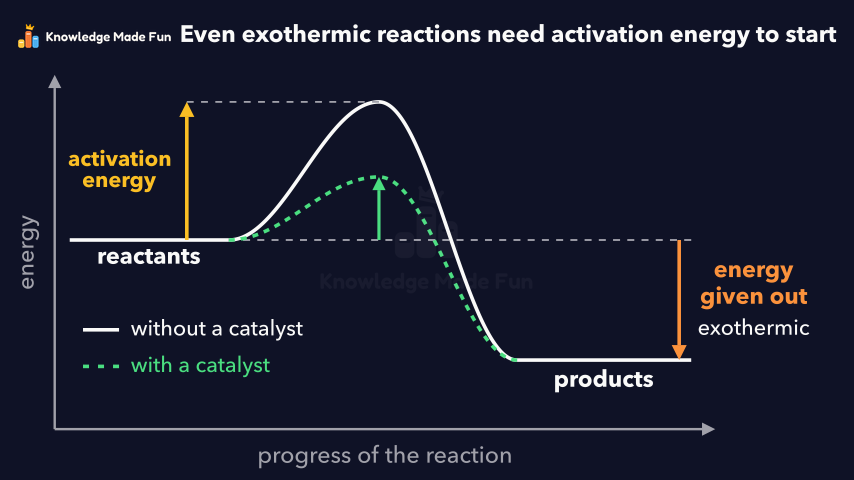 1 min 39 s
Activation energy: the push a reaction needs to start
Grade 10 · 1 min 39 s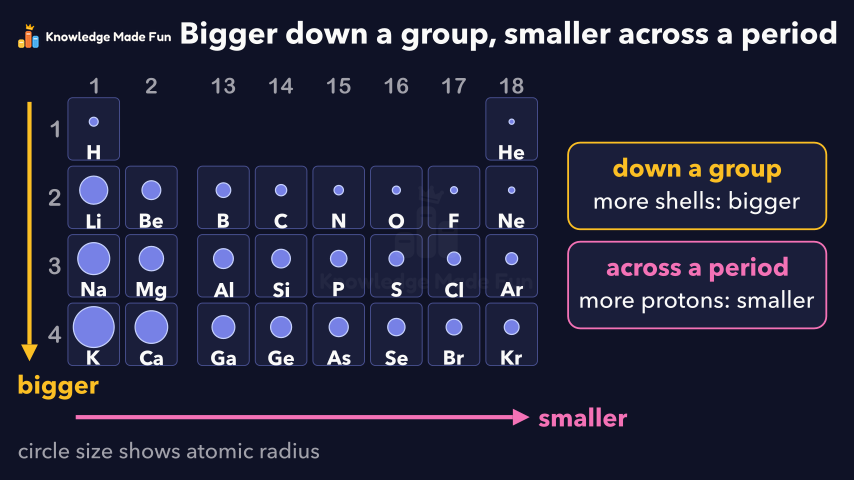 1 min 54 s
Atomic Size: Bigger Down a Group, Smaller Across a Period
Grade 9 · 1 min 54 s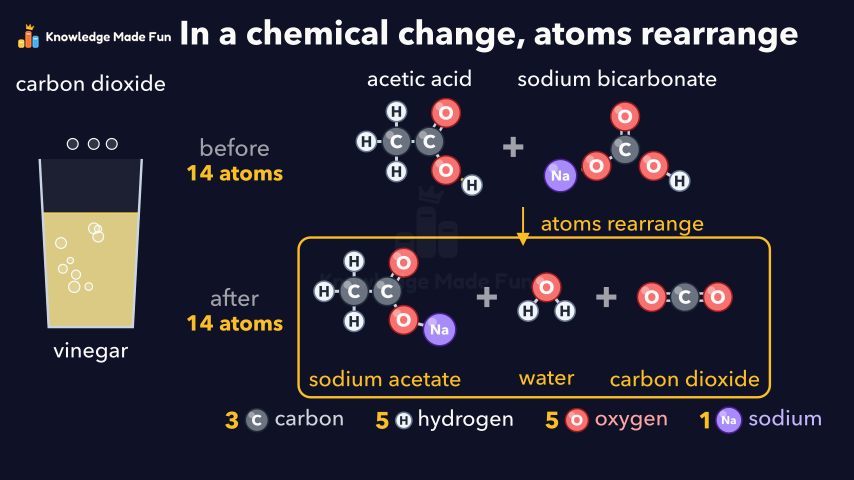 1 min 18 s
Atoms rearrange: vinegar and baking soda
Grade 7 · 1 min 18 s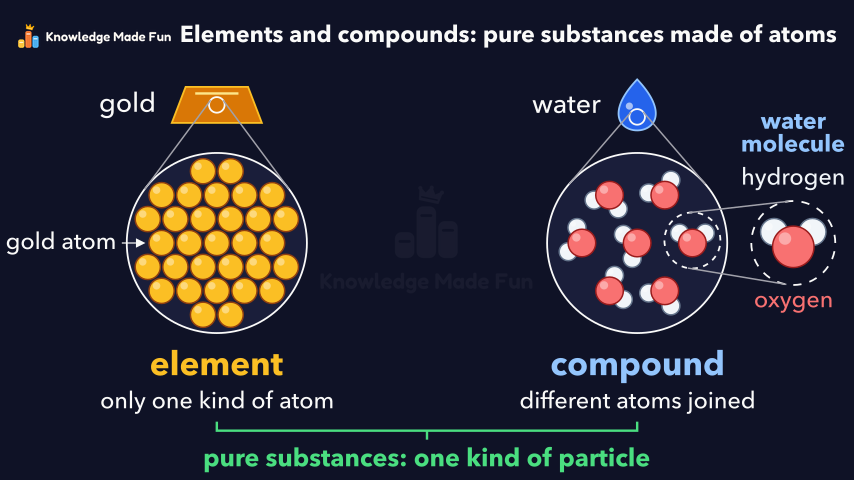 1 min 16 s
Atoms: What Everything Is Made Of
Grade 7 · 1 min 16 s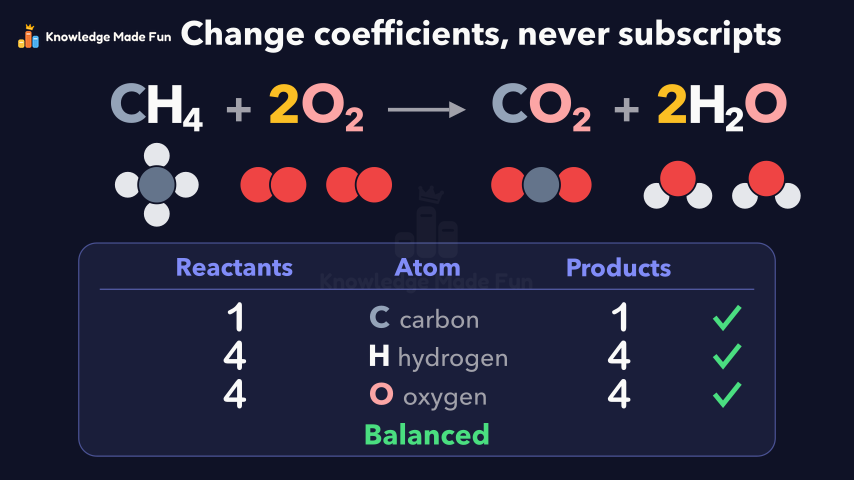 2 min 3 s
Balancing Chemical Equations
Grade 10 · 2 min 3 s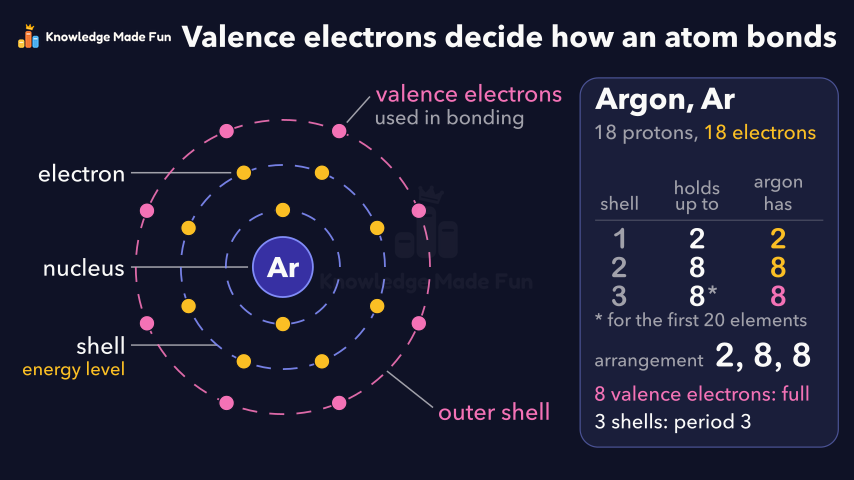 1 min 54 s
Bohr Diagrams: Electrons in Shells and Valence Electrons
Grade 9 · 1 min 54 s 1 min 45 s
Brownian motion: evidence that molecules exist
Grade 8 · 1 min 45 s
- All Grade 7 Science lessons
- Create a free account to watch three lessons a day, no payment and no card.