Lesson · Grade 8 · Science
Layers of the Earth: Crust, Mantle, Outer Core and Inner Core
- Grade 8
- Science
- 1 min 50 s
- British Columbia
- BC8-SC-45
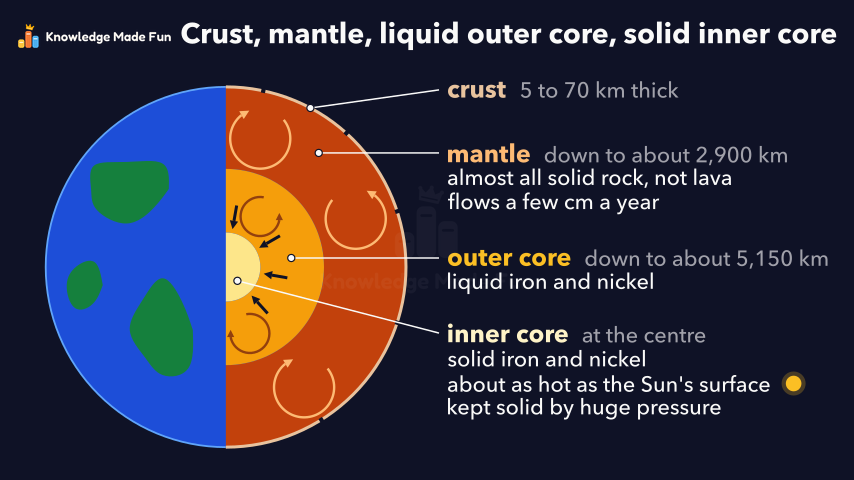
A cut-away of Earth, drawn to scale, shows the thin crust, with a close-up of how thick it is under oceans and continents and how it joins the rigid top of the mantle to form the lithosphere, which is broken into plates. The video then shows that the mantle is solid rock flowing very slowly rather than a sea of lava, that the outer core is liquid iron and nickel, and that the inner core is solid iron and nickel kept solid by huge pressure.
Anyone can watch two lessons on the website without an account. Signing in is free, no payment and no card, and opens three a day; Plus has no limit.
Loading
In one sentence
The question this lesson answers
What is inside our planet, under the ground we stand on?
On average, it is 6,371 kilometres from Earth's surface to its centre.
Transcript
What the lesson says
What is inside our planet, under the ground we stand on?
On average, it is 6,371 kilometres from Earth's surface to its centre.
Imagine cutting Earth open. Inside are four main layers, drawn here to scale.
The outer layer is the crust, the solid rock of the land and the ocean floor.
Drawn to scale, the crust would be thinner than this line, so let's zoom in.
Under the oceans, the crust is only about 5 to 10 kilometres thick.
Under the continents it is about 30 to 70 kilometres thick, thickest under mountains.
The crust and the rigid top of the mantle below it together make up the lithosphere.
The lithosphere is broken into large pieces called tectonic plates.
Below the crust is the mantle, the thickest layer, down to about 2,900 kilometres.
The mantle is not a sea of lava. It is almost all solid rock.
But it is so hot that it flows very slowly, a few centimetres a year.
The outer core goes down to about 5,150 kilometres. It is liquid iron and nickel.
At the centre is the inner core, a solid ball of iron and nickel.
It is about as hot as the surface of the Sun.
Huge pressure from all the layers above keeps it from melting.
So from the outside in: the crust, the mantle, the liquid outer core and the solid inner core.
Curriculum
Where this fits
- British Columbia, Grade 8
Science, Earth science: layers of EarthBC8-SC-45
Previous: Megathrust Earthquakes and Tsunamis: How Cascadia Snapped in 1700Next: How we know what is inside the Earth: seismic waves
The outcomes and strands follow the British Columbia curriculum.
Keep going
 1 min 43 s
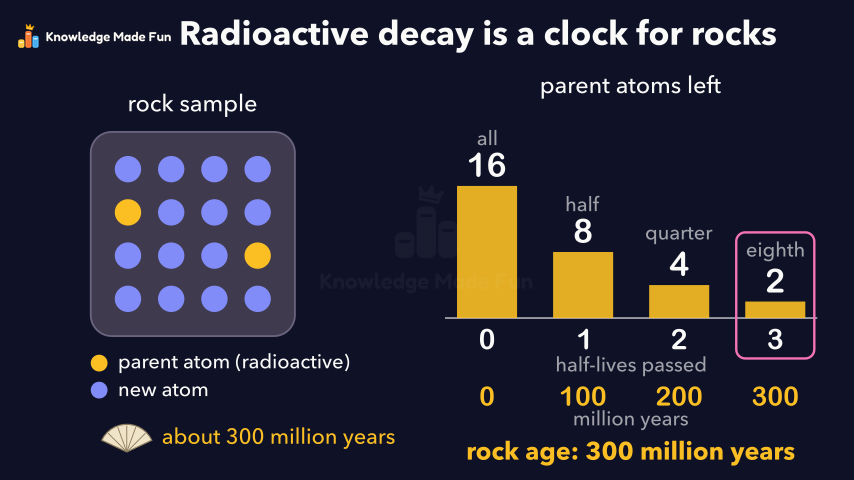
Absolute dating: radioactive decay is a clock for rocks
Grade 7 · 1 min 43 s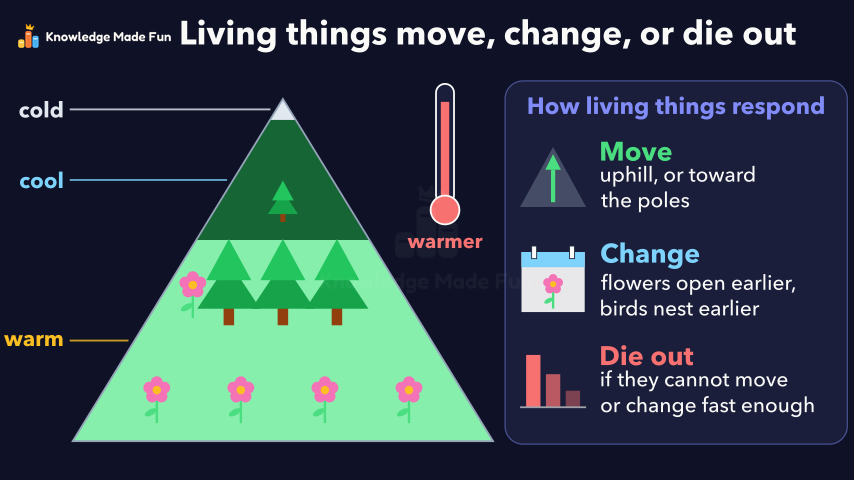 1 min 19 s
Climate Change and Living Things: Move, Change, or Die Out
Grade 7 · 1 min 19 s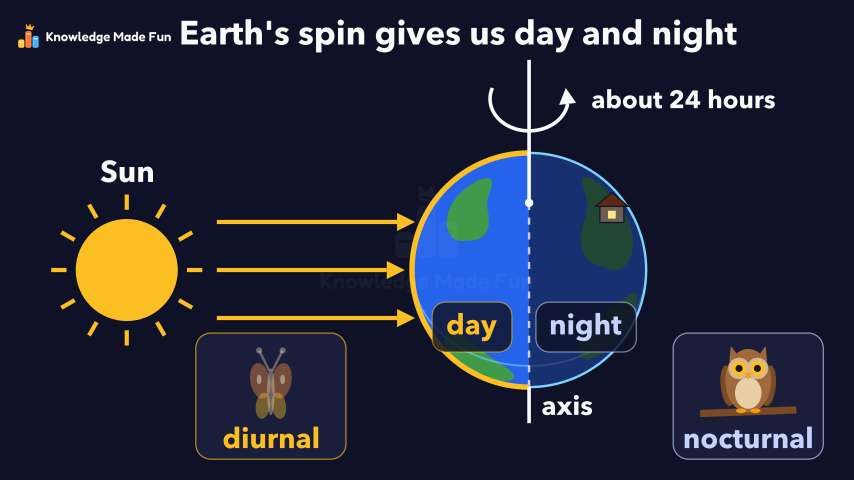 1 min 14 s
Day and Night: Earth Spins on Its Axis
Grade 4 · 1 min 14 s 1 min 50 s
Dynamic equilibrium: balanced but always changing
Grade 9 · 1 min 50 s 1 min 11 s
Earth Materials: From Boulders to Clay
Grade 5 · 1 min 11 s 1 min 11 s
Erosion and Deposition: How Wind, Water and Ice Move Land
Grade 3 · 1 min 11 s 1 min 53 s
From quarks to galaxies: how the universe's matter formed
Grade 10 · 1 min 53 s 47 s
Hot, Warm, Cool and Cold: What Do We Wear?
Kindergarten · 47 s
- All Grade 8 Science lessons
- Create a free account to watch three lessons a day, no payment and no card.