Lesson · Grade 8 · Science
How one case becomes thousands: the reproduction number
- Grade 8
- Science
- 1 min 56 s
- British Columbia
- BC8-SC-20
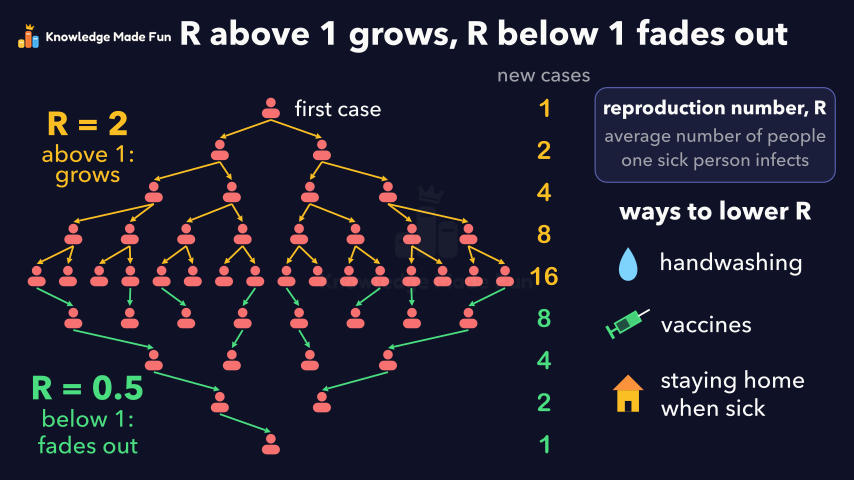
A tree of cases grows round by round with R = 2, from 1 first case to 2, 4, 8 and 16 new cases, so the 10th round alone would have 1,024 new cases and more than 2,000 people would be infected in all. Measles (R about 12 to 18 where nobody is immune) shows how high R can be, and then handwashing, vaccines and staying home when sick bring R down to 0.5, so the tree narrows to 8, 4, 2 and 1: R above 1 grows, R below 1 fades out.
Anyone can watch two lessons on the website without an account. Signing in is free, no payment and no card, and opens three a day; Plus has no limit.
Loading
In one sentence
The question this lesson answers
How can one sick person lead to thousands of cases?
Suppose each sick person passes the infection on to 2 other people. That is the first round of new cases.
Transcript
What the lesson says
How can one sick person lead to thousands of cases?
Suppose each sick person passes the infection on to 2 other people. That is the first round of new cases.
The average number of people that one sick person infects is called the reproduction number, or R.
In this example, R is 2.
Each round doubles the one before: 4 new cases, then 8, then 16.
If it keeps doubling, the tenth round alone has 1,024 new cases.
Add up all the rounds, and more than 2,000 people have been infected.
So a few cases are worth taking seriously: they can grow into an epidemic, a disease spreading to many people in a short time.
Whenever R is above 1, each round is bigger than the last, so the number of cases grows.
Some diseases have a much bigger R. Measles is one of the most contagious diseases, which means it spreads very easily.
Where nobody is immune, or protected against it, one person with measles infects about 12 to 18 others.
Some ways to lower R are handwashing, vaccines and staying home when sick.
Suppose they bring R down to 0.5: only half of the sick people pass it on, to one person each.
Now each round is half the size of the last: 8, then 4, then 2, then 1.
When R is below 1, each round is smaller than the last, so the cases fade out.
So R above 1 means cases grow, and R below 1 means they fade out.
Curriculum
Where this fits
- British Columbia, Grade 8
Science, Biology: the relationship of micro-organisms with living things: impacts of epidemics and pandemics on human populationsBC8-SC-20
Previous: Epidemics and pandemics: how far a disease spreads
The outcomes and strands follow the British Columbia curriculum.
Keep going
 1 min 3 s
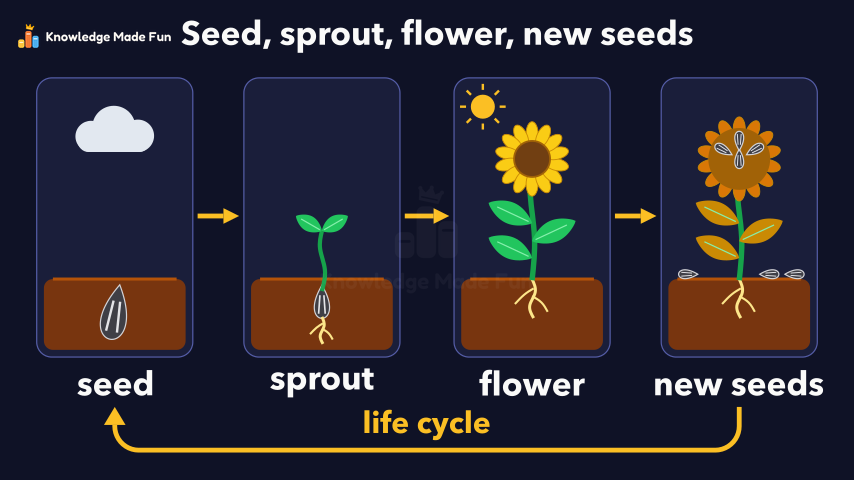
A Sunflower's Life Cycle: Seed, Sprout, Flower, Seed
Kindergarten · 1 min 3 s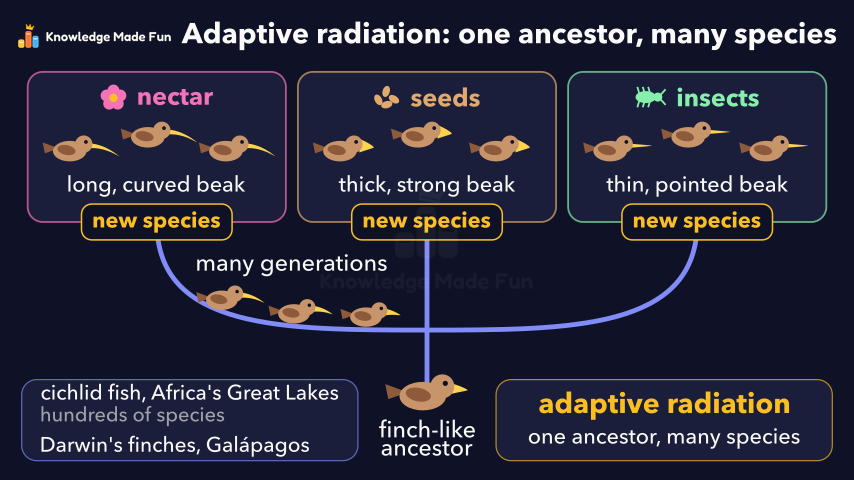 1 min 48 s
Adaptive radiation: one ancestor, many species
Grade 10 · 1 min 48 s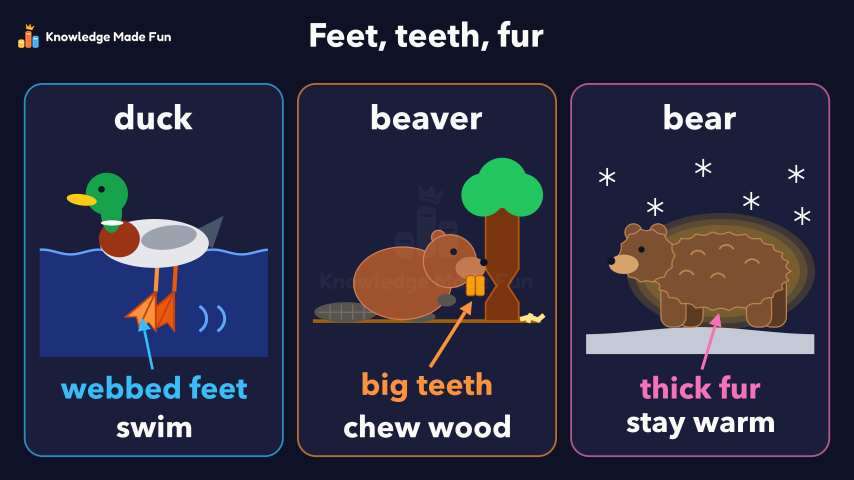 52 s
Animal Bodies That Help Them Live: Feet, Teeth and Fur
Kindergarten · 52 s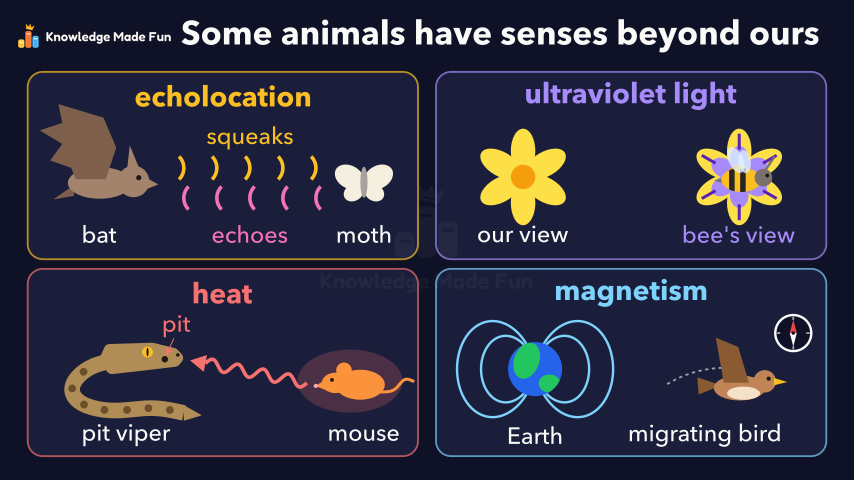 1 min 3 s
Animal senses beyond ours: echolocation, ultraviolet light, heat and magnetism
Grade 4 · 1 min 3 s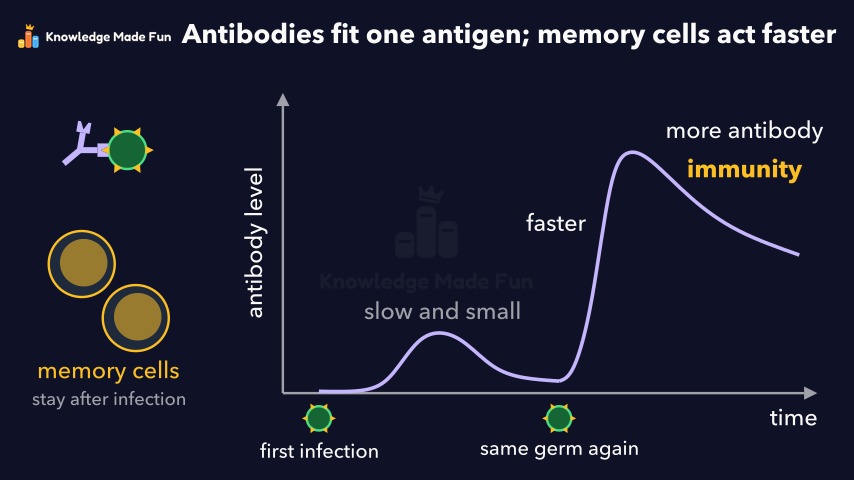 1 min 44 s
Antibodies and Memory Cells: The Body's Targeted Defence
Grade 8 · 1 min 44 s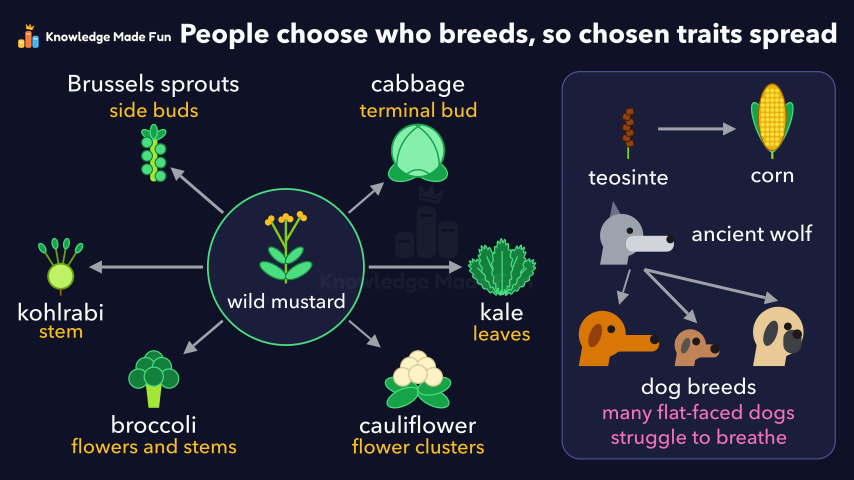 1 min 44 s
Artificial selection: people choose the traits
Grade 10 · 1 min 44 s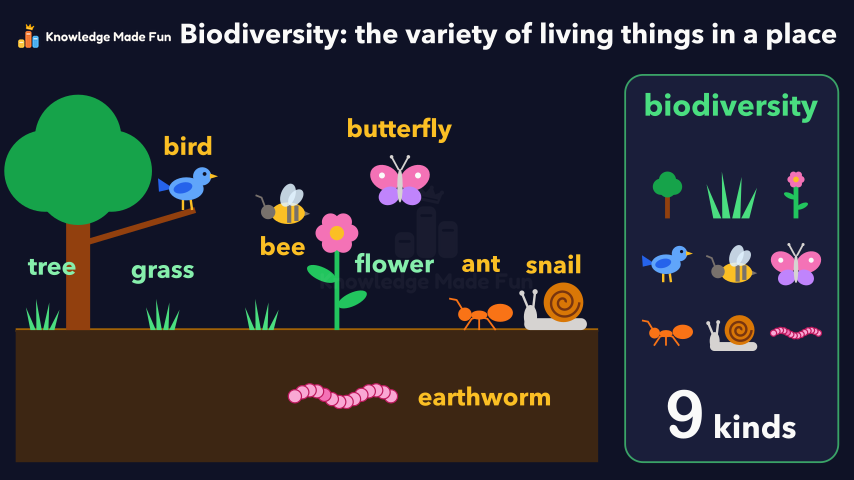 1 min 4 s
Biodiversity: The Variety of Living Things
Grade 3 · 1 min 4 s 1 min 8 s
Biomes: Sorted by Temperature and Precipitation
Grade 4 · 1 min 8 s
- All Grade 8 Science lessons
- Create a free account to watch three lessons a day, no payment and no card.