Lesson · Grade 10 · Science
Efficiency: where the wasted energy goes
- Grade 10
- Science
- 1 min 59 s
- British Columbia
- BC10-SC-41
A Sankey diagram builds up step by step: 100 J of electrical energy goes into an incandescent bulb, where only 5 J becomes useful light and 95 J becomes wasted heat. The video works out efficiency = useful energy out ÷ total energy in × 100% for the bulb (5%) and an LED (20%) and redraws the diagram for a gasoline car (about 20 to 25 J of every 100 J moves it). It shows that wasted energy is not destroyed but spreads out as heat, why resistance and friction cause it, and that efficient devices save money and can cut pollution.
Concept: Efficiency: why every energy change wastes some heat
Anyone can watch two lessons on the website without an account. Signing in is free, no payment and no card, and opens three a day; Plus has no limit.
Loading
In one sentence
The question this lesson answers
When a device changes energy from one form to another, where does it all go?
An incandescent bulb makes light by heating a thin wire. Say 100 joules of electrical energy go in.
Transcript
What the lesson says
When a device changes energy from one form to another, where does it all go?
An incandescent bulb makes light by heating a thin wire. Say 100 joules of electrical energy go in.
Only about 5 joules come out as light, the useful energy we want.
The other 95 joules become thermal energy, or heat. We did not want it, so it is wasted.
In this Sankey diagram, each arrow's width shows how much energy it carries.
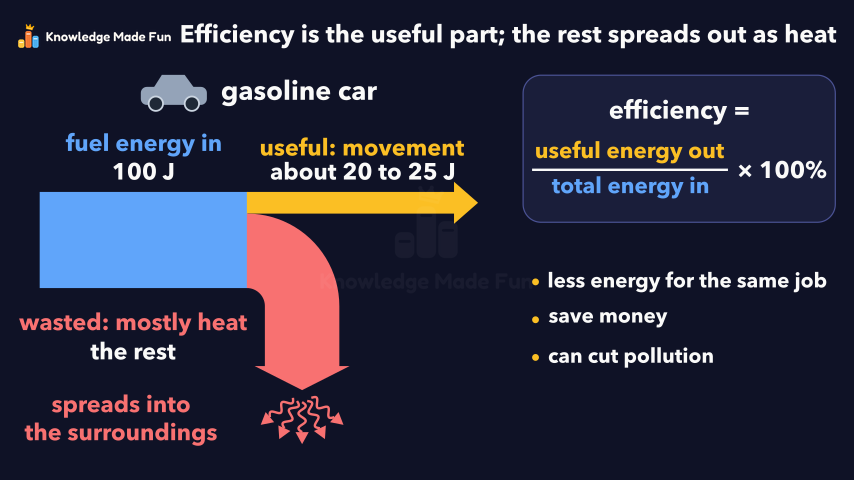
Efficiency is useful energy out, divided by total energy in, times 100 percent.
For the bulb, 5 joules divided by 100 joules, times 100 percent, is 5 percent.
Is the wasted energy destroyed? No: 5 joules plus 95 joules still makes all 100 joules.
The heat spreads out into the surroundings, where it is very hard to use again.
Electrical resistance warms wires carrying a current, and friction warms rubbing parts, so nearly every machine wastes heat.
An LED, or light emitting diode, gives the same 5 joules of light from about 25 joules.
Only 20 joules are wasted: 5 divided by 25, times 100 percent, is 20 percent.
A gasoline car moves using only about 20 to 25 of every 100 joules of fuel energy; the rest is wasted, mostly as heat.
Efficient devices need less energy for the same job, so they save money and can cut pollution.
Efficiency is the useful part of the energy; the rest is not destroyed, it spreads out as heat.
Curriculum
Where this fits
- British Columbia, Grade 10
Science 10, Physics: local and global impacts of energy transformations from technologiesBC10-SC-41
Previous: Specific heat capacity: Q = mcΔTNext: Local and global impacts of energy technologies
- British Columbia, Grade 11
Physics 11, Energy: power and efficiencyBC11-SC-215
Previous: Conservation of Energy: Tracking the TotalNext: Specific heat capacity: Q = mcΔT
This lesson is also listed in Grade 11.
The outcomes and strands follow the British Columbia curriculum.
Keep going
 1 min 51 s
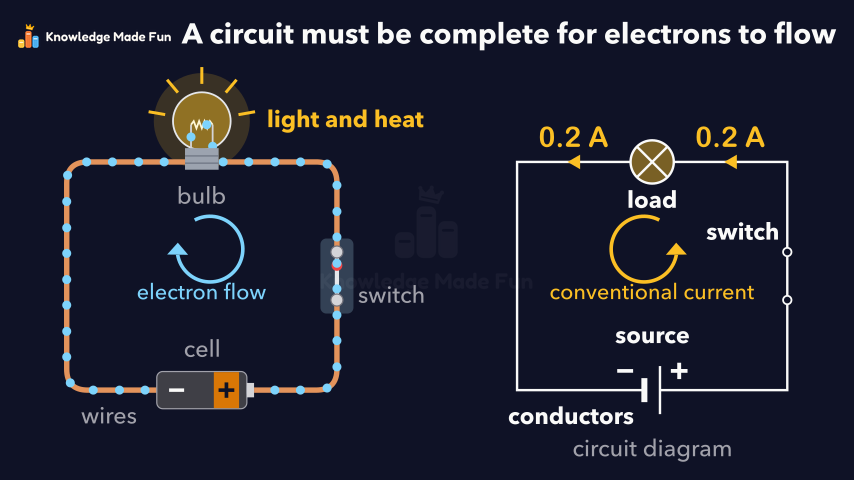
A Complete Circuit: Source, Load, Conductors and Switch
Grade 9 · 1 min 51 s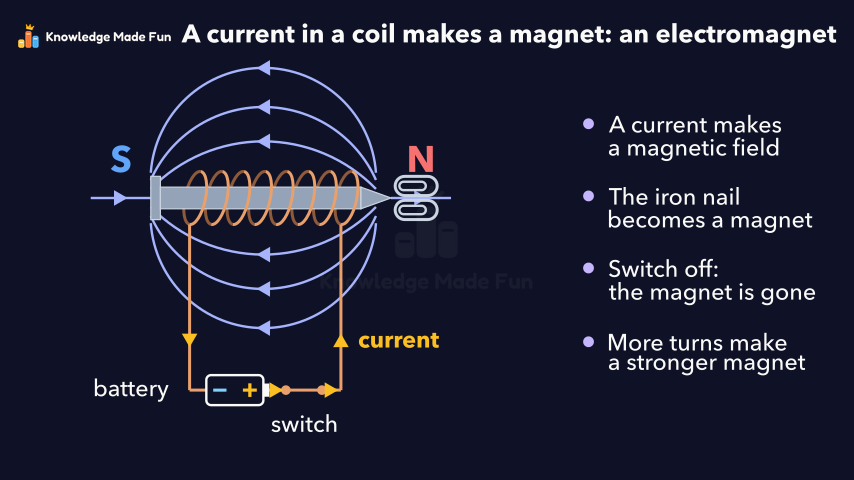 1 min 18 s
A current makes a magnet: the electromagnet
Grade 7 · 1 min 18 s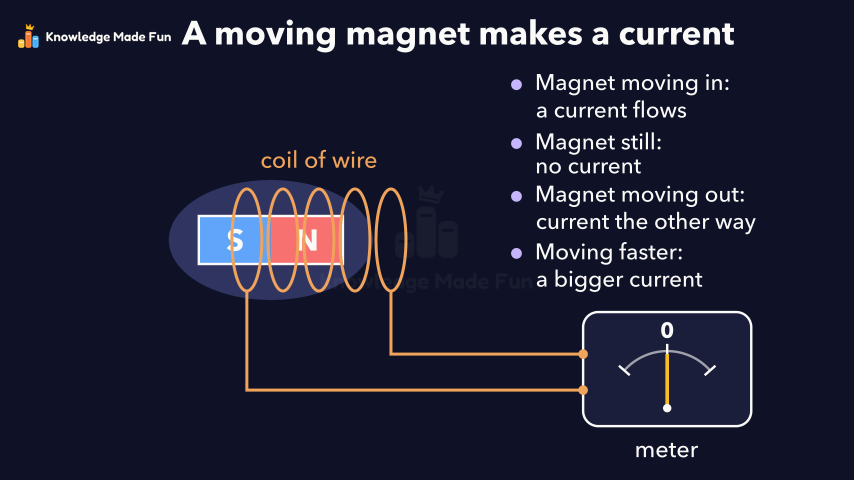 1 min 12 s
A Moving Magnet Makes a Current
Grade 7 · 1 min 12 s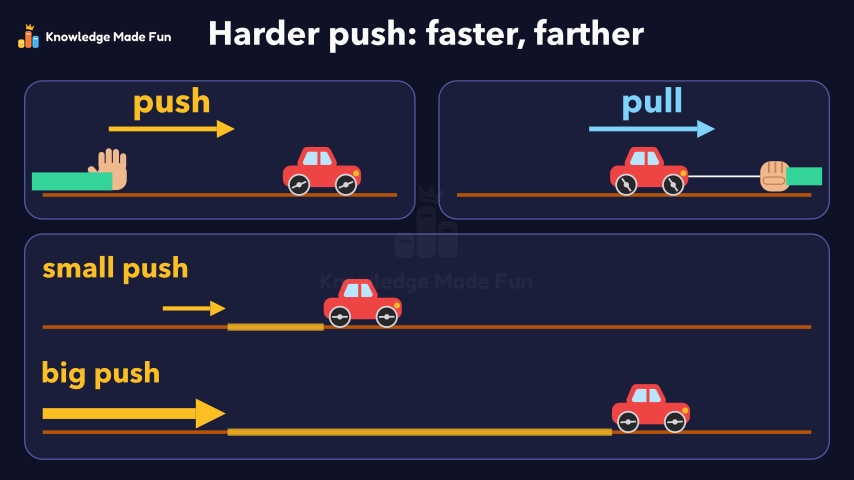 54 s
A Push or a Pull Makes Things Move
Kindergarten · 54 s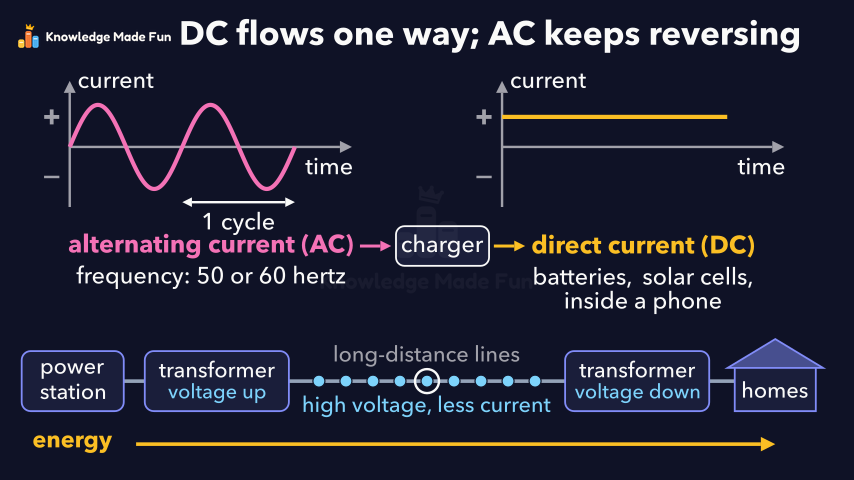 1 min 48 s
AC and DC: Two Ways Current Can Flow
Grade 9 · 1 min 48 s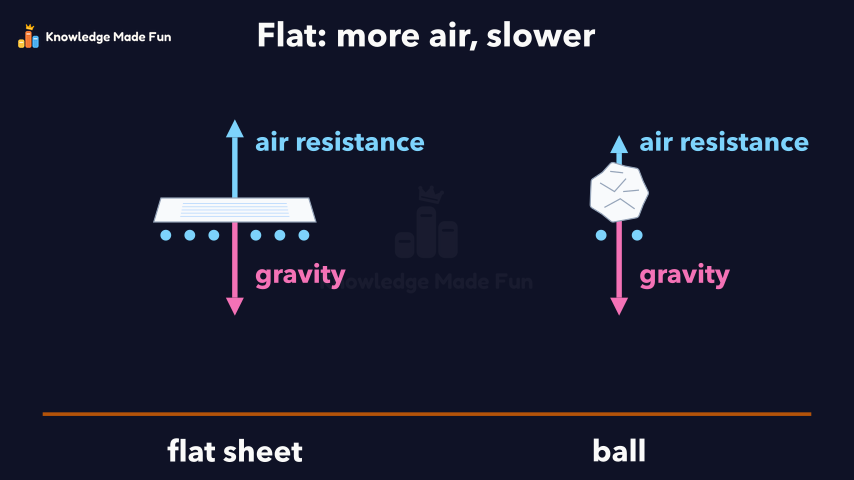 1 min 3 s
Air Resistance: Why a Flat Sheet Falls Slower
Grade 2 · 1 min 3 s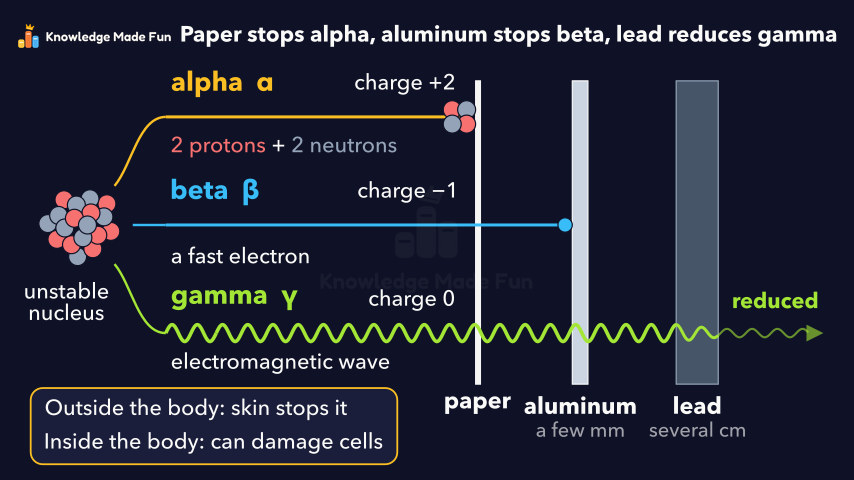 1 min 40 s
Alpha, Beta and Gamma Radiation
Grade 10 · 1 min 40 s 1 min 6 s
Balanced and Unbalanced Forces in Sport and Play
Grade 6 · 1 min 6 s
- All Grade 10 Science lessons
- Create a free account to watch three lessons a day, no payment and no card.