Lesson · Grade 2 · Science
Air Resistance: Why a Flat Sheet Falls Slower
- Grade 2
- Science
- 1 min 3 s
- British Columbia
- BC2-SC-10
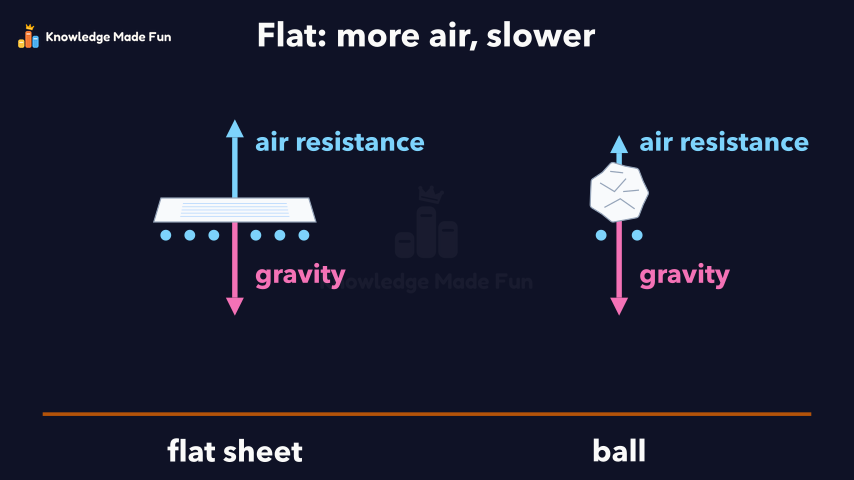
Two sheets of the same paper are dropped together, one flat and one crumpled into a ball, and the ball lands first while the flat sheet flutters down. A labelled diagram then builds up one step at a time: gravity pulls both down the same, air resistance pushes up, and the wide sheet hits lots of air so it falls slowly, while the small ball hits less air and falls faster.
Concept: Air resistance: why shape changes how things fall
Anyone can watch two lessons on the website without an account. Signing in is free, no payment and no card, and opens three a day; Plus has no limit.
Loading
In one sentence
The question this lesson answers
Here are two sheets of paper, just the same.
Keep one sheet flat. Crumple the other into a ball.
Transcript
What the lesson says
Here are two sheets of paper, just the same.
Keep one sheet flat. Crumple the other into a ball.
If we drop them together, which lands first?
Ready? Let's drop them both together.
The ball landed first! The flat sheet fluttered down slowly.
Why? Let's look at them while they fall.
Gravity pulls both of them down, just the same.
Air pushes up on them as they fall.
This push from the air is called air resistance.
The wide flat sheet hits lots of air.
Lots of air pushes up, so it falls slowly.
The small ball hits much less air.
Less air pushes up, so it falls faster.
Flat paper catches more air, so it falls slower.
Curriculum
Where this fits
- British Columbia, Grade 2
Science, Physics: types of forcesBC2-SC-10
Previous: Forces That Work Without TouchingNext: Sliding on Ice, Carpet and Sand
The outcomes and strands follow the British Columbia curriculum.
Keep going
 1 min 51 s
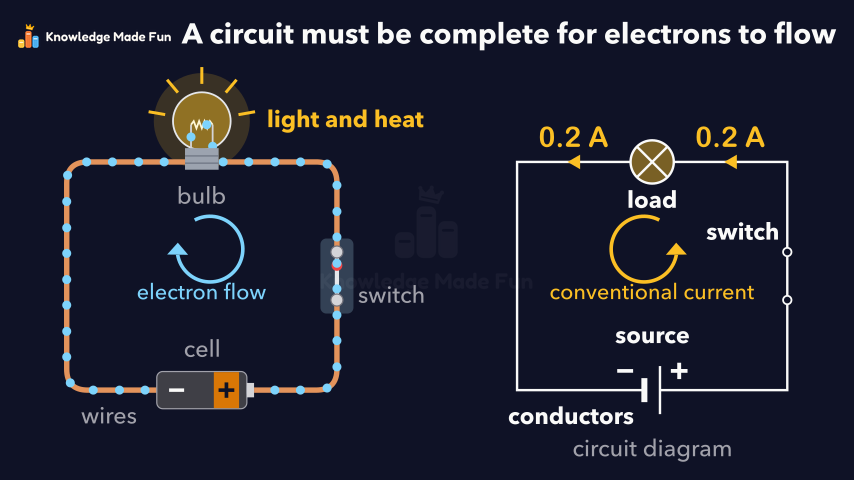
A Complete Circuit: Source, Load, Conductors and Switch
Grade 9 · 1 min 51 s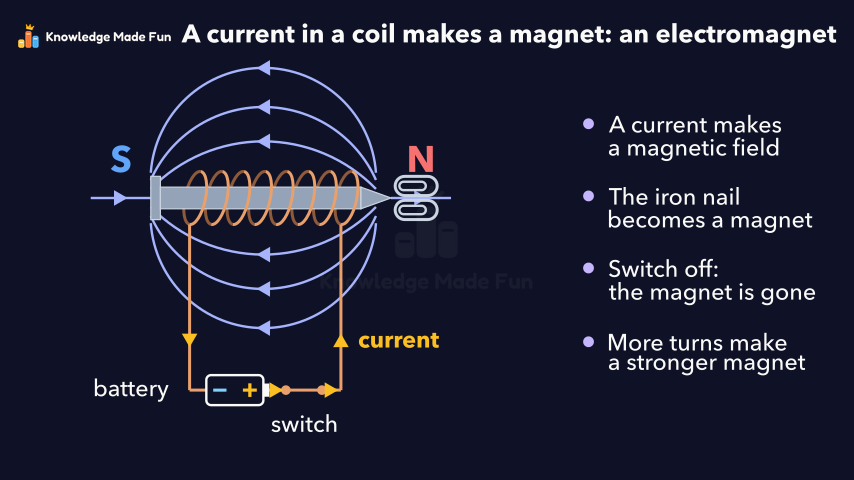 1 min 18 s
A current makes a magnet: the electromagnet
Grade 7 · 1 min 18 s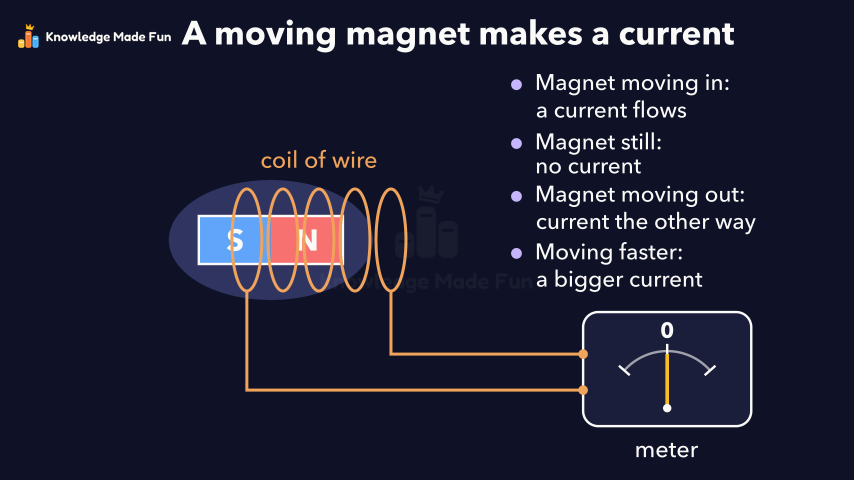 1 min 12 s
A Moving Magnet Makes a Current
Grade 7 · 1 min 12 s 54 s
A Push or a Pull Makes Things Move
Kindergarten · 54 s 1 min 48 s
AC and DC: Two Ways Current Can Flow
Grade 9 · 1 min 48 s 1 min 40 s
Alpha, Beta and Gamma Radiation
Grade 10 · 1 min 40 s 1 min 6 s
Balanced and Unbalanced Forces in Sport and Play
Grade 6 · 1 min 6 s 1 min 48 s
Cameras, Microscopes and Telescopes: Tools That Extend Our Sight
Grade 8 · 1 min 48 s
- All Grade 2 Science lessons
- Create a free account to watch three lessons a day, no payment and no card.