Lesson · Grade 6 · Science
Balanced and Unbalanced Forces in Sport and Play
- Grade 6
- Science
- 1 min 6 s
- British Columbia
- BC6-SC-13
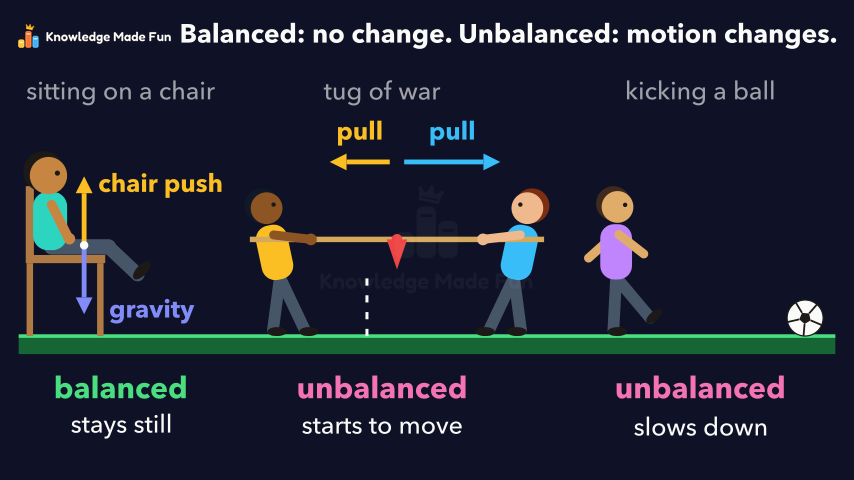
One labelled diagram on a strip of grass builds up three everyday examples, with each force drawn as an arrow whose length shows its strength: sitting on a chair (gravity and the chair's push are equal, so the forces are balanced and you stay still), tug of war (equal pulls keep the rope still, but a harder pull makes the forces unbalanced and the rope starts to move), and kicking a ball (the kick makes the ball speed up, then friction slows it to a stop). It ends on the recap that balanced forces do not change motion but unbalanced forces do.
Anyone can watch two lessons on the website without an account. Signing in is free, no payment and no card, and opens three a day; Plus has no limit.
Loading
In one sentence
The question this lesson answers
Do forces always make things move?
When you sit on a chair, gravity pulls you down.
Transcript
What the lesson says
Do forces always make things move?
When you sit on a chair, gravity pulls you down.
The chair pushes up on you just as hard, so its arrow is just as long.
Equal forces in opposite directions are balanced, so you stay still.
In tug of war, two players pull the rope in opposite directions.
When both pulls are equal, the forces are balanced and the rope stays still.
Now the player on the right pulls harder.
The forces are now unbalanced, so the rope starts to move toward the stronger pull.
When you kick a ball, your foot gives it a big push.
Nothing pushes back as hard, so the forces are unbalanced and the ball speeds up.
As the ball rolls, friction from the grass pushes back on it.
This unbalanced force slows the ball down until it stops.
Balanced forces do not change motion, but unbalanced forces do.
Curriculum
Where this fits
- British Columbia, Grade 6
Science, Physics: effects of balanced and unbalanced forces in daily physical activitiesBC6-SC-13
Previous: Newton's Third Law: Equal and Opposite ForcesNext: Gravity: Every Object Pulls on Every Other Object
The outcomes and strands follow the British Columbia curriculum.
Keep going
 1 min 51 s
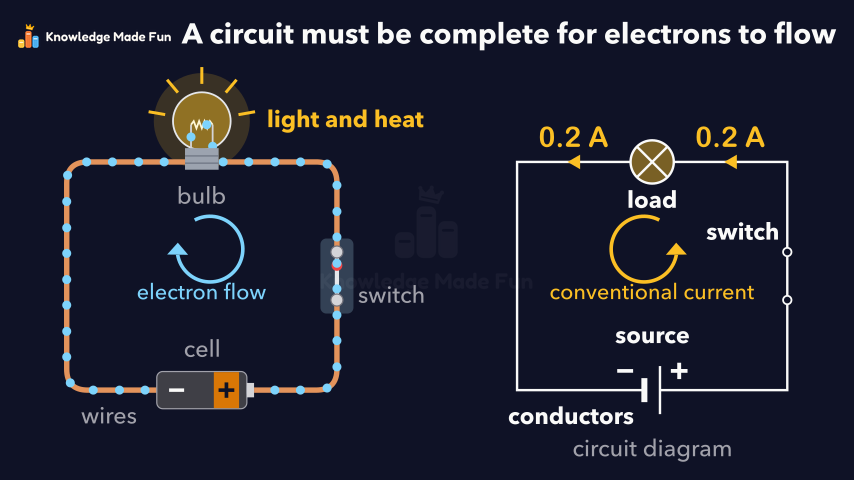
A Complete Circuit: Source, Load, Conductors and Switch
Grade 9 · 1 min 51 s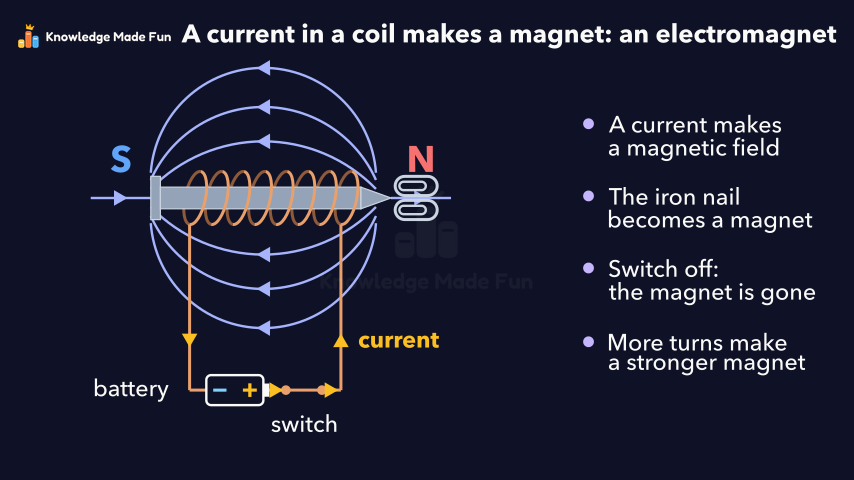 1 min 18 s
A current makes a magnet: the electromagnet
Grade 7 · 1 min 18 s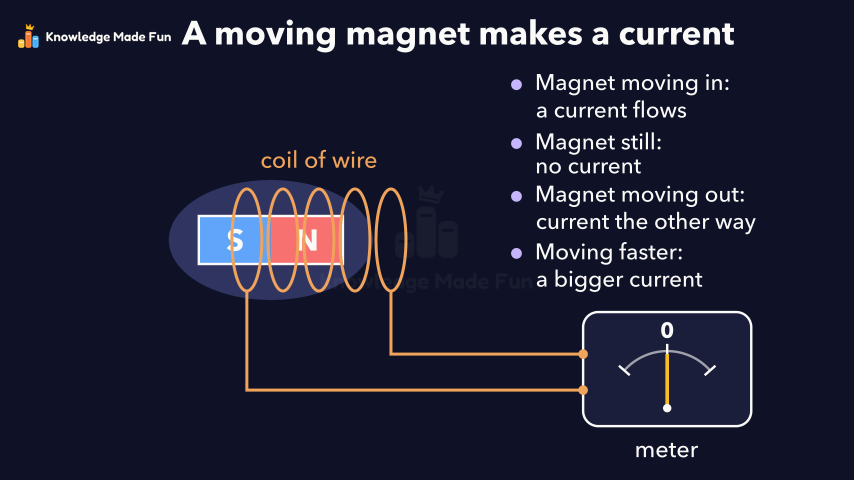 1 min 12 s
A Moving Magnet Makes a Current
Grade 7 · 1 min 12 s 54 s
A Push or a Pull Makes Things Move
Kindergarten · 54 s 1 min 48 s
AC and DC: Two Ways Current Can Flow
Grade 9 · 1 min 48 s 1 min 3 s
Air Resistance: Why a Flat Sheet Falls Slower
Grade 2 · 1 min 3 s 1 min 40 s
Alpha, Beta and Gamma Radiation
Grade 10 · 1 min 40 s 1 min 48 s
Cameras, Microscopes and Telescopes: Tools That Extend Our Sight
Grade 8 · 1 min 48 s
- All Grade 6 Science lessons
- Create a free account to watch three lessons a day, no payment and no card.