Lesson · Grade 10 · Science
Specific heat capacity: Q = mcΔT
- Grade 10
- Science
- 2 min 5 s
- British Columbia
- BC10-SC-40
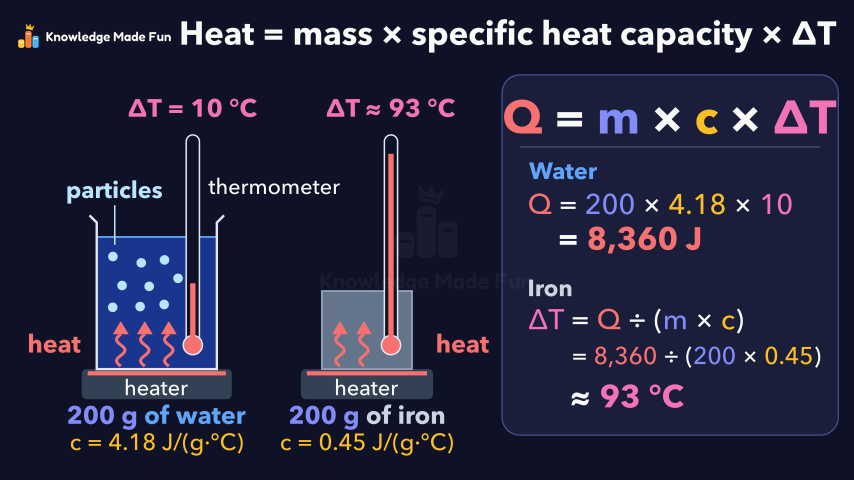
A beaker of 200 g of water on a heater builds up step by step: its moving particles and a thermometer show what temperature is, and heat arrows from the heater show that heat is energy that flows because of a temperature difference, so the two are not the same thing. The formula Q = m × c × ΔT is then explained term by term and worked out for the water (8,360 J for a 10 °C rise), and the same heat warms 200 g of iron by about 93 °C, which shows why water's high c helps oceans keep coastal weather mild.
Anyone can watch two lessons on the website without an account. Signing in is free, no payment and no card, and opens three a day; Plus has no limit.
Loading
In one sentence
The question this lesson answers
How much energy does it take to warm 200 grams of water?
Water is made of tiny particles that are always moving.
Transcript
What the lesson says
How much energy does it take to warm 200 grams of water?
Water is made of tiny particles that are always moving.
A thermometer measures temperature: the average kinetic energy, or energy of motion, of the particles.
Heat is energy that flows because of a temperature difference: here, from the hot heater into the water.
As heat flows in, the particles move faster on average and the temperature rises.
So heat and temperature are not the same: heat is energy on the move, temperature measures average kinetic energy.
The heat needed is Q equals m times c times delta T.
Q is the heat, in joules, and m is the mass, in grams.
c is the specific heat capacity: the energy to warm 1 gram by 1 degree Celsius.
Water's c is 4.18 joules per gram per degree Celsius, which is very high.
Delta T is the temperature change: our water warmed by 10 degrees.
So for our water, Q is 200 times 4.18 times 10, which is 8,360 joules.
Now give the same 8,360 joules to 200 grams of iron, whose c is only about 0.45.
To find delta T, divide Q by m times c: 8,360 divided by 200 times 0.45.
The iron warms by about 93 degrees, over nine times as much as the water.
Water's high c means oceans warm and cool slowly, which helps keep coastal weather mild.
In short: heat equals mass times specific heat capacity times temperature change.
Curriculum
Where this fits
- British Columbia, Grade 10
Science 10, Physics: transformation of energyBC10-SC-40
Previous: Open and Closed Systems: Following Energy Across the BoundaryNext: Efficiency: where the wasted energy goes
- British Columbia, Grade 11
Physics 11, Energy: thermal equilibrium and specific heat capacityBC11-SC-227
- British Columbia, Grade 11
Science For Citizens 11, Science at work: applications of materials scienceBC11-SC-305
This lesson is also listed in Grade 11.
The outcomes and strands follow the British Columbia curriculum.
Keep going
 1 min 51 s
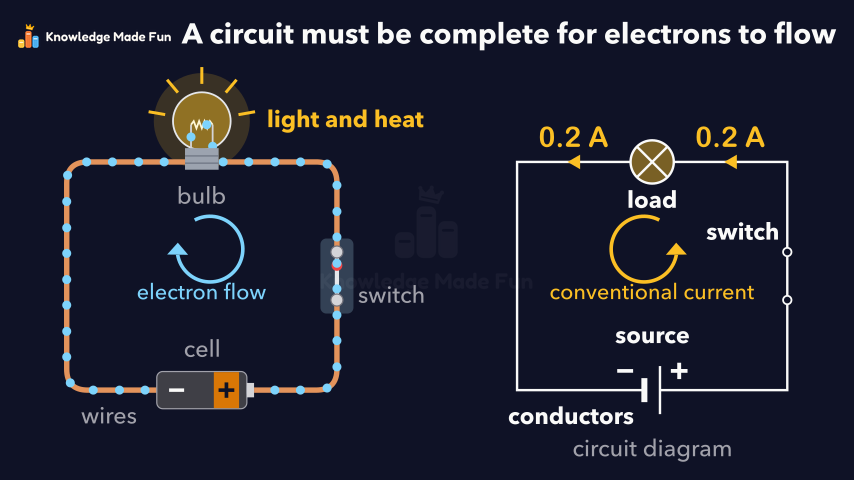
A Complete Circuit: Source, Load, Conductors and Switch
Grade 9 · 1 min 51 s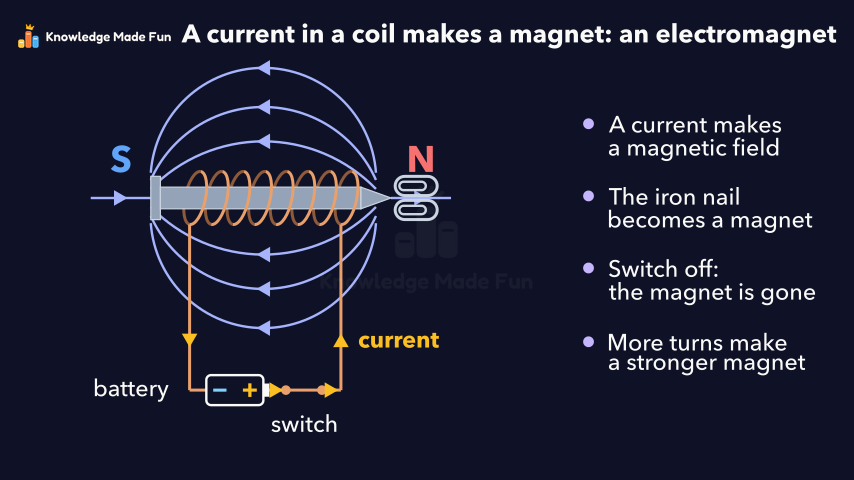 1 min 18 s
A current makes a magnet: the electromagnet
Grade 7 · 1 min 18 s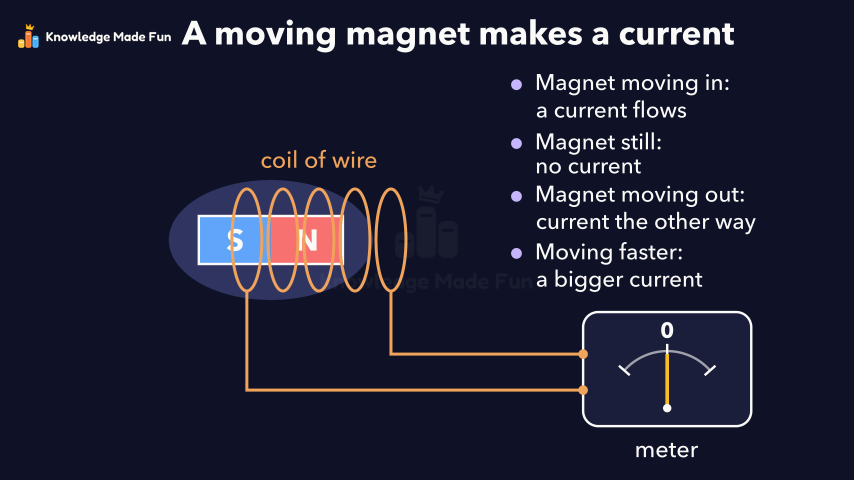 1 min 12 s
A Moving Magnet Makes a Current
Grade 7 · 1 min 12 s 54 s
A Push or a Pull Makes Things Move
Kindergarten · 54 s 1 min 48 s
AC and DC: Two Ways Current Can Flow
Grade 9 · 1 min 48 s 1 min 3 s
Air Resistance: Why a Flat Sheet Falls Slower
Grade 2 · 1 min 3 s 1 min 40 s
Alpha, Beta and Gamma Radiation
Grade 10 · 1 min 40 s 1 min 6 s
Balanced and Unbalanced Forces in Sport and Play
Grade 6 · 1 min 6 s
- All Grade 10 Science lessons
- Create a free account to watch three lessons a day, no payment and no card.