Lesson · Grade 10 · Science
Combustion: where does the fuel go?
- Grade 10
- Science
- 1 min 52 s
- British Columbia
- BC10-SC-21
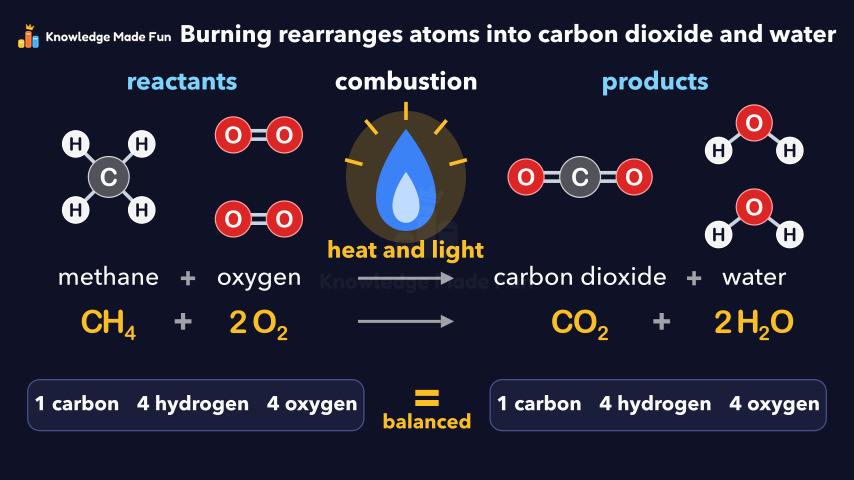
A methane molecule and two oxygen molecules break apart in a blue gas flame, and the same atoms join up again as one carbon dioxide and two water molecules, giving out heat and light. The names and formulas under the molecules become the equation CH4 + 2O2 → CO2 + 2H2O, the atoms are counted on both sides (1 carbon, 4 hydrogen, 4 oxygen) to show nothing disappears, and a final card shows that with too little oxygen some carbon becomes carbon monoxide or soot, which is why homes need carbon monoxide alarms.
Concept: Combustion: fuel and oxygen make carbon dioxide and water
Anyone can watch two lessons on the website without an account. Signing in is free, no payment and no card, and opens three a day; Plus has no limit.
Loading
In one sentence
The question this lesson answers
When fuel burns, it seems to vanish. So where does it go?
Burning is called combustion: a fuel reacting with oxygen.
Transcript
What the lesson says
When fuel burns, it seems to vanish. So where does it go?
Burning is called combustion: a fuel reacting with oxygen.
Natural gas is mostly methane, a hydrocarbon: a compound of only hydrogen and carbon.
It reacts with two oxygen molecules from the air.
In the flame, the bonds that hold these atoms together break.
The atoms then join up in new ways: carbon bonds to two oxygens, making carbon dioxide.
The hydrogens bond to the other two oxygens, making two molecules of water.
Making the new bonds releases more energy than breaking the old ones took, giving out heat and light.
The starting substances are the reactants, and the new substances are the products.
In symbols, one methane and two oxygen molecules give one carbon dioxide and two water molecules.
Count the atoms on each side: one carbon, four hydrogen and four oxygen, before and after.
No atoms are made or destroyed, only rearranged, so the equation balances.
So the fuel does not disappear: its atoms leave as invisible gases, carbon dioxide and water vapour.
With too little oxygen, combustion is incomplete: some carbon becomes carbon monoxide or soot.
Carbon monoxide is a colourless, odourless poison, so homes need carbon monoxide alarms.
So burning rearranges atoms: with enough oxygen, a hydrocarbon and oxygen become carbon dioxide and water.
Curriculum
Where this fits
- British Columbia, Grade 10
Science 10, Chemistry: rearrangement of atoms in chemical reactionsBC10-SC-21
Previous: Single and Double Replacement ReactionsNext: Acids and bases: the pH scale
The outcomes and strands follow the British Columbia curriculum.
Keep going
 1 min 40 s
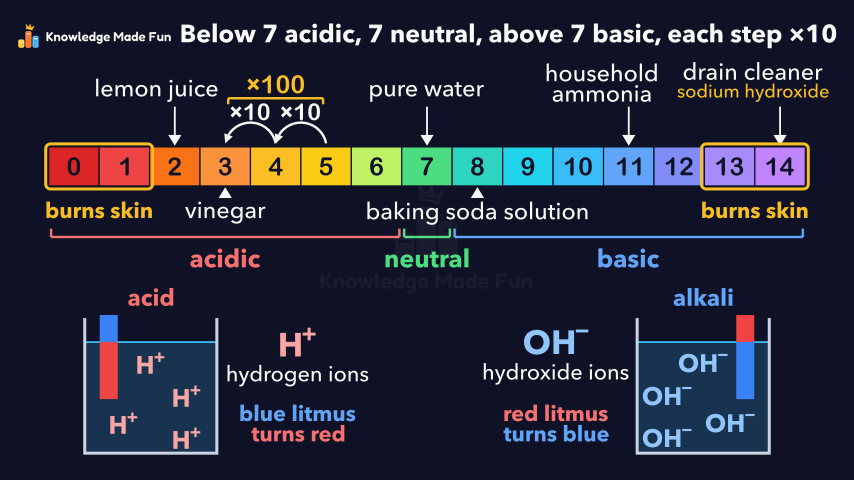
Acids and bases: the pH scale
Grade 10 · 1 min 40 s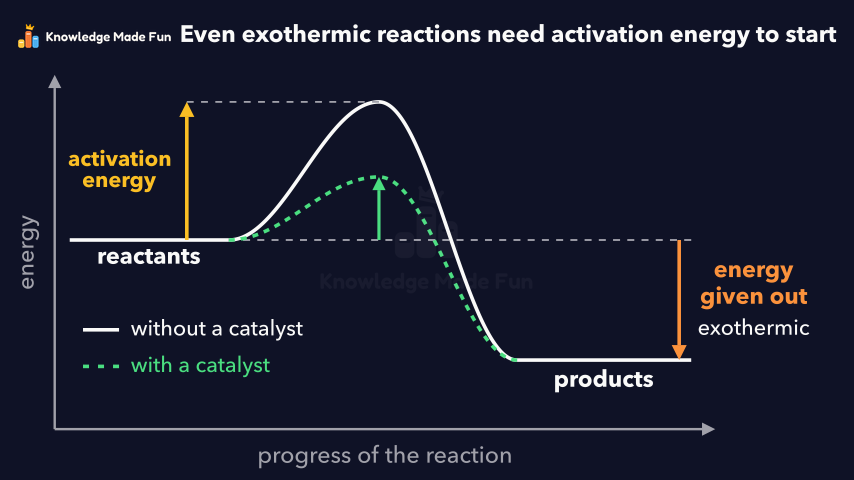 1 min 39 s
Activation energy: the push a reaction needs to start
Grade 10 · 1 min 39 s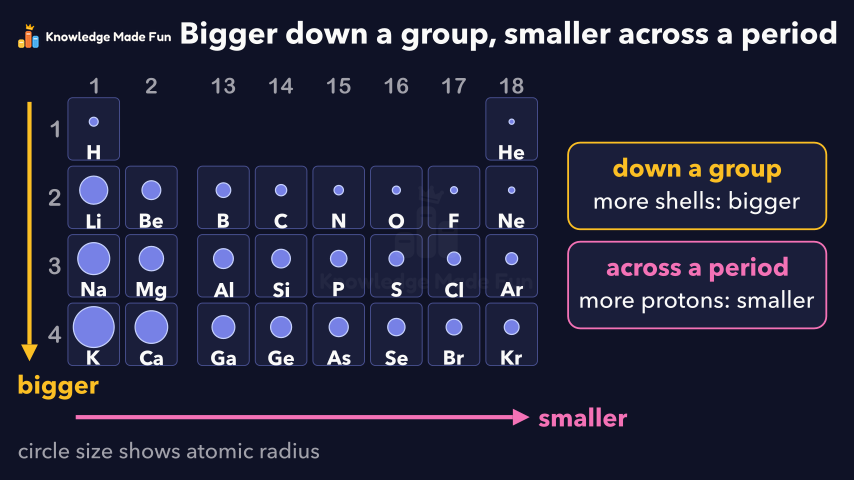 1 min 54 s
Atomic Size: Bigger Down a Group, Smaller Across a Period
Grade 9 · 1 min 54 s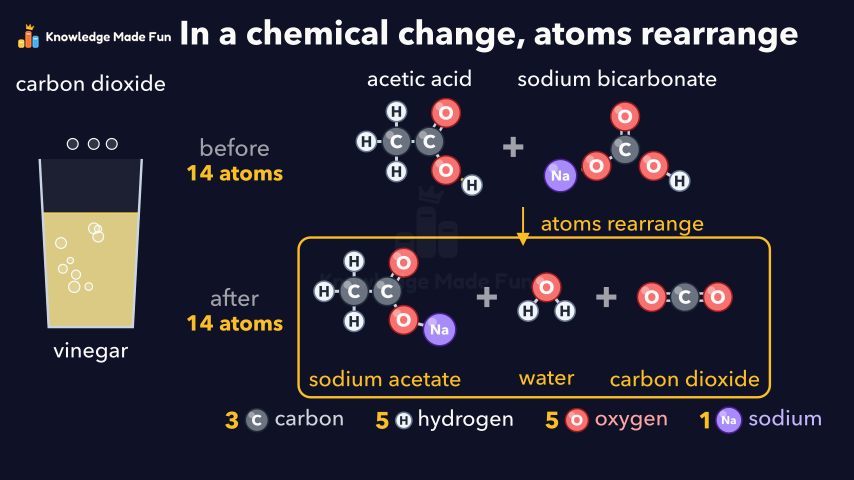 1 min 18 s
Atoms rearrange: vinegar and baking soda
Grade 7 · 1 min 18 s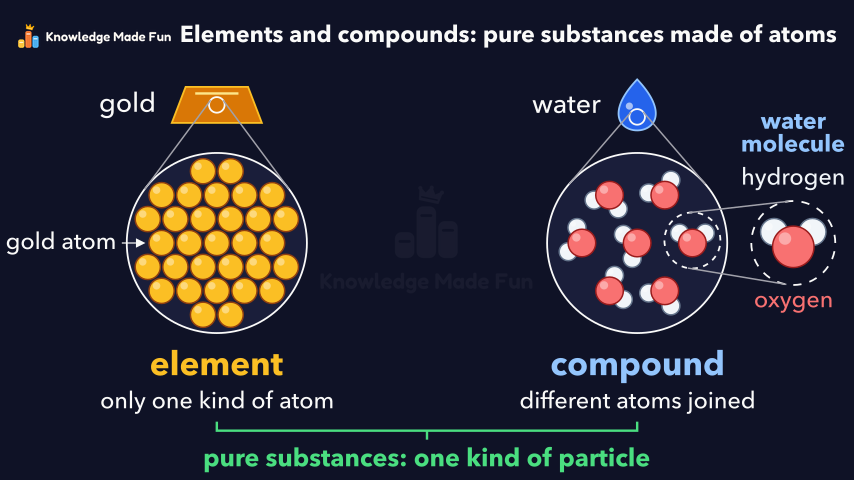 1 min 16 s
Atoms: What Everything Is Made Of
Grade 7 · 1 min 16 s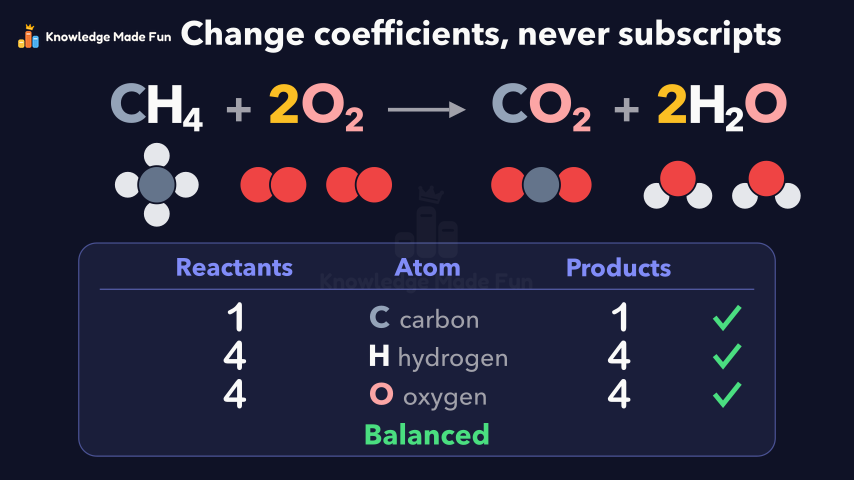 2 min 3 s
Balancing Chemical Equations
Grade 10 · 2 min 3 s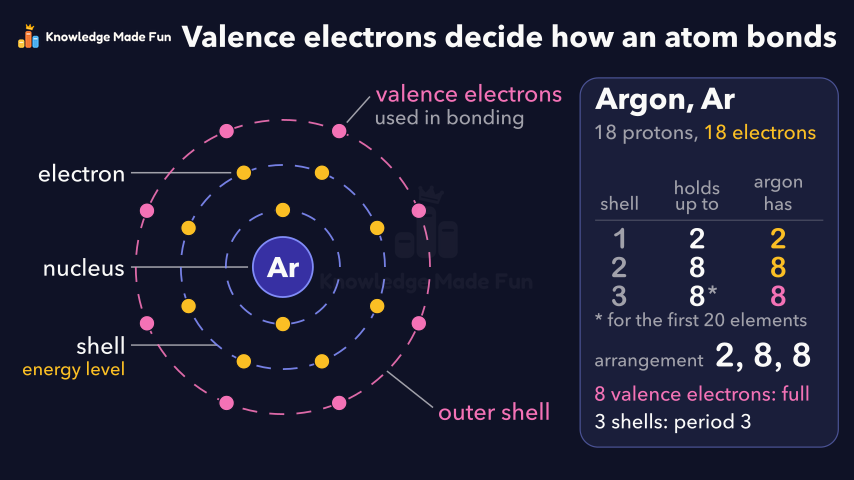 1 min 54 s
Bohr Diagrams: Electrons in Shells and Valence Electrons
Grade 9 · 1 min 54 s 1 min 45 s
Brownian motion: evidence that molecules exist
Grade 8 · 1 min 45 s
- All Grade 10 Science lessons
- Create a free account to watch three lessons a day, no payment and no card.