Lesson · Grade 7 · Social Studies
Why the First Civilizations Grew Beside Rivers
- Grade 7
- Social Studies
- 1 min 27 s
- British Columbia
- BC7-SS-05
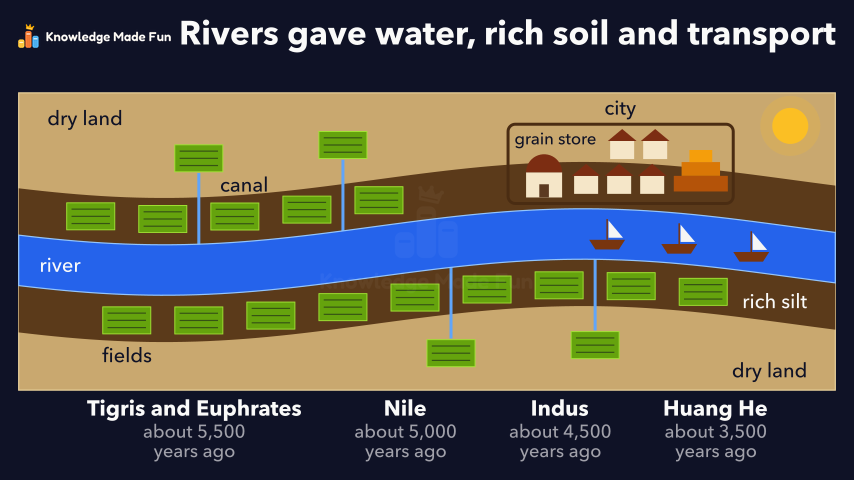
One pictorial map of a river valley builds up step by step: dry land, a winding river, the yearly flood and the rich silt it leaves, fields on the silt, canals carrying water to fields further out, a grain store, houses, boats on the river and at last a walled city, showing how people turned a river's challenges and opportunities into farming and cities. It ends by naming the four great river valleys (Tigris and Euphrates, Nile, Indus, Huang He) with their approximate dates and the one-line recap that rivers gave water, rich soil and transport.
Anyone can watch two lessons on the website without an account. Signing in is free, no payment and no card, and opens three a day; Plus has no limit.
Loading
In one sentence
The question this lesson answers
Why did the first civilizations all grow up beside big rivers?
In these places little rain fell, so land away from the river was too dry for farming.
Transcript
What the lesson says
Why did the first civilizations all grow up beside big rivers?
In these places little rain fell, so land away from the river was too dry for farming.
The river gave fresh water all year, for drinking and for watering crops.
Each year the river rose and flooded the flat land beside it.
When the water went down, it left behind a layer of rich, fine mud called silt.
Crops such as wheat, barley and millet grew very well in this soil.
People dug canals to carry river water to fields further from the river.
Big harvests gave extra food, which could be stored for later.
With plenty of food, many people could live close together.
The river was also a highway, and boats carried grain and goods along it.
Villages grew into cities, with rulers, builders, craftworkers and traders.
Managing the floods and canals took planning and teamwork, which helped lead to the first governments.
This happened beside the Tigris and Euphrates, the Nile, the Indus and the Huang He, starting about 5,500 years ago.
Rivers gave fresh water, rich soil and easy transport, and that is why the first civilizations grew beside them.
Curriculum
Where this fits
- British Columbia, Grade 7
Social Studies, Ancient world to the 7th century: human responses to particular geographic challenges and opportunitiesBC7-SS-05
Previous: From Hunting and Gathering to FarmingNext: How Ancient Peoples Adapted to Their Land
The outcomes and strands follow the British Columbia curriculum.
Keep going
 1 min 23 s
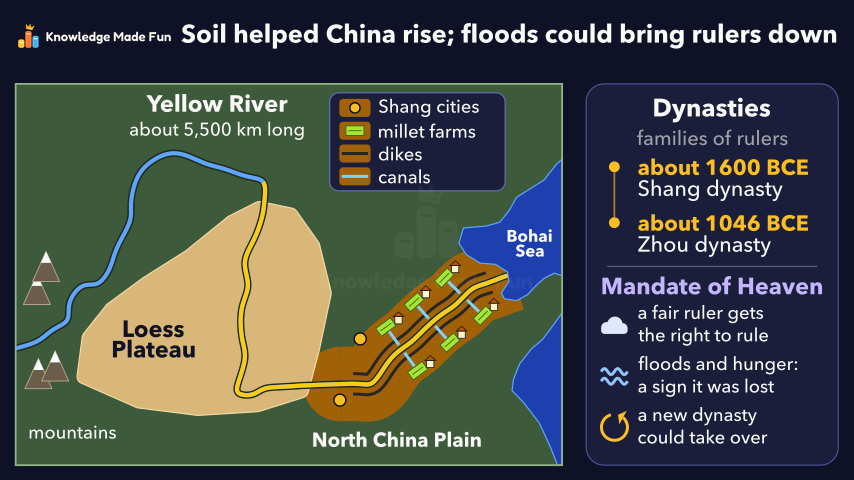
Ancient China and the Yellow River
Grade 7 · 1 min 23 s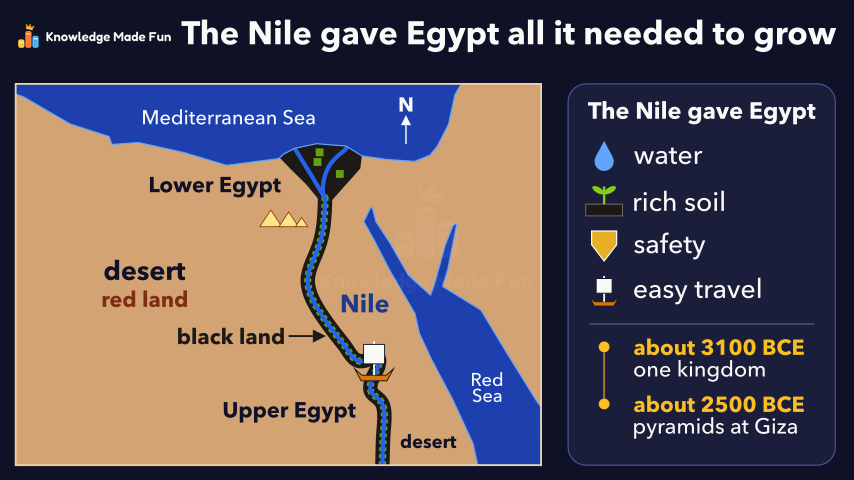 1 min 28 s
Ancient Egypt and the Nile
Grade 7 · 1 min 28 s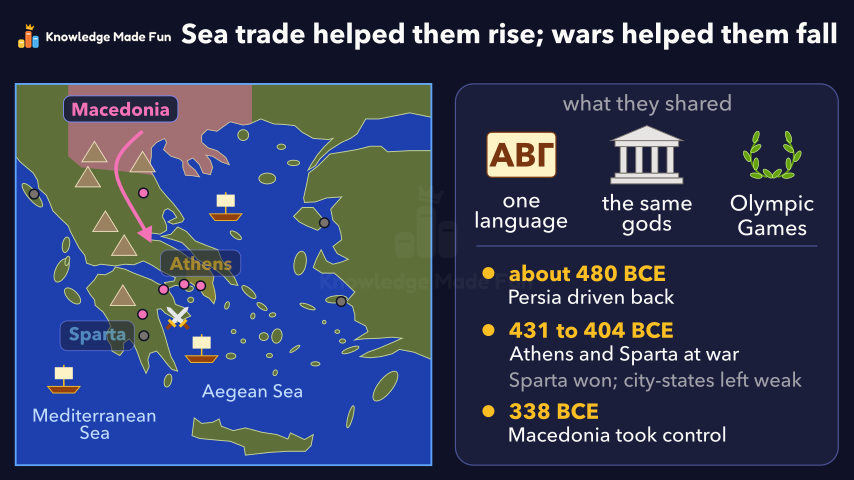 1 min 27 s
Ancient Greece: How the City-States Rose and Fell
Grade 7 · 1 min 27 s 1 min 13 s
Ancient Inventions We Still Use
Grade 7 · 1 min 13 s 1 min 28 s
Ancient Rome: How It Rose and Why the West Fell
Grade 7 · 1 min 28 s 1 min 31 s
Early humans and Neanderthals: our close relatives
Grade 7 · 1 min 31 s 1 min 9 s
From Barter to Money
Grade 7 · 1 min 9 s 1 min 33 s
From Hunting and Gathering to Farming
Grade 7 · 1 min 33 s
- All Grade 7 Social Studies lessons
- Create a free account to watch three lessons a day, no payment and no card.