Lesson · Grade 7 · Science
What evolution means: populations change over time
- Grade 7
- Science
- 1 min 7 s
- British Columbia
- BC7-SC-01
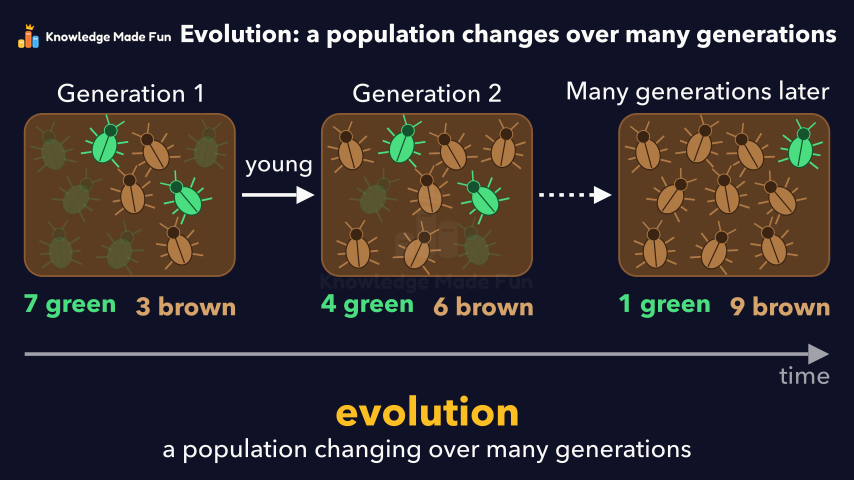
A population of green and brown beetles lives on brown ground, where a bird spots and eats the green ones more easily, so more brown beetles survive and pass their colour on to their young. Over three generations along a time arrow the mix goes from 7 green and 3 brown to 1 green and 9 brown, showing that no single beetle changes but the population does, and that this change over many generations is called evolution.
Anyone can watch two lessons on the website without an account. Signing in is free, no payment and no card, and opens three a day; Plus has no limit.
Loading
In one sentence
The question this lesson answers
What does the word evolution really mean?
Here is a population: a group of beetles of the same kind, living in one place.
Transcript
What the lesson says
What does the word evolution really mean?
Here is a population: a group of beetles of the same kind, living in one place.
The beetles are not all the same. Some are green and some are brown.
On brown ground, birds spot the green beetles more easily, and eat them.
So more of the brown beetles survive.
The survivors have young, and the young get their colour from their parents.
So the next generation has more brown beetles than before.
The same thing happens again, in every generation.
After many generations, most of the beetles are brown.
The population has changed over time.
But no single beetle changed its colour during its life.
This change in a population, over many generations, is called evolution.
Evolution means a population changes over many generations.
Curriculum
Where this fits
The outcomes and strands follow the British Columbia curriculum.
Keep going
 1 min 3 s
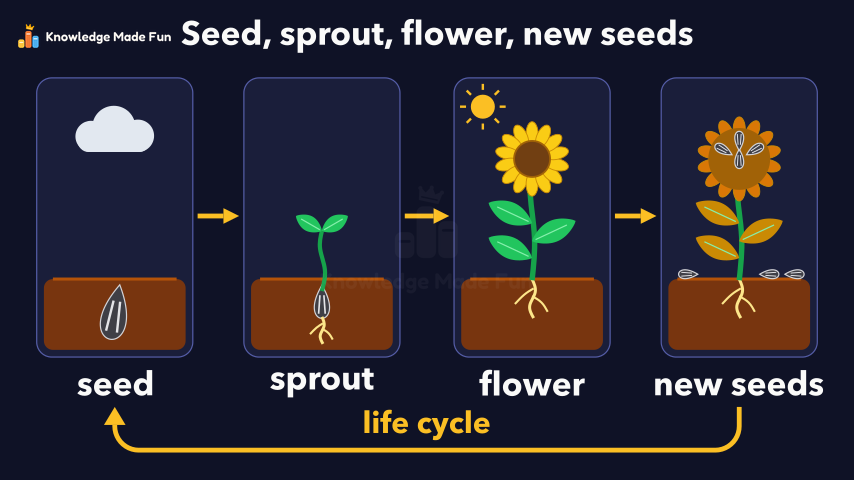
A Sunflower's Life Cycle: Seed, Sprout, Flower, Seed
Kindergarten · 1 min 3 s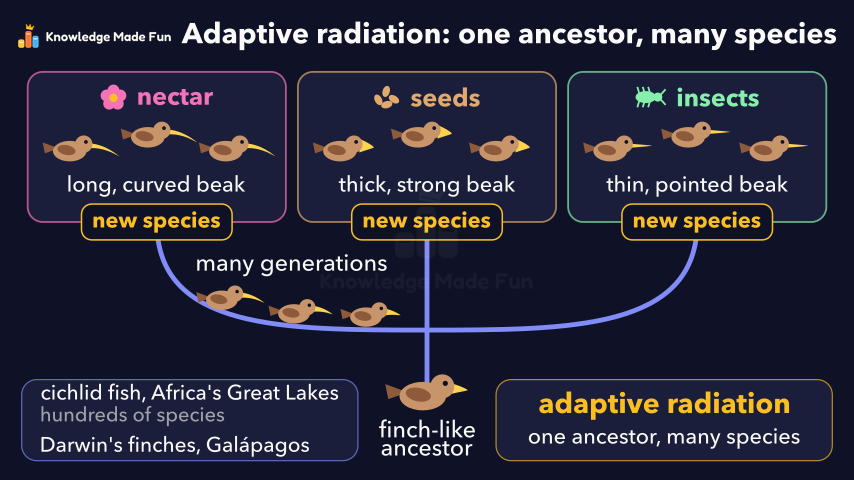 1 min 48 s
Adaptive radiation: one ancestor, many species
Grade 10 · 1 min 48 s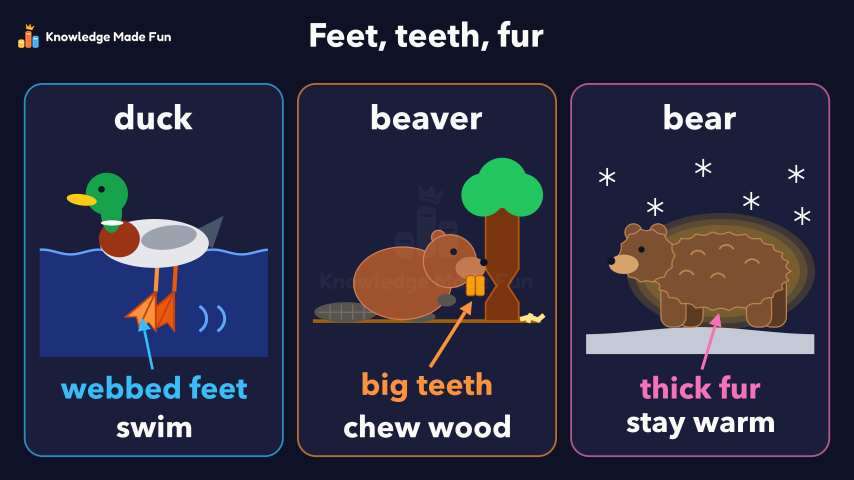 52 s
Animal Bodies That Help Them Live: Feet, Teeth and Fur
Kindergarten · 52 s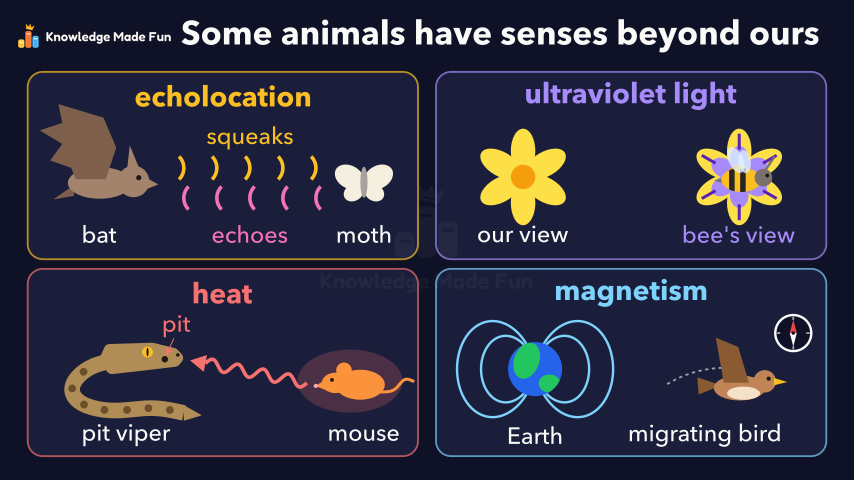 1 min 3 s
Animal senses beyond ours: echolocation, ultraviolet light, heat and magnetism
Grade 4 · 1 min 3 s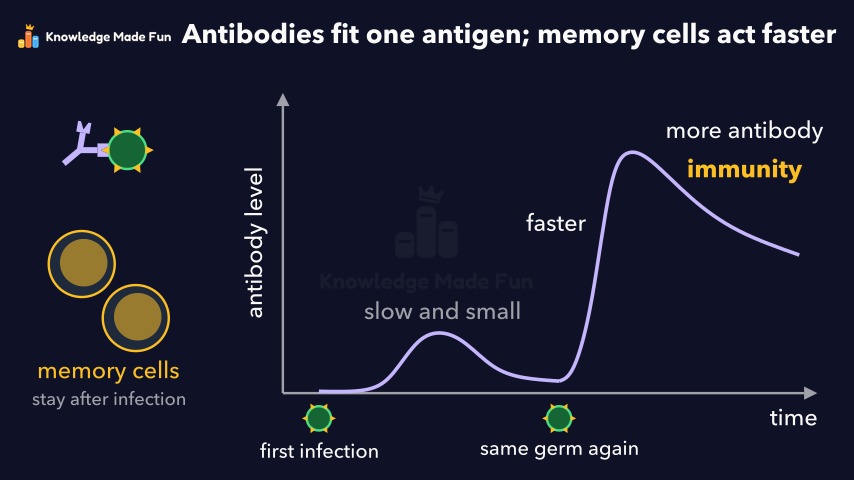 1 min 44 s
Antibodies and Memory Cells: The Body's Targeted Defence
Grade 8 · 1 min 44 s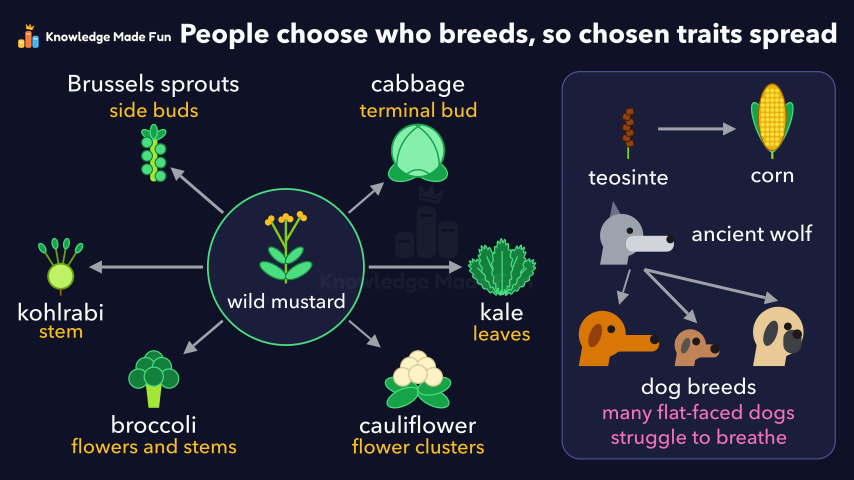 1 min 44 s
Artificial selection: people choose the traits
Grade 10 · 1 min 44 s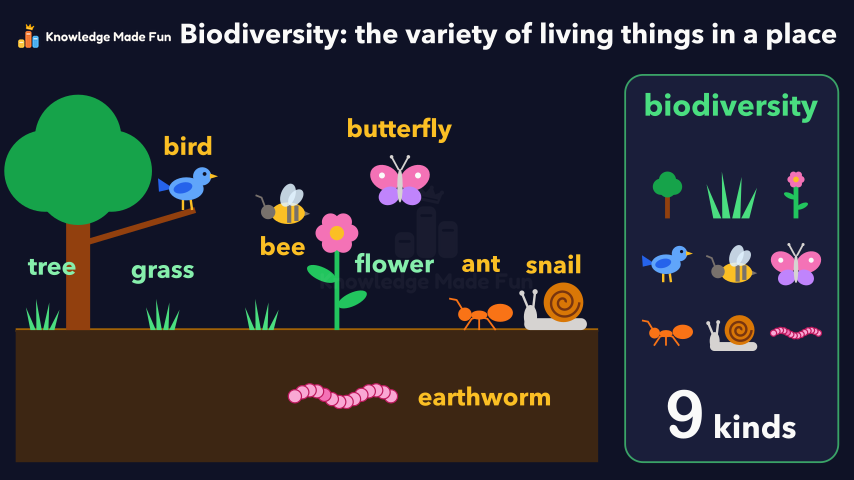 1 min 4 s
Biodiversity: The Variety of Living Things
Grade 3 · 1 min 4 s 1 min 8 s
Biomes: Sorted by Temperature and Precipitation
Grade 4 · 1 min 8 s
- All Grade 7 Science lessons
- Create a free account to watch three lessons a day, no payment and no card.