Lesson · Grade 5 · Science
Renewable and Non-Renewable Resources
- Grade 5
- Science
- 1 min 5 s
- British Columbia
- BC5-SC-18
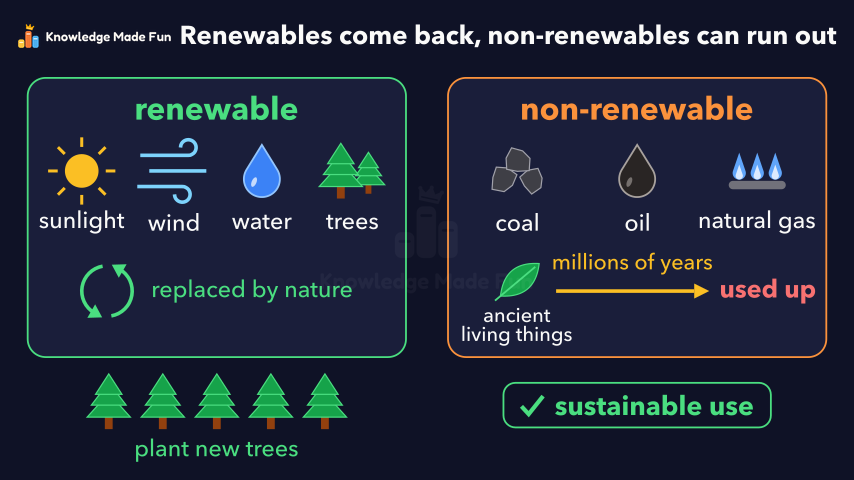
Seven natural resources are sorted into two labelled groups: sunlight, wind, water and trees, which nature replaces in a fairly short time, and coal, oil and natural gas, which formed from ancient living things over millions of years and are used up once burned. A small forest then shows that even trees run out if they are cut faster than they grow, and that planting new trees is sustainable use, before the recap that renewables come back and non-renewables can run out.
Anyone can watch two lessons on the website without an account. Signing in is free, no payment and no card, and opens three a day; Plus has no limit.
Loading
In one sentence
The question this lesson answers
We use lots of things from nature, but can they run out?
Things from nature that people use are called natural resources.
Transcript
What the lesson says
We use lots of things from nature, but can they run out?
Things from nature that people use are called natural resources.
We can sort them into two groups.
Renewable resources are replaced by nature in a fairly short time.
The Sun keeps shining, the wind keeps blowing, rain refills rivers, and new trees grow.
Non-renewable resources, like coal, oil and natural gas, can run out.
They formed from the remains of ancient living things, over millions of years.
Once we burn them, they are used up.
Even trees can run out if we cut them faster than they grow.
Planting new trees helps the forest grow back.
Using resources so they last into the future is called sustainable use.
Renewable resources are replaced by nature, but non-renewable ones can run out.
Curriculum
Where this fits
- British Columbia, Grade 5
Science, Earth science: the nature of sustainable practices around BC's resourcesBC5-SC-18
Previous: Earth Materials: From Boulders to ClayNext: Sustainable practices: forests, fish and water
The outcomes and strands follow the British Columbia curriculum.
Keep going
 1 min 43 s
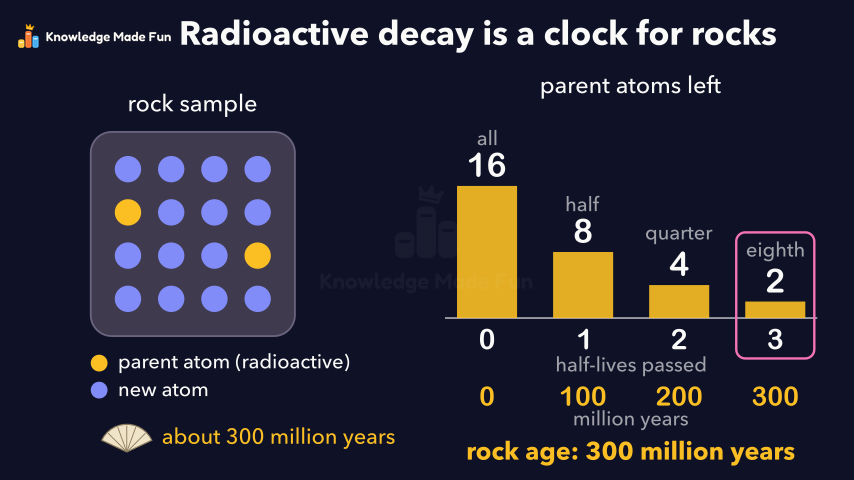
Absolute dating: radioactive decay is a clock for rocks
Grade 7 · 1 min 43 s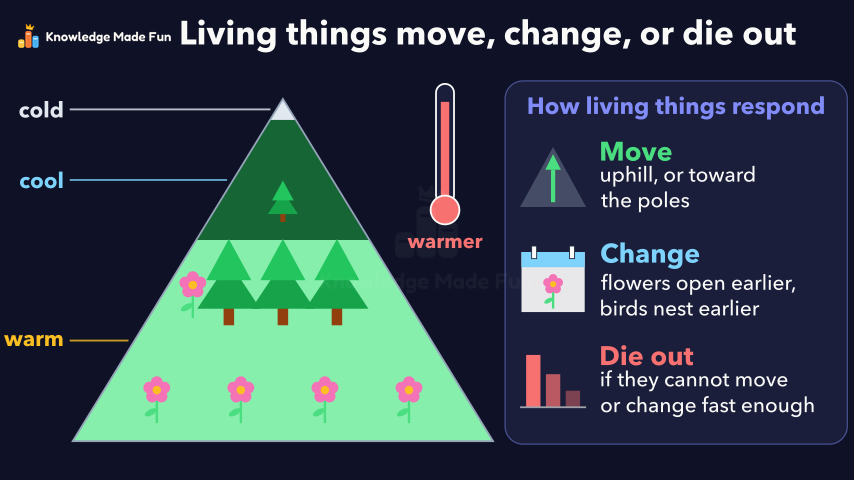 1 min 19 s
Climate Change and Living Things: Move, Change, or Die Out
Grade 7 · 1 min 19 s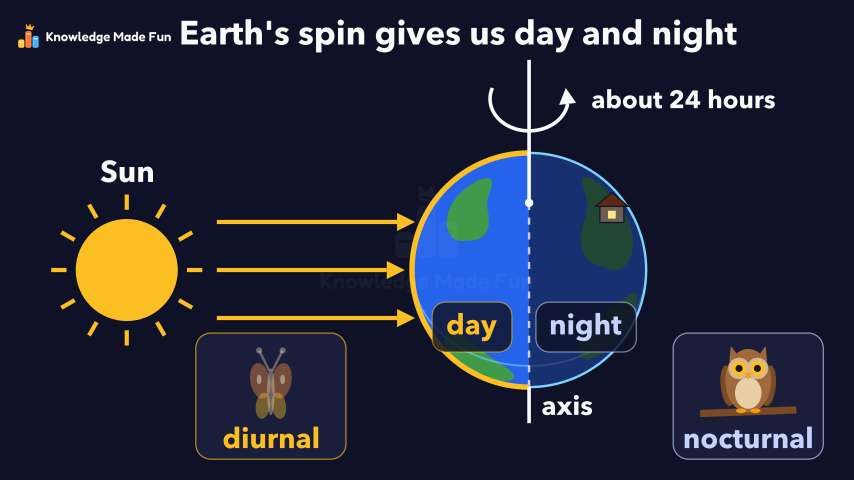 1 min 14 s
Day and Night: Earth Spins on Its Axis
Grade 4 · 1 min 14 s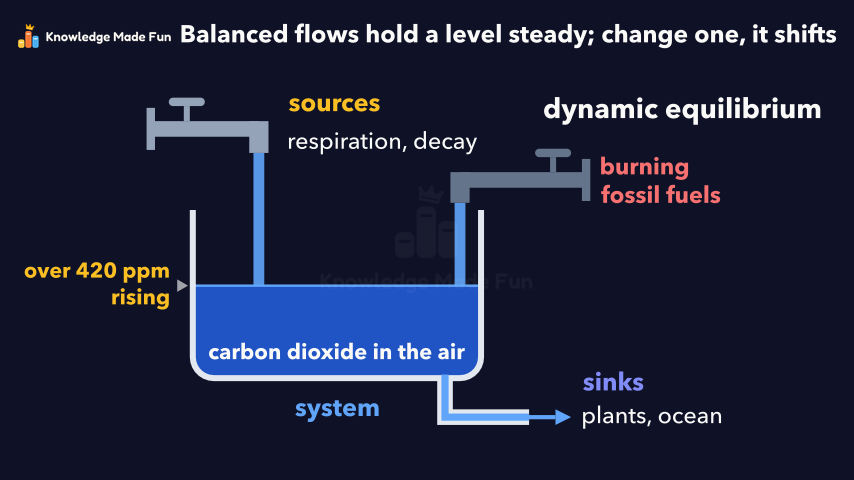 1 min 50 s
Dynamic equilibrium: balanced but always changing
Grade 9 · 1 min 50 s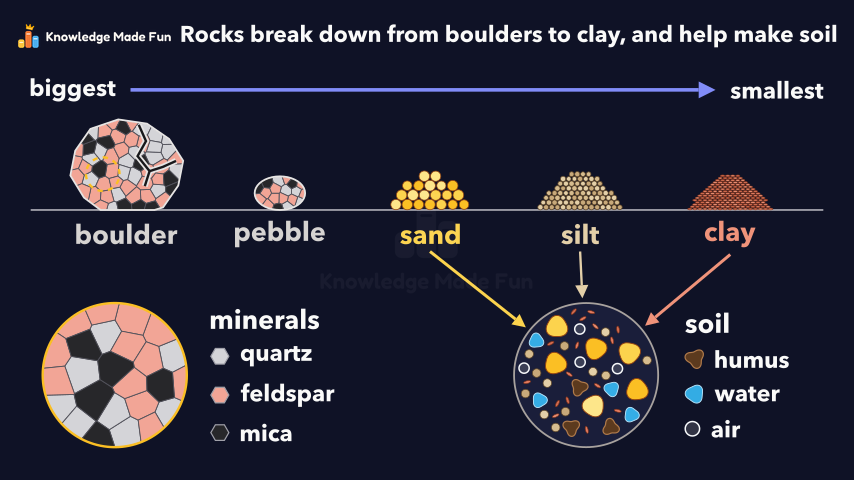 1 min 11 s
Earth Materials: From Boulders to Clay
Grade 5 · 1 min 11 s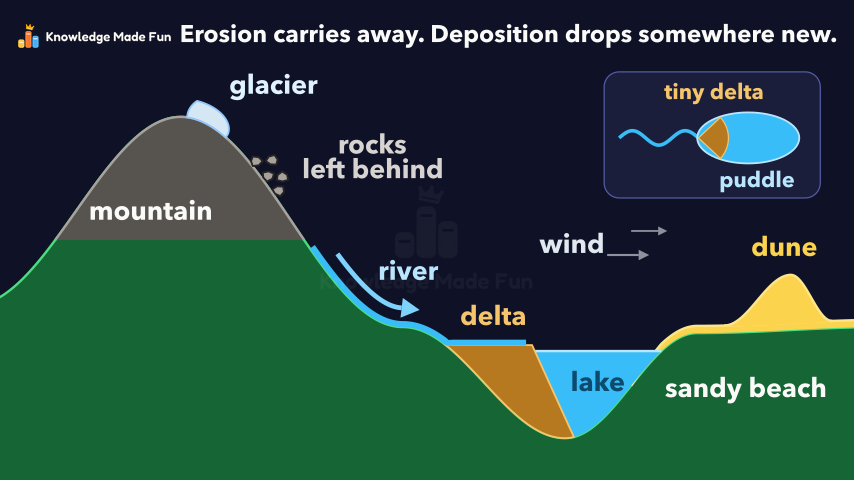 1 min 11 s
Erosion and Deposition: How Wind, Water and Ice Move Land
Grade 3 · 1 min 11 s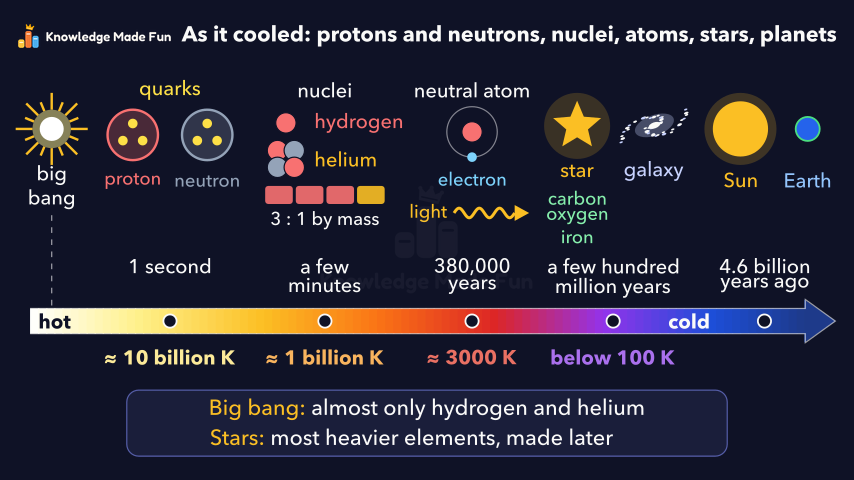 1 min 53 s
From quarks to galaxies: how the universe's matter formed
Grade 10 · 1 min 53 s 47 s
Hot, Warm, Cool and Cold: What Do We Wear?
Kindergarten · 47 s
- All Grade 5 Science lessons
- Create a free account to watch three lessons a day, no payment and no card.