Lesson · Grade 8 · Science
Refraction: why light bends in water and glass
- Grade 8
- Science
- 1 min 49 s
- British Columbia
- BC8-SC-34
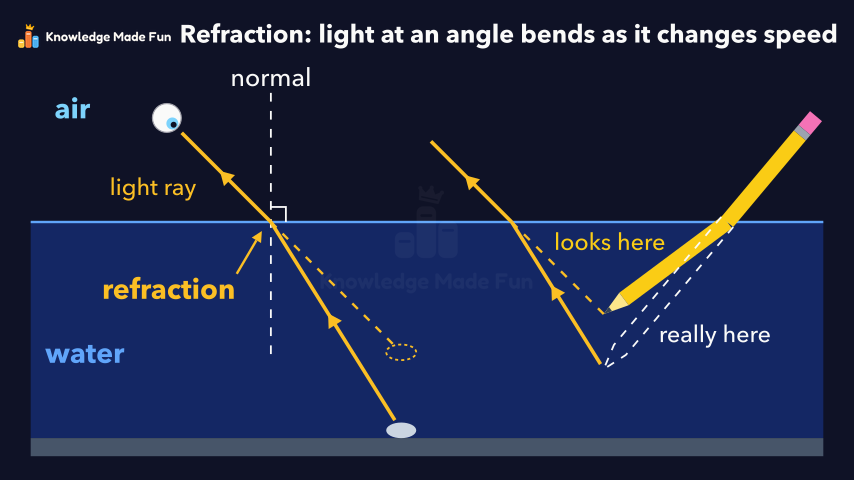
Light slows from about 300,000 km/s in air to about 225,000 km/s in water and 200,000 km/s in glass, so a ray that crosses the surface at an angle bends toward the normal, like a cart that turns when one wheel reaches sand first. Running the same bend backwards shows why a pool looks shallower and a pencil looks broken, even though the pencil does not really bend.
Anyone can watch two lessons on the website without an account. Signing in is free, no payment and no card, and opens three a day; Plus has no limit.
Loading
In one sentence
The question this lesson answers
Why does a straight pencil look broken when you dip it in water?
To find out, follow one ray of light as it passes from air into water.
Transcript
What the lesson says
Why does a straight pencil look broken when you dip it in water?
To find out, follow one ray of light as it passes from air into water.
Where it hits, draw the normal: an imaginary line at right angles to the surface.
In the water, the ray does not go straight on. It bends toward the normal.
This bending as light passes from one material into another is called refraction.
It happens because light slows down in water, and in glass too.
In air, light travels at about 300,000 kilometres per second, in water about 225,000, and in glass about 200,000.
Picture a cart rolling at an angle from smooth pavement onto sand.
One wheel reaches the sand first and slows down, so the cart turns toward the normal.
Straight on, both wheels slow at once and the cart goes straight. Light along the normal slows but does not bend.
Light from a stone on the bottom speeds up as it leaves the water, and bends away from the normal.
Your brain assumes light travels in straight lines, so it traces the ray straight back.
So the bottom looks higher than it really is, and the pool looks shallower.
The pencil works the same way: its underwater part looks raised, so it looks broken.
But the pencil does not really bend. Only the light coming from it bends.
So refraction is light bending as it crosses into a new material at an angle, because its speed changes.
Curriculum
Where this fits
- British Columbia, Grade 8
Science, Physics: light: behavioursBC8-SC-34
Previous: Reflection: The Law of Reflection and Mirror ImagesNext: Lenses: How Convex and Concave Lenses Form Images
The outcomes and strands follow the British Columbia curriculum.
Keep going
 1 min 51 s
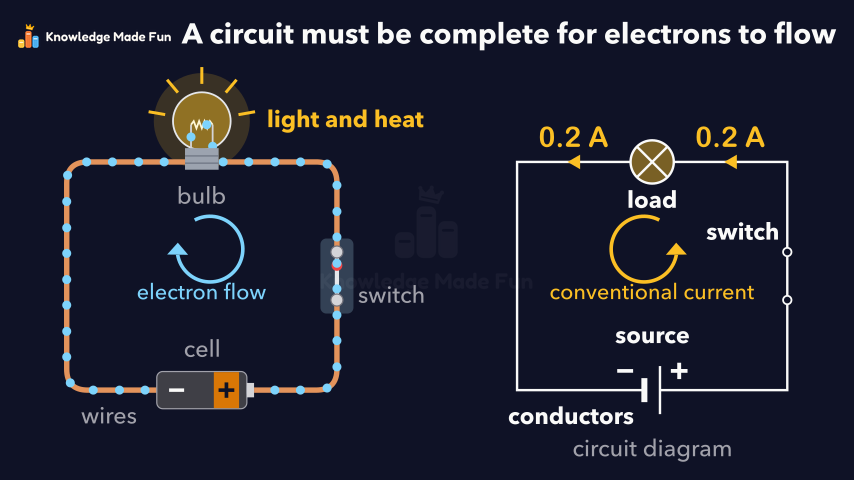
A Complete Circuit: Source, Load, Conductors and Switch
Grade 9 · 1 min 51 s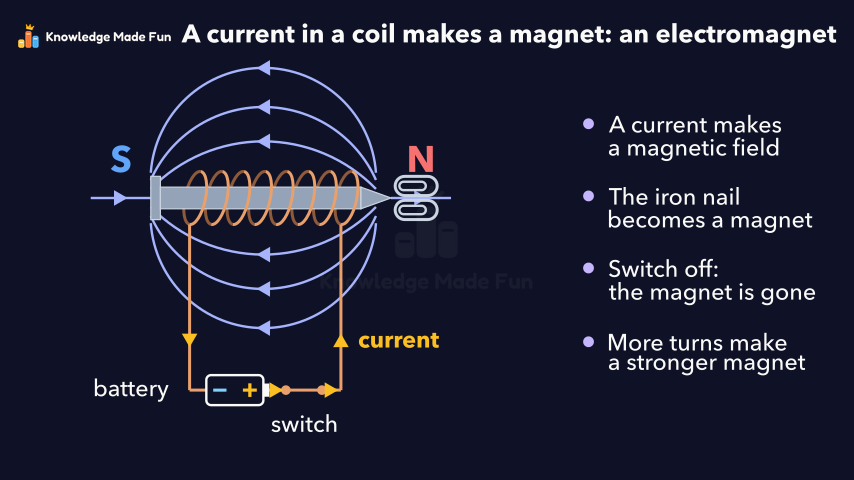 1 min 18 s
A current makes a magnet: the electromagnet
Grade 7 · 1 min 18 s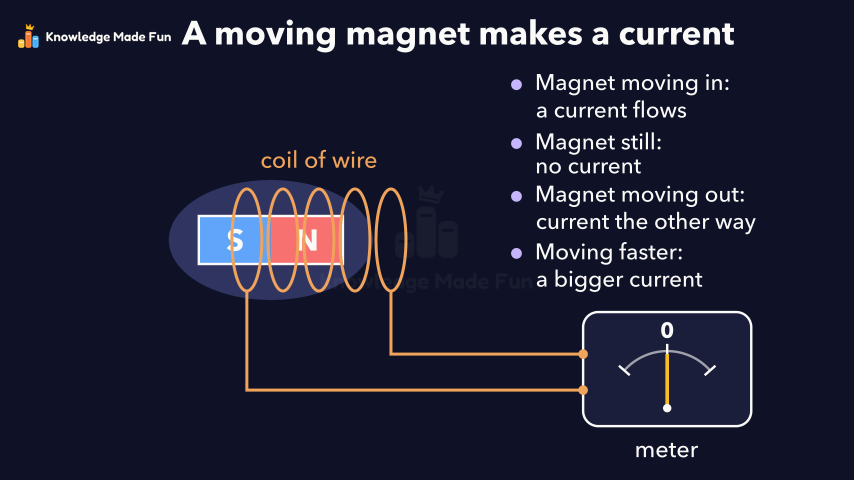 1 min 12 s
A Moving Magnet Makes a Current
Grade 7 · 1 min 12 s 54 s
A Push or a Pull Makes Things Move
Kindergarten · 54 s 1 min 48 s
AC and DC: Two Ways Current Can Flow
Grade 9 · 1 min 48 s 1 min 3 s
Air Resistance: Why a Flat Sheet Falls Slower
Grade 2 · 1 min 3 s 1 min 40 s
Alpha, Beta and Gamma Radiation
Grade 10 · 1 min 40 s 1 min 6 s
Balanced and Unbalanced Forces in Sport and Play
Grade 6 · 1 min 6 s
- All Grade 8 Science lessons
- Create a free account to watch three lessons a day, no payment and no card.