Lesson · Grade 8 · Science
Lenses: How Convex and Concave Lenses Form Images
- Grade 8
- Science
- 1 min 52 s
- British Columbia
- BC8-SC-35
A convex lens brings parallel rays to its focal point. Placed beyond the focal length, it uses two rays to form a real, upside-down image that a screen can catch, as in cameras and projectors; placed inside the focal length, it makes a bigger, upright virtual image, which is how a magnifying glass works. The same diagram then turns into a concave lens that spreads rays apart as if they came from F, and ends by showing that concave lenses correct nearsightedness and convex lenses correct farsightedness.
Anyone can watch two lessons on the website without an account. Signing in is free, no payment and no card, and opens three a day; Plus has no limit.
Loading
In one sentence
The question this lesson answers
How does a lens make a picture on a screen, or make things look bigger?
A convex lens is thicker in the middle. The line through its centre is the principal axis.
Transcript
What the lesson says
How does a lens make a picture on a screen, or make things look bigger?
A convex lens is thicker in the middle. The line through its centre is the principal axis.
Rays parallel to the axis bend as they pass through the lens. This is called refraction.
They meet at the focal point, F, so this is a converging lens.
The distance from the lens centre to F is the focal length. There is an F on each side.
Now place an object, drawn as an arrow, beyond F.
A ray from its tip parallel to the axis bends through F.
A ray through the centre of the lens goes straight on.
Where the rays cross, an upside-down image forms.
It is a real image: light really meets there, so a screen can catch it.
Cameras and projectors use convex lenses this way.
Now move the object closer to the lens than F.
Now the rays spread apart after the lens and never meet.
Traced back, they seem to come from a bigger, upright image: a virtual image.
No screen can catch it. This is how a magnifying glass works.
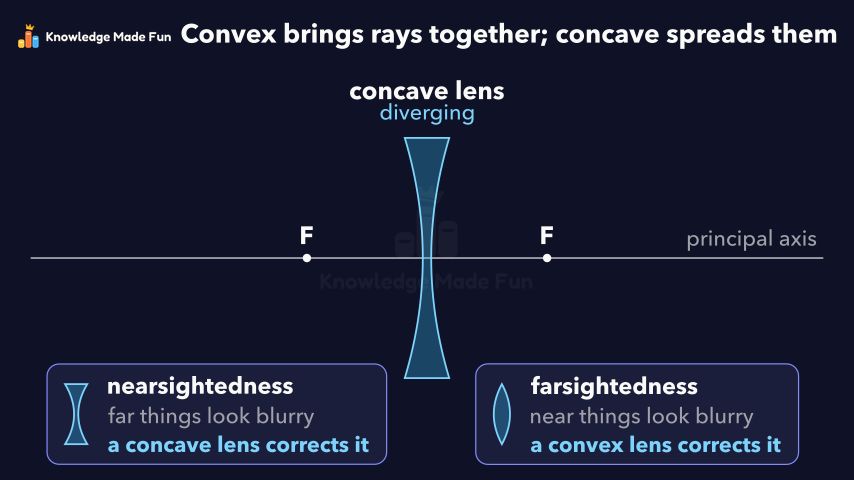
A concave lens is thinner in the middle than at its edges.
It spreads parallel rays apart, as if from F, so it is a diverging lens.
Glasses use both. Concave lenses correct nearsightedness, when far things look blurry.
Convex lenses correct farsightedness, when near things look blurry.
A convex lens brings light rays together; a concave lens spreads them apart.
Curriculum
Where this fits
- British Columbia, Grade 8
Science, Physics: light: behavioursBC8-SC-35
Previous: Refraction: why light bends in water and glassNext: Transparent, translucent or opaque: what materials do to light
The outcomes and strands follow the British Columbia curriculum.
Keep going
 1 min 51 s
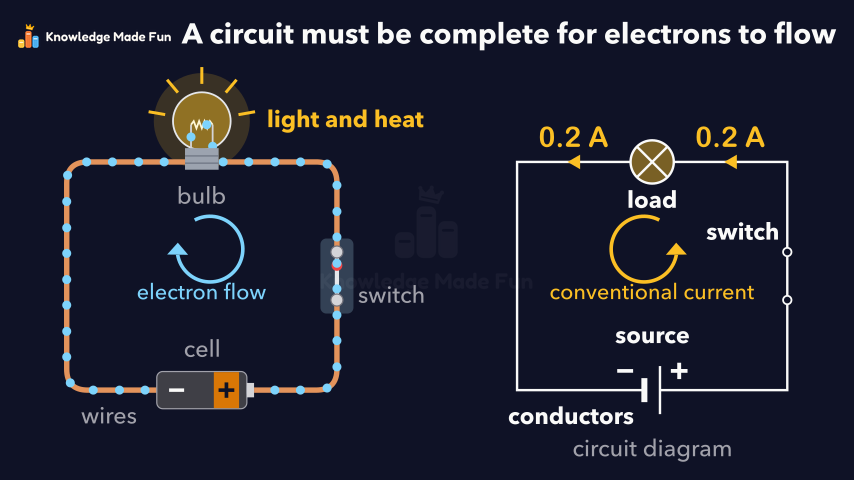
A Complete Circuit: Source, Load, Conductors and Switch
Grade 9 · 1 min 51 s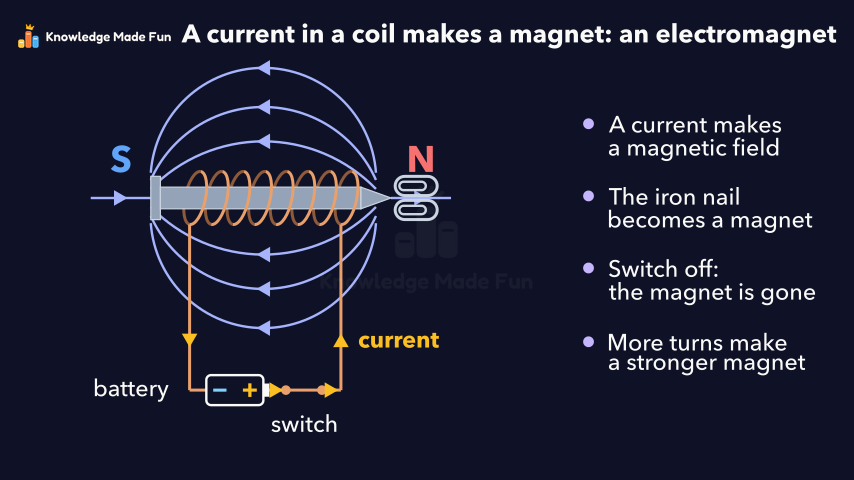 1 min 18 s
A current makes a magnet: the electromagnet
Grade 7 · 1 min 18 s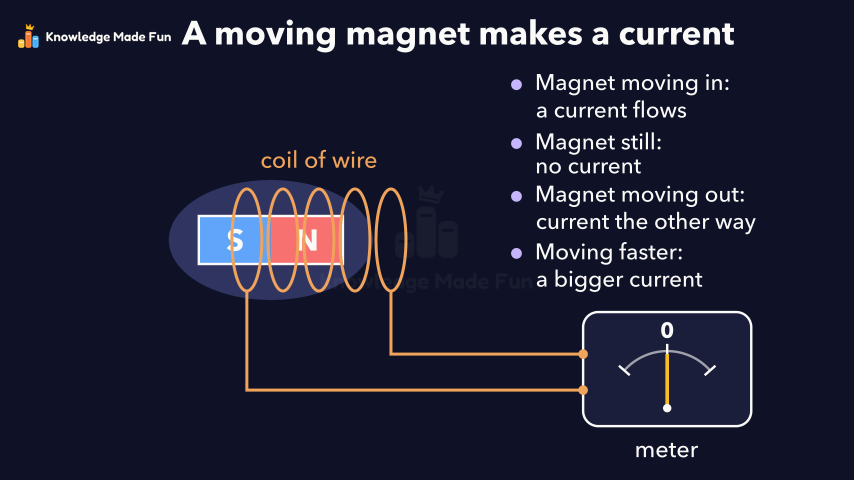 1 min 12 s
A Moving Magnet Makes a Current
Grade 7 · 1 min 12 s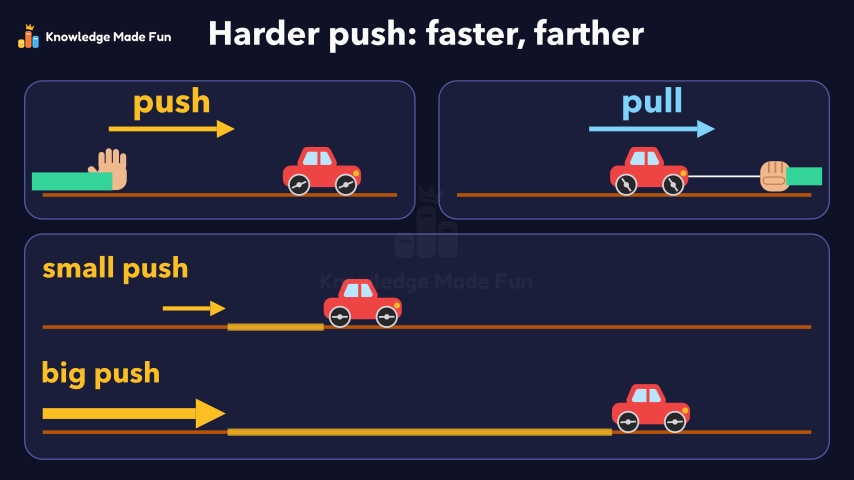 54 s
A Push or a Pull Makes Things Move
Kindergarten · 54 s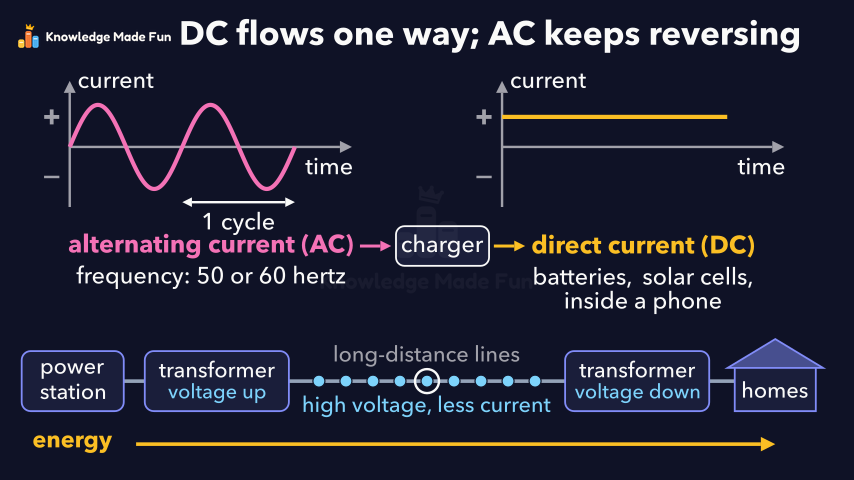 1 min 48 s
AC and DC: Two Ways Current Can Flow
Grade 9 · 1 min 48 s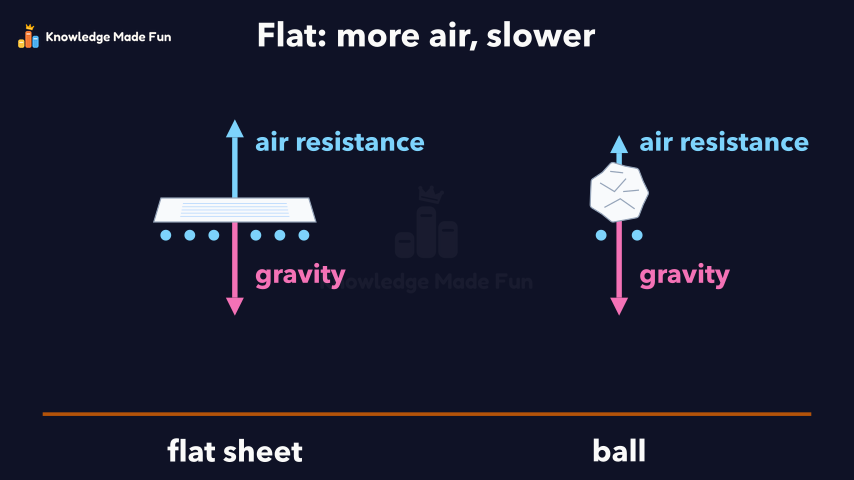 1 min 3 s
Air Resistance: Why a Flat Sheet Falls Slower
Grade 2 · 1 min 3 s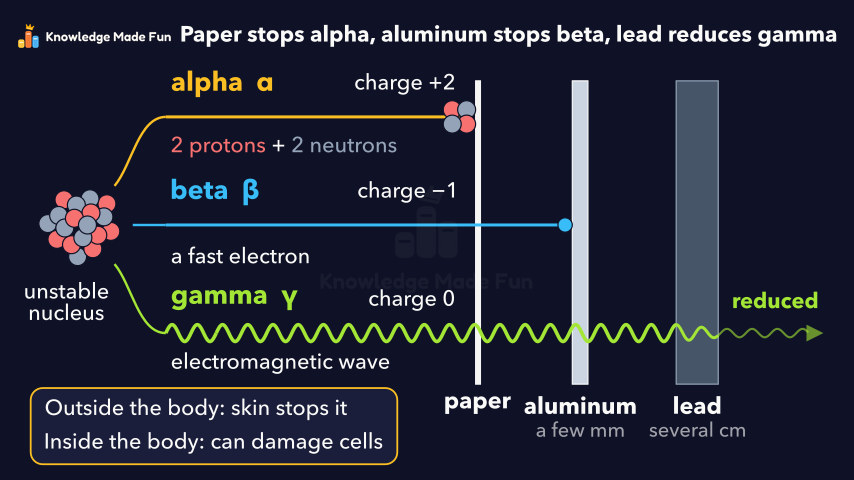 1 min 40 s
Alpha, Beta and Gamma Radiation
Grade 10 · 1 min 40 s 1 min 6 s
Balanced and Unbalanced Forces in Sport and Play
Grade 6 · 1 min 6 s
- All Grade 8 Science lessons
- Create a free account to watch three lessons a day, no payment and no card.