Lesson · Grade 10 · Science
Redshift and Blueshift: What Light Tells Us About Motion
- Grade 10
- Science
- 1 min 46 s
- British Columbia
- BC10-SC-46
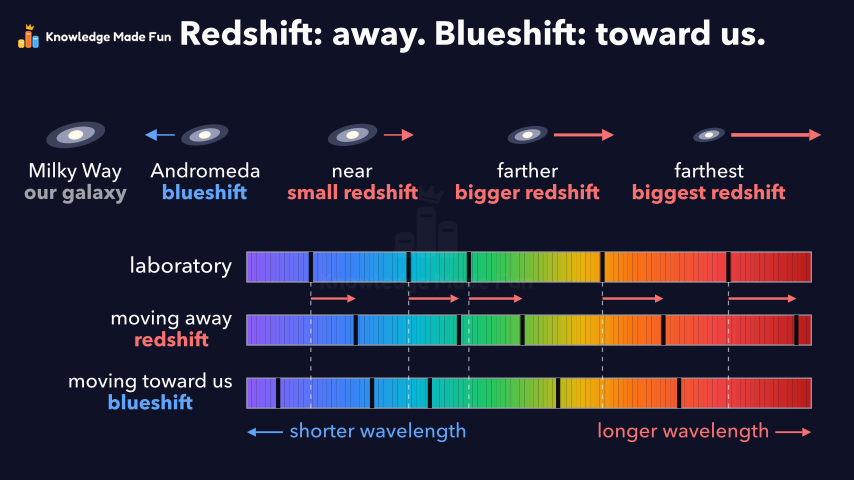
A siren's sound waves are squeezed in front and stretched behind it (the Doppler effect), and the same diagram, now a galaxy giving off light, shows redshift and blueshift. Astronomers measure how far dark absorption lines in a spectrum have moved from their laboratory positions: nearly all galaxies are redshifted, and the farther ones more, so the universe is expanding, while nearby Andromeda is blueshifted, and a redshifted galaxy does not look red.
Anyone can watch two lessons on the website without an account. Signing in is free, no payment and no card, and opens three a day; Plus has no limit.
Loading
In one sentence
The question this lesson answers
How can astronomers tell if a galaxy is moving toward us or away?
Start with sound. A moving siren's waves are squeezed in front of it and stretched behind it.
Transcript
What the lesson says
How can astronomers tell if a galaxy is moving toward us or away?
Start with sound. A moving siren's waves are squeezed in front of it and stretched behind it.
It sounds higher coming toward you and lower moving away. This is the Doppler effect.
Light is a wave too. Its wavelength, the distance from one crest to the next, sets its colour.
A spectrum spreads light out by wavelength: blue light has shorter waves, red light longer ones.
Light from a source moving away is stretched toward red. This is redshift.
Light from a source moving toward us is squeezed toward blue. This is blueshift.
Gases in stars absorb certain wavelengths, leaving dark absorption lines. A laboratory shows their normal positions.
From a galaxy moving away, the same lines are shifted toward red.
From a galaxy moving toward us, they are shifted toward blue.
A bigger shift means faster motion toward or away from us.
Nearly all galaxies are redshifted, and generally, the farther away they are, the bigger the redshift.
So the universe is expanding: galaxies are getting farther apart.
A few nearby galaxies are blueshifted, like Andromeda, which is moving toward us.
Careful: redshift does not mean a galaxy looks red. It means its lines moved to longer wavelengths.
Redshift means moving away, and blueshift means moving toward us.
Curriculum
Where this fits
- British Columbia, Grade 10
Science 10, Earth science: astronomical data and collection methodsBC10-SC-46
Previous: From quarks to galaxies: how the universe's matter formedNext: The Cosmic Microwave Background: The Oldest Light We Can See
The outcomes and strands follow the British Columbia curriculum.
Keep going
 1 min 43 s
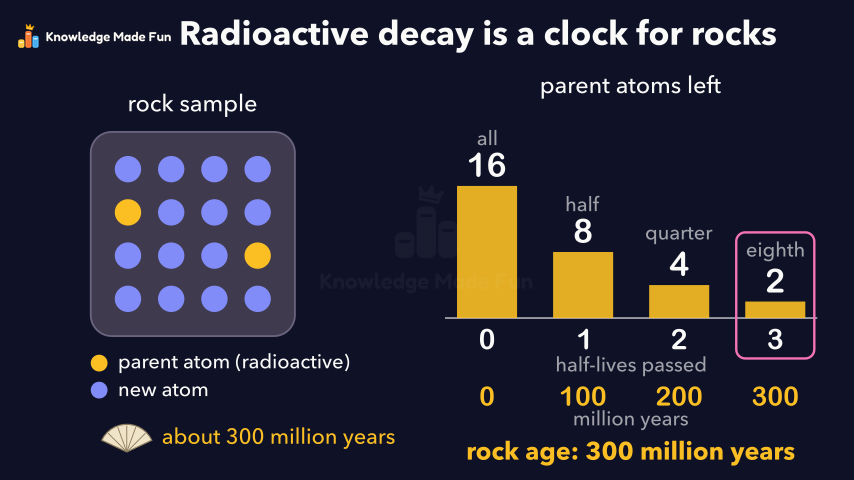
Absolute dating: radioactive decay is a clock for rocks
Grade 7 · 1 min 43 s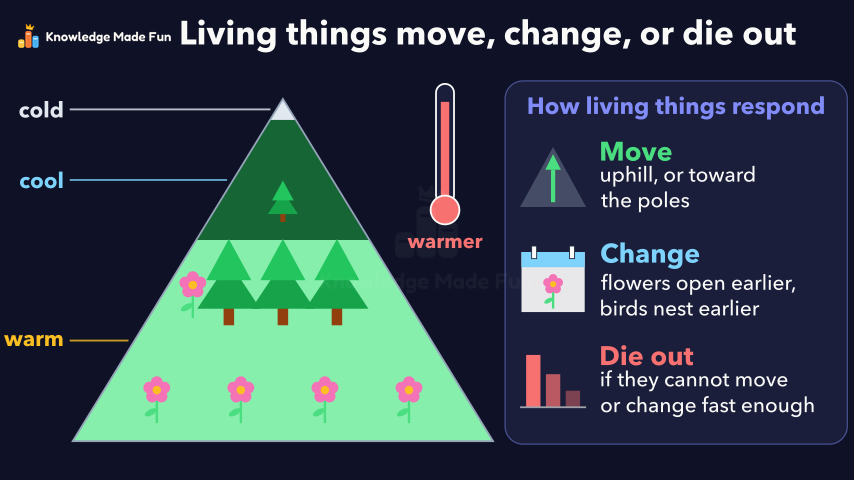 1 min 19 s
Climate Change and Living Things: Move, Change, or Die Out
Grade 7 · 1 min 19 s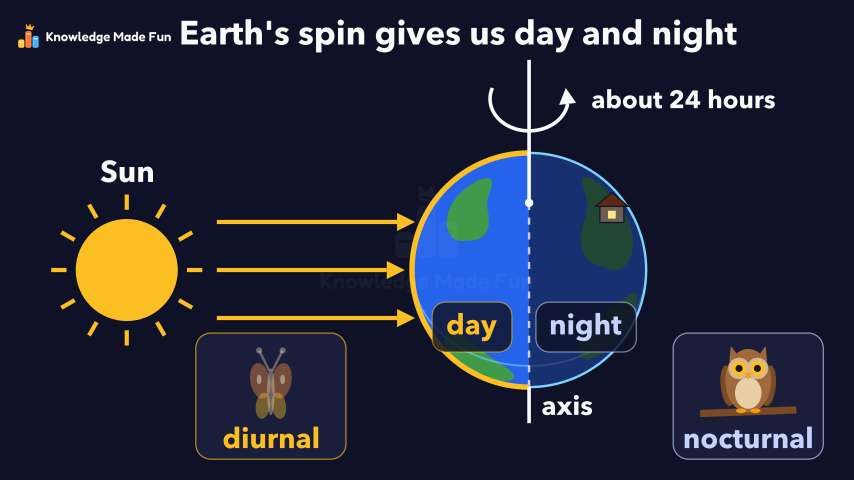 1 min 14 s
Day and Night: Earth Spins on Its Axis
Grade 4 · 1 min 14 s 1 min 50 s
Dynamic equilibrium: balanced but always changing
Grade 9 · 1 min 50 s 1 min 11 s
Earth Materials: From Boulders to Clay
Grade 5 · 1 min 11 s 1 min 11 s
Erosion and Deposition: How Wind, Water and Ice Move Land
Grade 3 · 1 min 11 s 1 min 53 s
From quarks to galaxies: how the universe's matter formed
Grade 10 · 1 min 53 s 47 s
Hot, Warm, Cool and Cold: What Do We Wear?
Kindergarten · 47 s
- All Grade 10 Science lessons
- Create a free account to watch three lessons a day, no payment and no card.