Lesson · Grade 3 · Science
Populations and Communities in a Pond
- Grade 3
- Science
- 58 s
- British Columbia
- BC3-SC-04
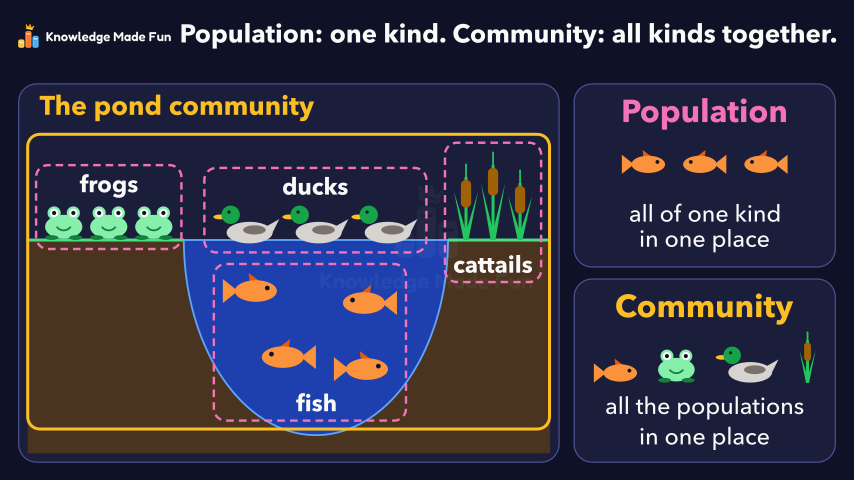
A pond fills up one kind at a time with fish, frogs, ducks and cattails, and a loop around each kind shows that all of one kind in one place is a population. A big loop around all of them shows that all the populations living together in one place make a community.
Concept: Populations and communities in an ecosystem
Anyone can watch two lessons on the website without an account. Signing in is free, no payment and no card, and opens three a day; Plus has no limit.
Loading
In one sentence
The question this lesson answers
What is a population, and what is a community?
Here is a pond, a home for many living things.
Transcript
What the lesson says
What is a population, and what is a community?
Here is a pond, a home for many living things.
Fish of one kind live in the water.
All the fish of this kind in the pond make a population.
A population is all of one kind of living thing in one place.
The frogs are all one kind too, so they make another population.
The ducks are one kind as well, so they are a population too.
Plants count too, so these cattails of one kind make a population.
What do we call all these populations together?
All the populations in the pond together make a community.
A community is all the populations that live in one place.
A population is all of one kind, and a community is all the kinds living together.
Curriculum
Where this fits
- British Columbia, Grade 3
Science, Biology: the knowledge of local First Peoples of ecosystemsBC3-SC-04
Previous: Plants, Animals and Fungi: How Living Things Get FoodNext: Producers, Consumers and Decomposers
The outcomes and strands follow the British Columbia curriculum.
Keep going
 1 min 3 s
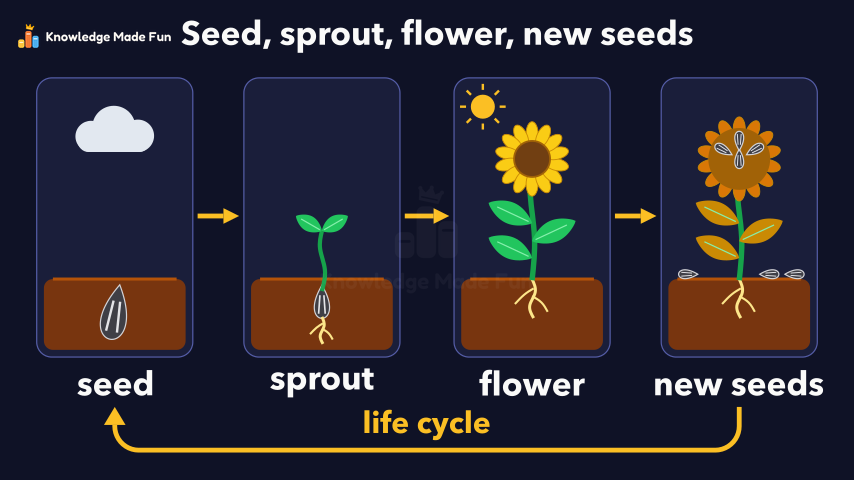
A Sunflower's Life Cycle: Seed, Sprout, Flower, Seed
Kindergarten · 1 min 3 s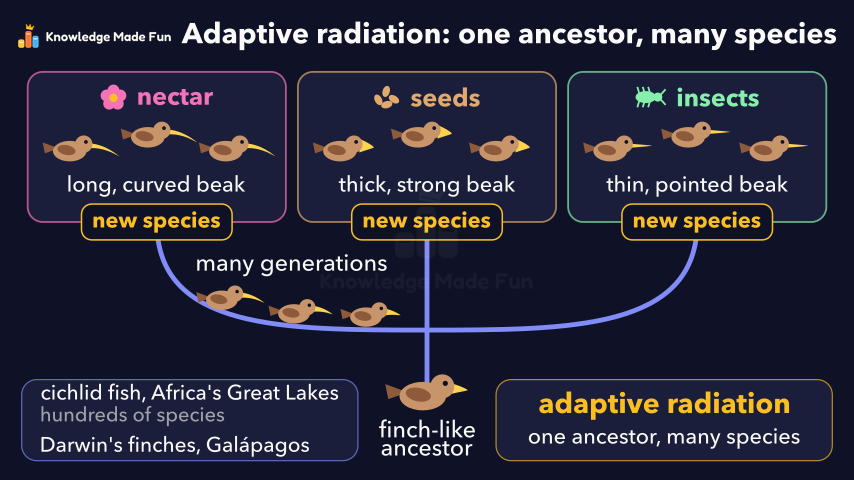 1 min 48 s
Adaptive radiation: one ancestor, many species
Grade 10 · 1 min 48 s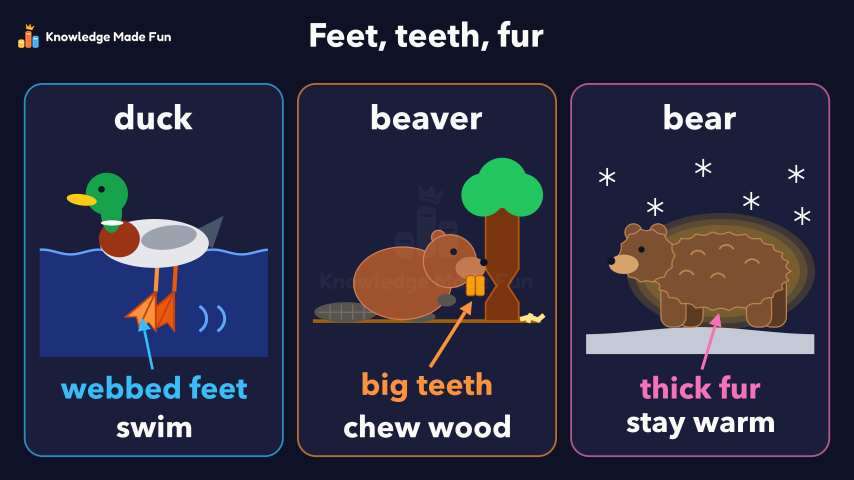 52 s
Animal Bodies That Help Them Live: Feet, Teeth and Fur
Kindergarten · 52 s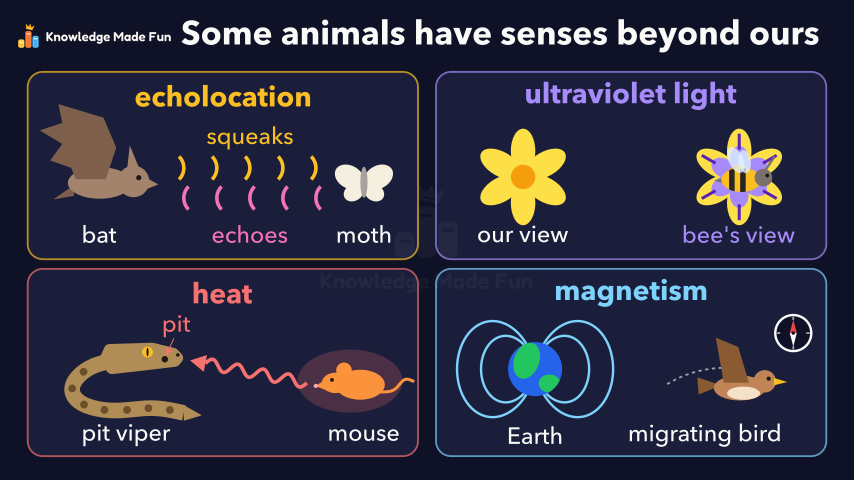 1 min 3 s
Animal senses beyond ours: echolocation, ultraviolet light, heat and magnetism
Grade 4 · 1 min 3 s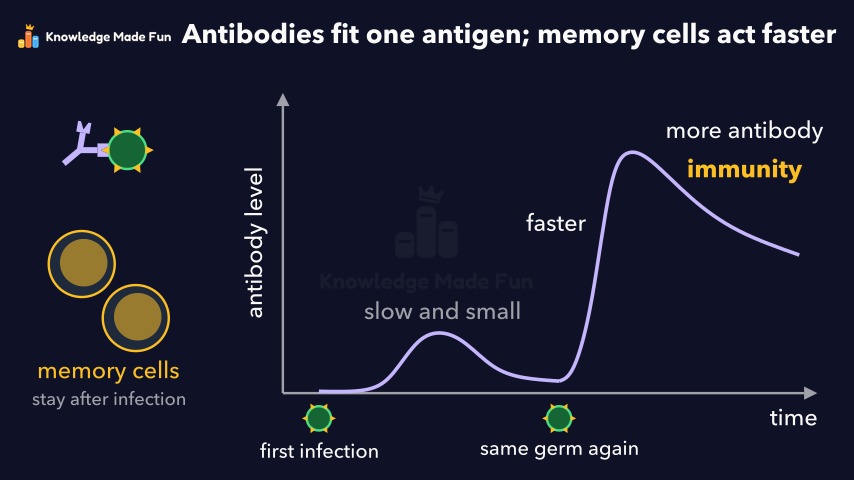 1 min 44 s
Antibodies and Memory Cells: The Body's Targeted Defence
Grade 8 · 1 min 44 s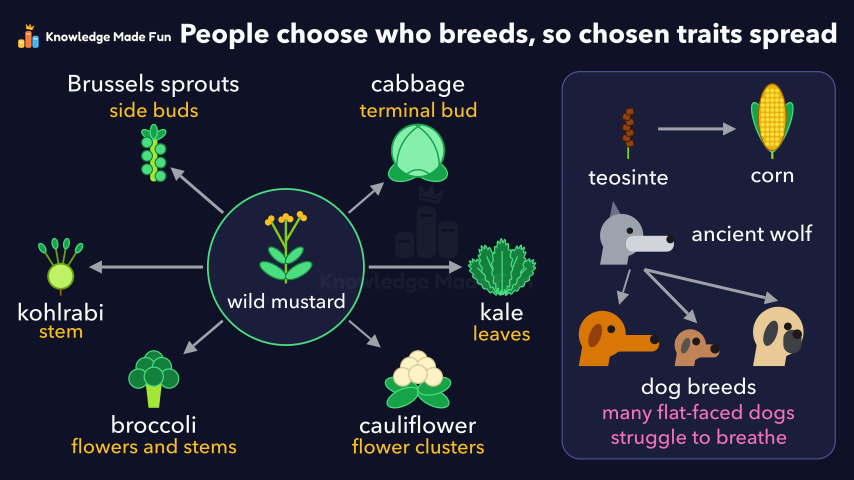 1 min 44 s
Artificial selection: people choose the traits
Grade 10 · 1 min 44 s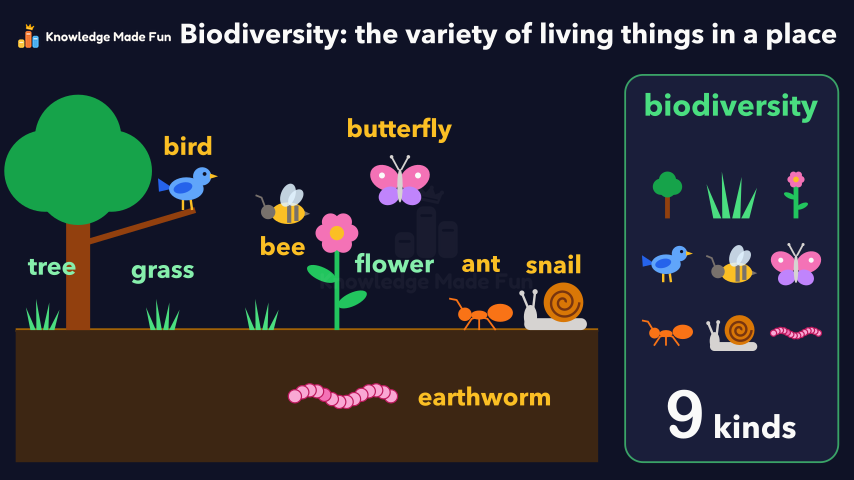 1 min 4 s
Biodiversity: The Variety of Living Things
Grade 3 · 1 min 4 s 1 min 8 s
Biomes: Sorted by Temperature and Precipitation
Grade 4 · 1 min 8 s
- All Grade 3 Science lessons
- Create a free account to watch three lessons a day, no payment and no card.