Lesson · Grade 10 · Science
Nuclear Technology: Benefits and Risks
- Grade 10
- Science
- 1 min 56 s
- British Columbia
- BC10-SC-35
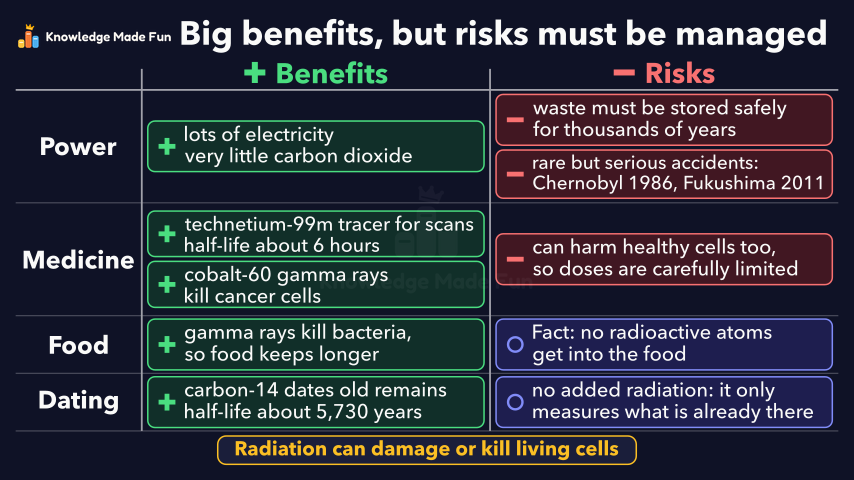
A balance sheet builds up row by row, weighing four uses of nuclear technology: power, medicine (the technetium-99m tracer, with a half-life of about 6 hours, and cobalt-60 against cancer), food irradiation and carbon-14 dating (half-life about 5,730 years). Each benefit is set against its risks, such as waste that stays radioactive for thousands of years and the Chernobyl and Fukushima accidents, and the myth that irradiated food becomes radioactive is corrected, all tied to one idea: radiation can damage or kill living cells.
Anyone can watch two lessons on the website without an account. Signing in is free, no payment and no card, and opens three a day; Plus has no limit.
Loading
In one sentence
The question this lesson answers
Nuclear technology has big benefits and real risks. Let's weigh them up.
We will look at four uses: power, medicine, food and dating.
Transcript
What the lesson says
Nuclear technology has big benefits and real risks. Let's weigh them up.
We will look at four uses: power, medicine, food and dating.
Nuclear power stations use fission, the splitting of uranium nuclei, to make lots of electricity with very little carbon dioxide.
But the used fuel is radioactive: its unstable nuclei give out radiation. It must be stored safely for thousands of years.
That radiation can damage or kill living cells.
Accidents are rare but can be serious, as at Chernobyl in 1986 and Fukushima in 2011.
In medicine, a tracer called technetium ninety-nine M is injected, and a gamma camera detects its rays to make a scan.
Its half-life, the time for half its nuclei to decay, is only about 6 hours.
Gamma rays from cobalt 60 are aimed at tumours to kill cancer cells.
But the rays can harm healthy cells too, so doses are carefully limited.
Food irradiation uses radiation, such as gamma rays, to kill bacteria so food keeps longer.
A common myth is that irradiated food becomes radioactive.
It does not, because no radioactive atoms get into the food.
Radioactive dating uses carbon 14 to find the age of old remains.
After death, its carbon 14 halves about every 5,730 years, so what is left shows the age.
It adds no radiation: it only measures what is already there.
Nuclear technology has big benefits, but its risks must be carefully managed.
Curriculum
Where this fits
- British Columbia, Grade 10
Science 10, Physics: nuclear energy and radiationBC10-SC-35
Previous: Fission and Fusion: Two Ways to Release Nuclear EnergyNext: Conservation of Energy: Tracking the Total
The outcomes and strands follow the British Columbia curriculum.
Keep going
 1 min 51 s
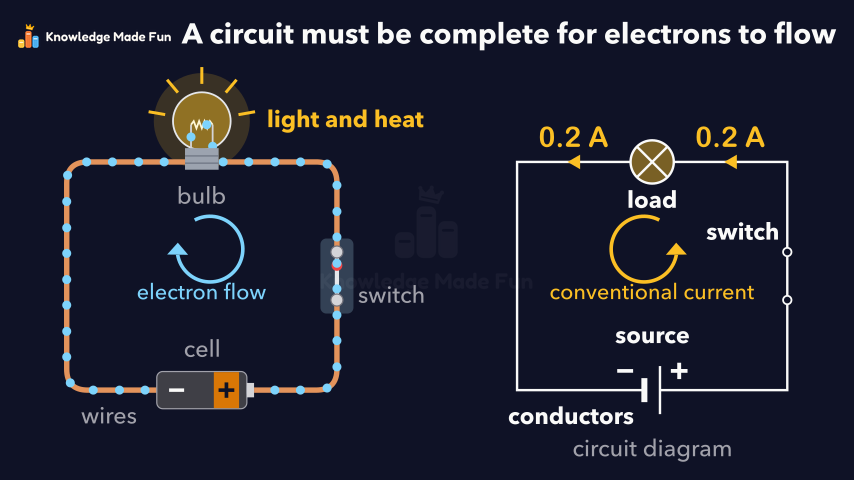
A Complete Circuit: Source, Load, Conductors and Switch
Grade 9 · 1 min 51 s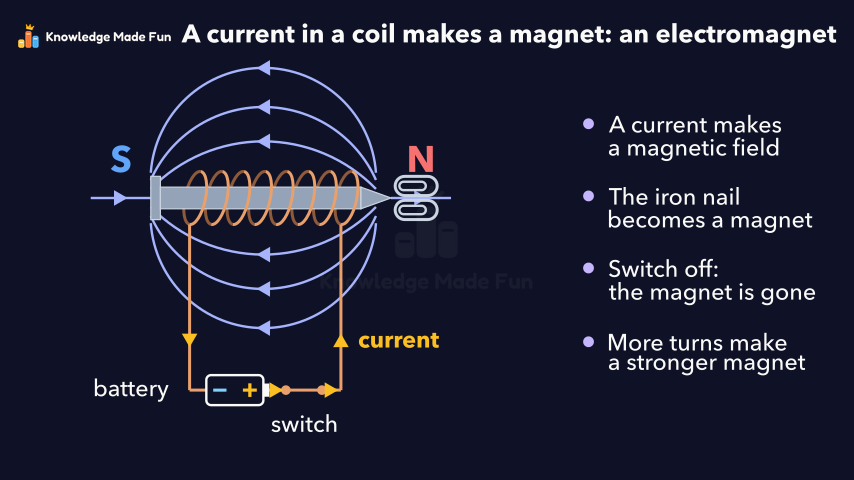 1 min 18 s
A current makes a magnet: the electromagnet
Grade 7 · 1 min 18 s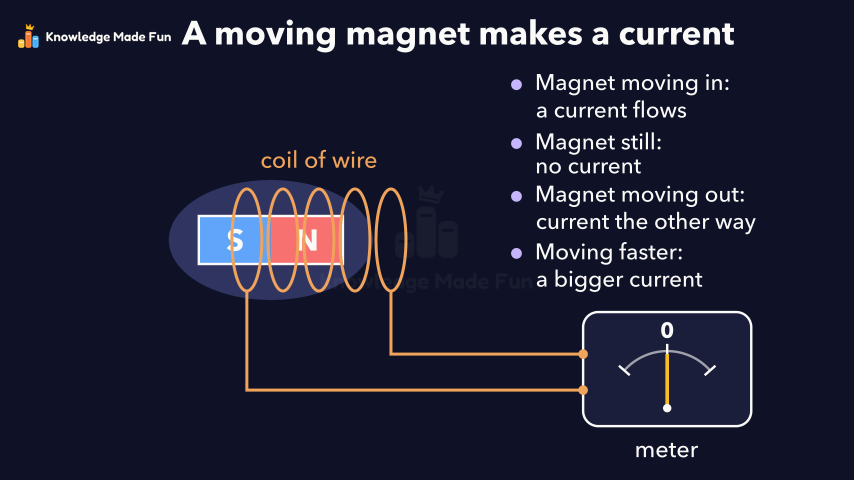 1 min 12 s
A Moving Magnet Makes a Current
Grade 7 · 1 min 12 s 54 s
A Push or a Pull Makes Things Move
Kindergarten · 54 s 1 min 48 s
AC and DC: Two Ways Current Can Flow
Grade 9 · 1 min 48 s 1 min 3 s
Air Resistance: Why a Flat Sheet Falls Slower
Grade 2 · 1 min 3 s 1 min 40 s
Alpha, Beta and Gamma Radiation
Grade 10 · 1 min 40 s 1 min 6 s
Balanced and Unbalanced Forces in Sport and Play
Grade 6 · 1 min 6 s
- All Grade 10 Science lessons
- Create a free account to watch three lessons a day, no payment and no card.