Lesson · Grade 10 · Science
Fission and Fusion: Two Ways to Release Nuclear Energy
- Grade 10
- Science
- 1 min 50 s
- British Columbia
- BC10-SC-34
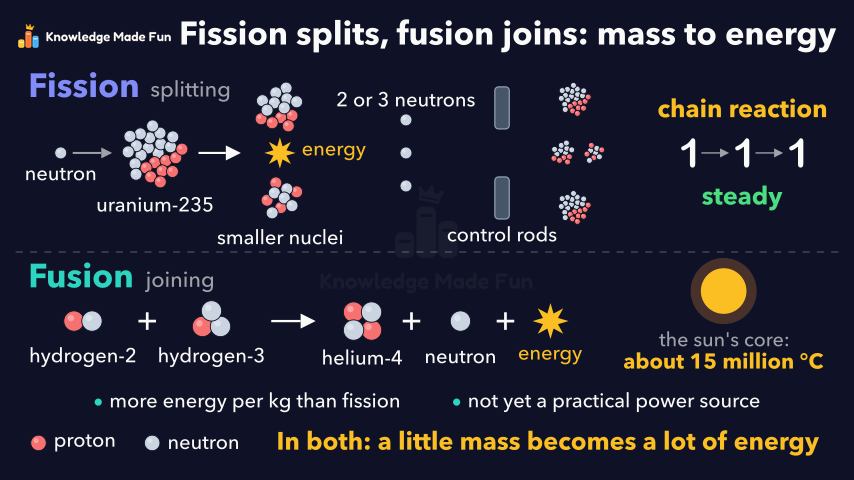
A two-row diagram builds up step by step: a neutron splits a uranium-235 nucleus into two smaller nuclei, neutrons and energy, the freed neutrons drive a chain reaction (1 → 3 → 9), and control rods hold it steady at 1 → 1 → 1. Below, hydrogen-2 and hydrogen-3 fuse into helium-4, a neutron and energy, as in the sun's core at about 15 million °C, and the video ends on the shared idea that in both a little mass becomes a lot of energy.
Anyone can watch two lessons on the website without an account. Signing in is free, no payment and no card, and opens three a day; Plus has no limit.
Loading
In one sentence
The question this lesson answers
How can the tiny nucleus at the centre of an atom release energy?
A nucleus is made of protons and neutrons, packed tightly together.
Transcript
What the lesson says
How can the tiny nucleus at the centre of an atom release energy?
A nucleus is made of protons and neutrons, packed tightly together.
There are two ways: fission splits a large nucleus, and fusion joins small nuclei.
Fission uses a large nucleus such as uranium-235, which has 235 protons and neutrons.
A neutron hits the nucleus and is absorbed.
The nucleus splits into two smaller nuclei, two or three neutrons, and energy.
These neutrons can split more uranium nuclei. Here, one split causes three, then nine.
This is called a chain reaction, and it can grow very fast.
In a nuclear reactor, control rods absorb some of the neutrons.
Then each split causes just one more, on average, so the reaction stays steady.
In fusion, small nuclei join to make a larger one.
Here, hydrogen-2 and hydrogen-3 join to make helium-4, giving out a neutron and energy.
Fusion powers the sun, whose core is about 15 million degrees Celsius.
Kilogram for kilogram, fusion releases even more energy than fission.
But fusion is not yet a practical power source on Earth.
In both, what comes out has slightly less mass than what went in.
That missing mass has become a lot of energy.
Fission splits a large nucleus, fusion joins small nuclei, and both turn a little mass into a lot of energy.
Curriculum
Where this fits
- British Columbia, Grade 10
Science 10, Physics: nuclear energy and radiationBC10-SC-34
Previous: Ionizing and Non-Ionizing RadiationNext: Nuclear Technology: Benefits and Risks
The outcomes and strands follow the British Columbia curriculum.
Keep going
 1 min 51 s
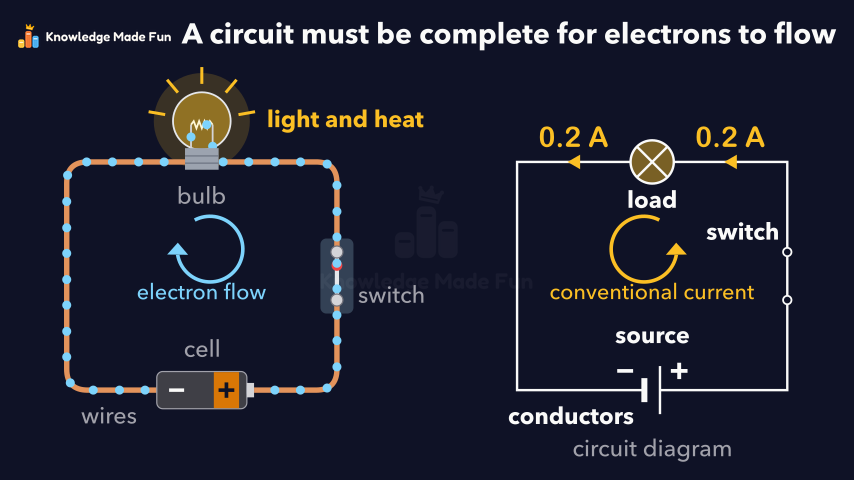
A Complete Circuit: Source, Load, Conductors and Switch
Grade 9 · 1 min 51 s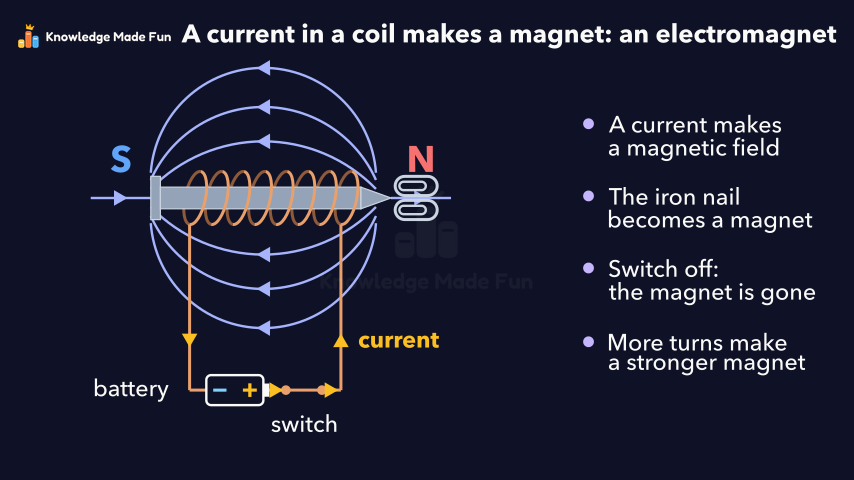 1 min 18 s
A current makes a magnet: the electromagnet
Grade 7 · 1 min 18 s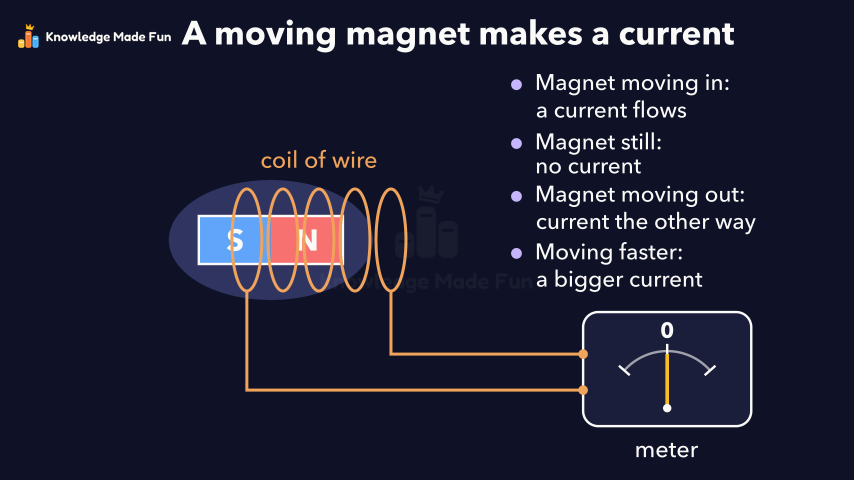 1 min 12 s
A Moving Magnet Makes a Current
Grade 7 · 1 min 12 s 54 s
A Push or a Pull Makes Things Move
Kindergarten · 54 s 1 min 48 s
AC and DC: Two Ways Current Can Flow
Grade 9 · 1 min 48 s 1 min 3 s
Air Resistance: Why a Flat Sheet Falls Slower
Grade 2 · 1 min 3 s 1 min 40 s
Alpha, Beta and Gamma Radiation
Grade 10 · 1 min 40 s 1 min 6 s
Balanced and Unbalanced Forces in Sport and Play
Grade 6 · 1 min 6 s
- All Grade 10 Science lessons
- Create a free account to watch three lessons a day, no payment and no card.