Lesson · Grade 10 · Science
Ionizing and Non-Ionizing Radiation
- Grade 10
- Science
- 1 min 54 s
- British Columbia
- BC10-SC-33
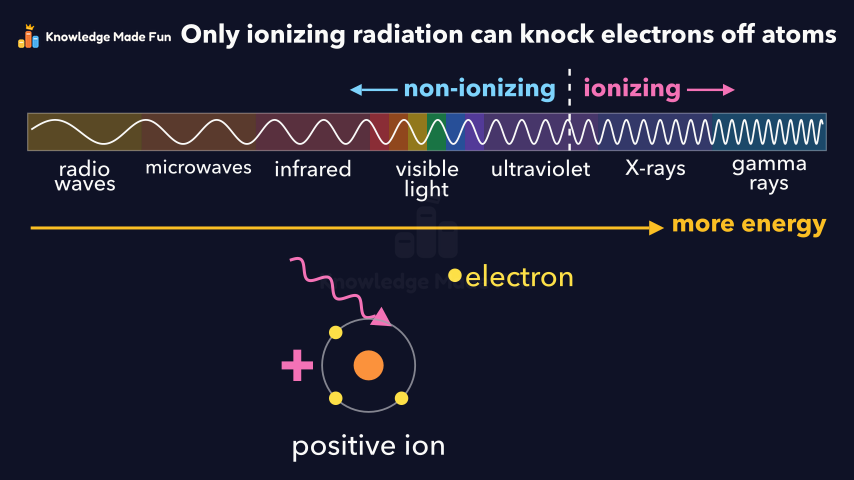
The electromagnetic spectrum builds up band by band from radio waves to gamma rays, with a dashed line inside the ultraviolet. On the ionizing side, a ray knocks an electron off an atom to make a positive ion, alpha and beta particles appear, and DNA breaks; on the non-ionizing side, radiation warms a material without knocking off electrons, and sunlight UV still damages skin-cell DNA. The video then shows the three ways to protect yourself (less time, more distance, shielding, with a lead apron for a dental X-ray), debunks the myth that microwave ovens make food radioactive, and ends on the recap that only ionizing radiation has enough energy to knock electrons off atoms.
Anyone can watch two lessons on the website without an account. Signing in is free, no payment and no card, and opens three a day; Plus has no limit.
Loading
In one sentence
The question this lesson answers
Why can X-rays damage our DNA, when radio waves cannot?
Radiation is energy that travels as waves or fast particles.
Transcript
What the lesson says
Why can X-rays damage our DNA, when radio waves cannot?
Radiation is energy that travels as waves or fast particles.
The waves form the electromagnetic spectrum: radio waves, microwaves, infrared, visible light, ultraviolet, X-rays and gamma rays.
Toward gamma rays, the waves get shorter and carry more energy.
With enough energy, radiation can knock an electron right off an atom.
Now the atom has a positive charge, which makes it an ion. So this radiation is called ionizing.
The dividing line falls inside the ultraviolet. The highest-energy ultraviolet, X-rays and gamma rays are ionizing.
Alpha and beta particles, given off by radioactive atoms, are ionizing too.
Ionizing radiation can also break DNA in our cells.
Radio waves, microwaves, infrared and visible light are non-ionizing: they can heat things, but cannot knock electrons off atoms.
The ultraviolet, or UV, in sunlight and tanning beds is not strongly ionizing.
Even so, it can still damage the DNA in skin cells directly.
Three basic ways protect you from ionizing radiation: less time, more distance and shielding.
Lead makes a good shield, like the lead apron you may wear for a dental X-ray.
A common myth says microwave ovens make food radioactive.
In fact, microwaves make water molecules in food move faster, which heats it.
So only ionizing radiation has enough energy to knock electrons off atoms.
Curriculum
Where this fits
- British Columbia, Grade 10
Science 10, Physics: nuclear energy and radiationBC10-SC-33
Previous: Alpha, Beta and Gamma RadiationNext: Fission and Fusion: Two Ways to Release Nuclear Energy
- British Columbia, Grade 11
Science For Citizens 11, Technology: impacts of technology in the workplaceBC11-SC-293
This lesson is also listed in Grade 11.
The outcomes and strands follow the British Columbia curriculum.
Keep going
 1 min 51 s
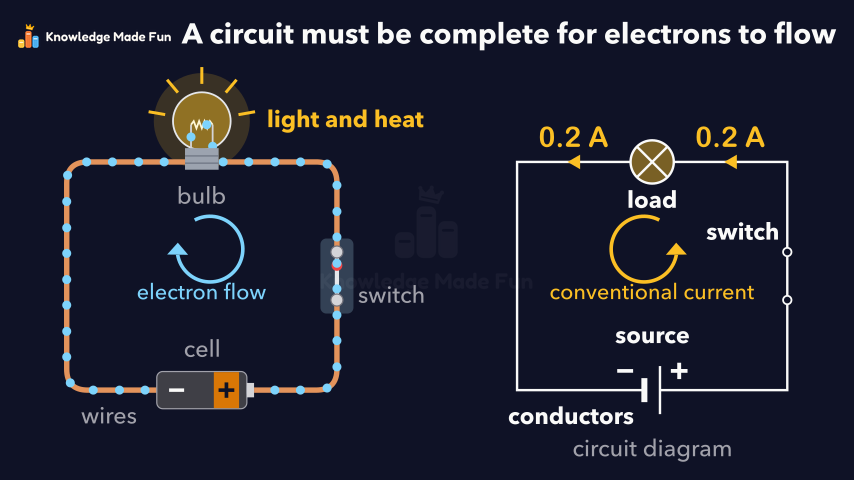
A Complete Circuit: Source, Load, Conductors and Switch
Grade 9 · 1 min 51 s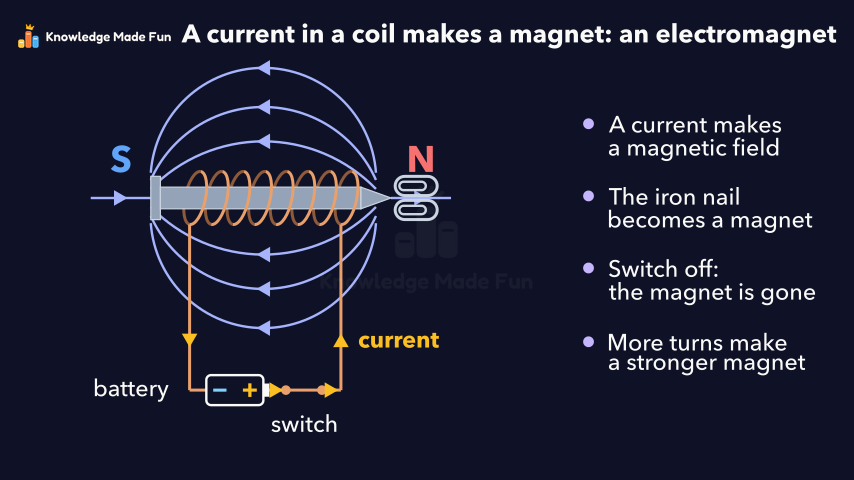 1 min 18 s
A current makes a magnet: the electromagnet
Grade 7 · 1 min 18 s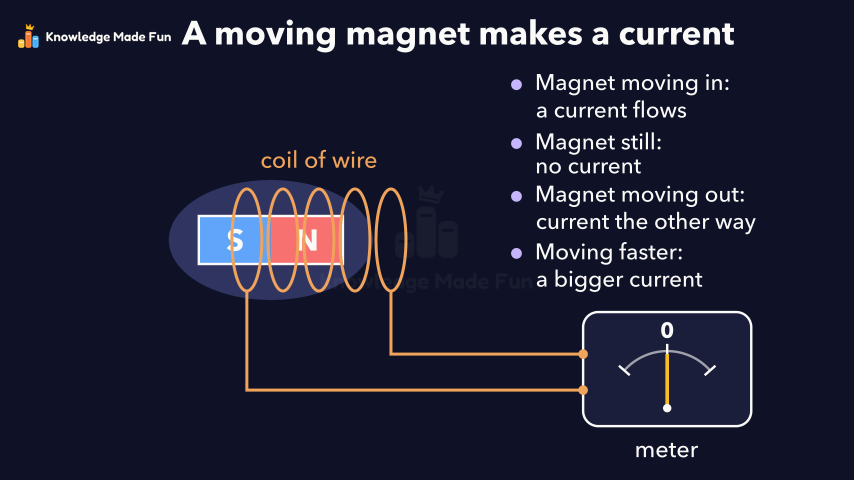 1 min 12 s
A Moving Magnet Makes a Current
Grade 7 · 1 min 12 s 54 s
A Push or a Pull Makes Things Move
Kindergarten · 54 s 1 min 48 s
AC and DC: Two Ways Current Can Flow
Grade 9 · 1 min 48 s 1 min 3 s
Air Resistance: Why a Flat Sheet Falls Slower
Grade 2 · 1 min 3 s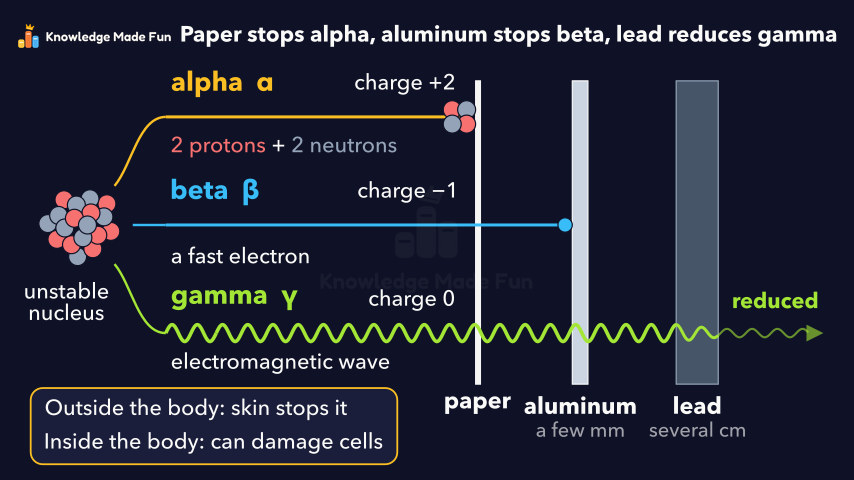 1 min 40 s
Alpha, Beta and Gamma Radiation
Grade 10 · 1 min 40 s 1 min 6 s
Balanced and Unbalanced Forces in Sport and Play
Grade 6 · 1 min 6 s
- All Grade 10 Science lessons
- Create a free account to watch three lessons a day, no payment and no card.