Lesson · Grade 11 · Chemistry
Naming Alkanes, Alkenes and Alkynes
- Grade 11
- Chemistry
- 2 min 6 s
- British Columbia
- BC11-SC-13
A hydrocarbon's name joins a prefix for the number of carbons in its longest chain (meth to dec) to an ending for its carbon–carbon bonds: -ane for single, -ene for double, -yne for triple. Working through CH₃–CH(CH₃)–CH₂–CH₃, the video shows that the longest chain can bend on the page and that the chain is numbered to give the lowest numbers, giving 2-methylbutane (C₅H₁₂) and then but-1-ene, not but-3-ene.
Anyone can watch two lessons on the website without an account. Signing in is free, no payment and no card, and opens three a day; Plus has no limit.
Loading
In one sentence
The question this lesson answers
How do chemists name a hydrocarbon, a compound of only carbon and hydrogen?
Each group here is one carbon atom with its hydrogens.
Transcript
What the lesson says
How do chemists name a hydrocarbon, a compound of only carbon and hydrogen?
Each group here is one carbon atom with its hydrogens.
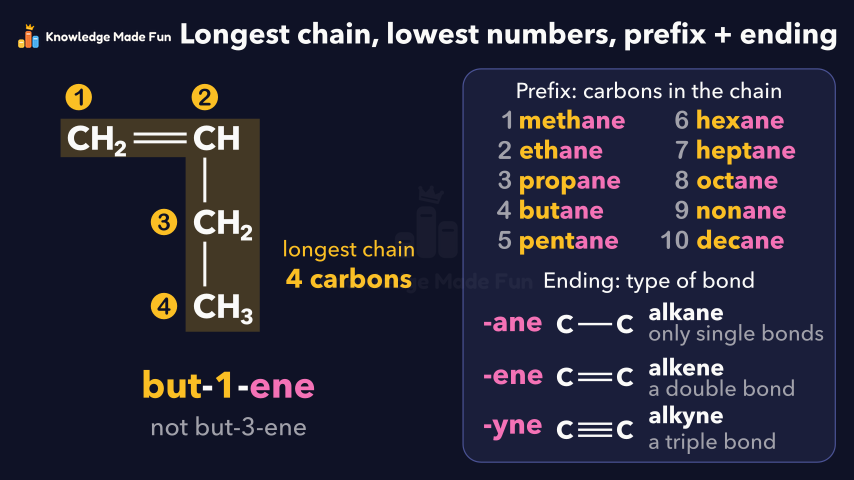
A name joins a prefix, for the carbons in the longest chain, and an ending, for the bonds.
Prefixes count carbons: one is methane, two ethane, three propane, four butane, five pentane, six hexane, seven heptane, eight octane, nine nonane, ten decane.
These are alkanes: only single bonds between carbons, so the names end in -ane.
Alkenes have a carbon-carbon double bond, and their names end in -ene.
Alkynes have a carbon-carbon triple bond, and their names end in -yne.
Our molecule has only single bonds, so its name ends in -ane.
Now find the longest chain, the most carbons joined in one line. Straight across there are only three.
But a chain can bend on the page. Follow it down: one, two, three, four carbons.
Four carbons and only single bonds make butane.
The carbon left over is a branch, called methyl, from meth for one.
Number from the end that gives the branch the lowest number: two from the top, not three from the bottom.
So the name is 2-methylbutane, and its formula is C5H12.
Now picture no branch, and a double bond between the first two carbons: a butene.
Number from the end nearer the double bond: one, not three. So it is but-1-ene, not but-3-ene.
Find the longest chain, give the lowest numbers, then join the prefix and the ending.
Curriculum
Where this fits
- British Columbia, Grade 11
Chemistry 11, Organic chemistry: organic compoundsBC11-SC-13
Previous: Carbon makes four bondsNext: Functional groups: the part that gives a molecule its behaviour
The outcomes and strands follow the British Columbia curriculum.
Keep going
 2 min 2 s
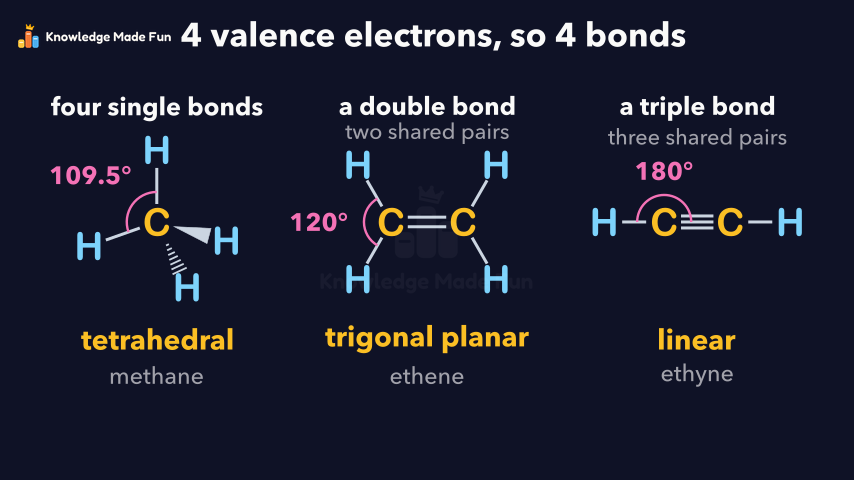
Carbon makes four bonds
Grade 11 · 2 min 2 s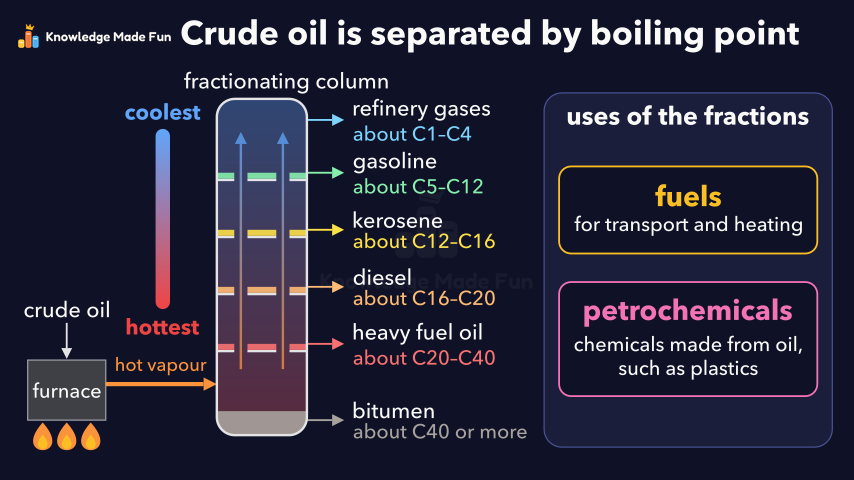 1 min 48 s
Fractional Distillation: Separating Crude Oil by Boiling Point
Grade 11 · 1 min 48 s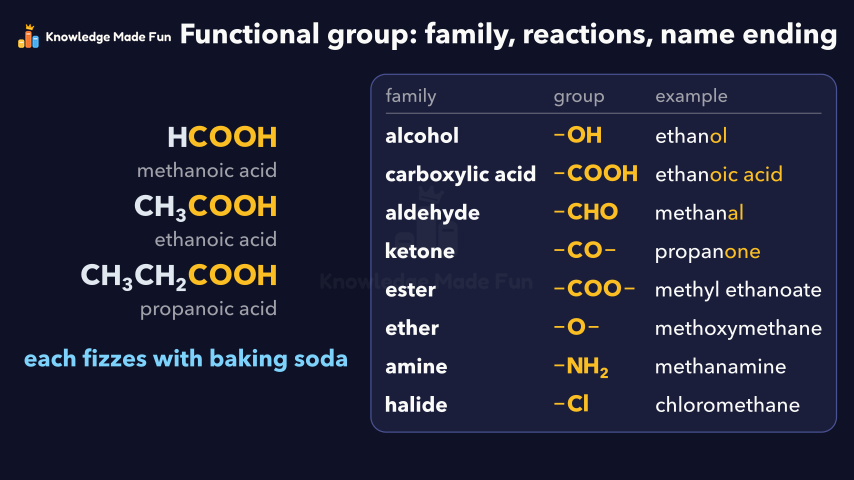 1 min 59 s
Functional groups: the part that gives a molecule its behaviour
Grade 11 · 1 min 59 s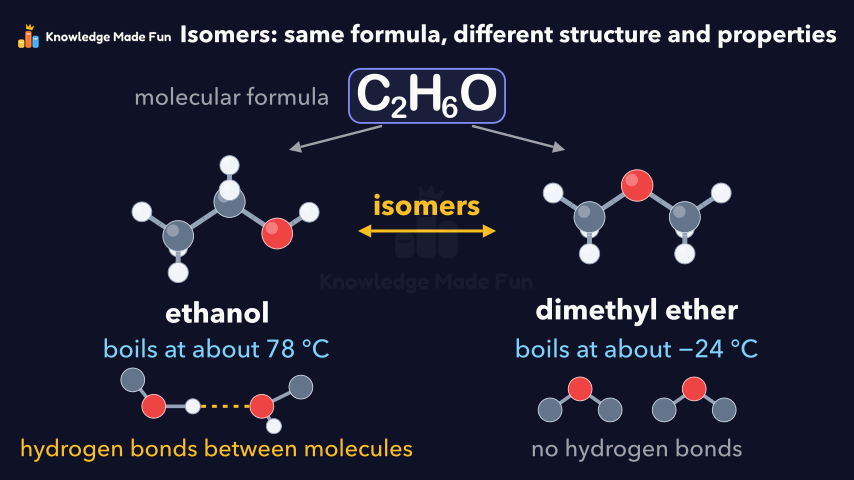 1 min 51 s
Isomers: Same Formula, Different Structure
Grade 11 · 1 min 51 s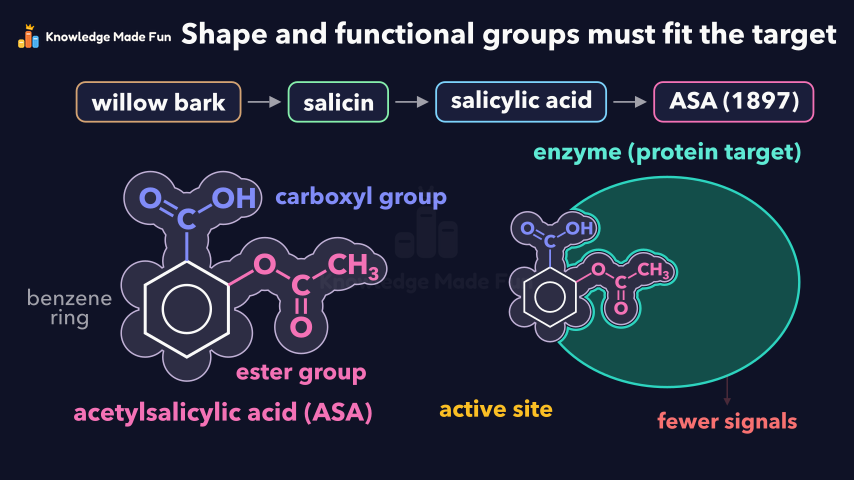 1 min 48 s
Medicines from Organic Molecules: Shape Fits the Target
Grade 11 · 1 min 48 s 1 min 40 s
Acids and bases: the pH scale
Grade 10 · 1 min 40 s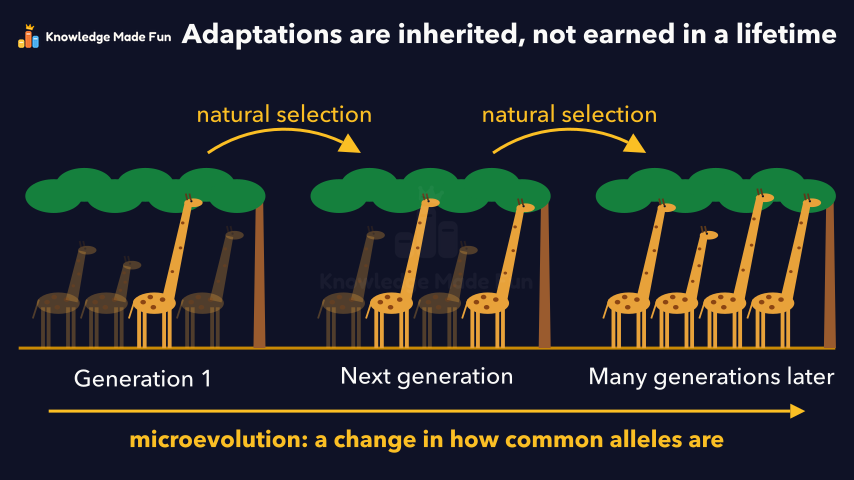 1 min 39 s
Adaptations Are Inherited, Not Earned in a Lifetime
Grade 11 · 1 min 39 s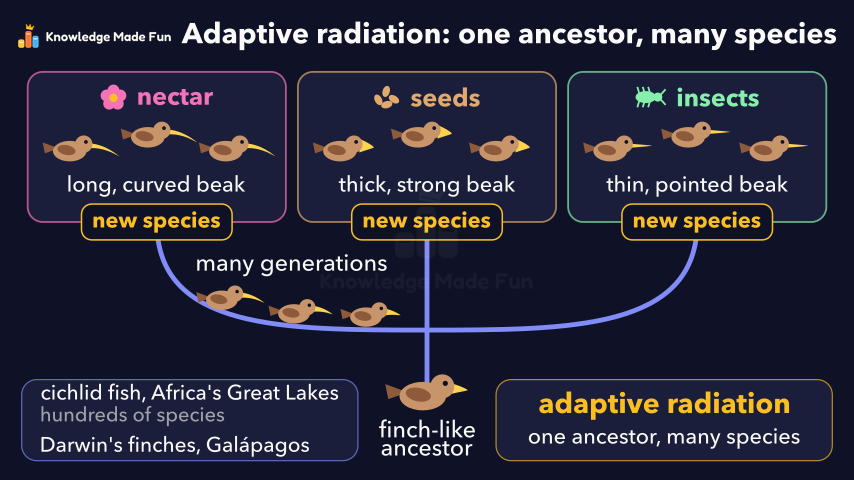 1 min 48 s
Adaptive radiation: one ancestor, many species
Grade 10 · 1 min 48 s
- All Grade 11 Chemistry lessons
- Create a free account to watch three lessons a day, no payment and no card.