Lesson · Grade 11 · Chemistry
Functional groups: the part that gives a molecule its behaviour
- Grade 11
- Chemistry
- 1 min 59 s
- British Columbia
- BC11-SC-14
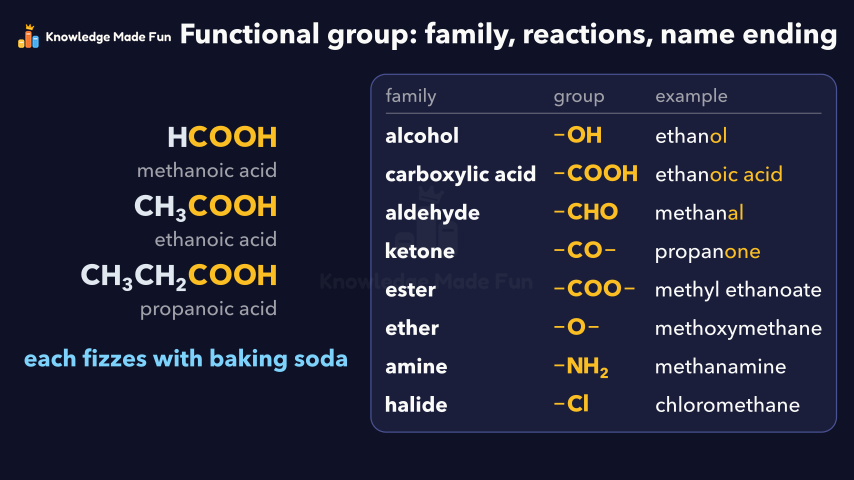
Starting from ethane, one hydrogen is swapped for OH to make ethanol, and its hydroxyl group is shown as a functional group. Simple molecules then light up their groups one at a time while a table builds: alcohol, carboxylic acid, aldehyde, ketone, ester, ether, amine and halide, with the name endings -ol, -oic acid, -al and -one. Three carboxylic acids line up their COOH groups to show that molecules with the same group react alike (each fizzes with baking soda), and the video ends on a one-line recap that the functional group sets a molecule's family, reactions and name ending.
Anyone can watch two lessons on the website without an account. Signing in is free, no payment and no card, and opens three a day; Plus has no limit.
Loading
In one sentence
The question this lesson answers
Organic molecules are built on carbon chains, so what gives each one its behaviour?
Ethane is a hydrocarbon: it has only carbon and hydrogen atoms.
Transcript
What the lesson says
Organic molecules are built on carbon chains, so what gives each one its behaviour?
Ethane is a hydrocarbon: it has only carbon and hydrogen atoms.
Picture swapping one hydrogen for O H, an oxygen joined to a hydrogen. Ethane becomes ethanol.
This O H, a hydroxyl group, is a functional group: a small group of atoms that sets how a molecule reacts.
Ethanol is an alcohol. Alcohols have a hydroxyl group, and their names end in O L.
Ethanoic acid, the acid in vinegar, has a carboxyl group, C O O H. Carboxylic acid names end in O I C acid.
Methanal has an aldehyde group, C H O: a carbon double bonded to oxygen, with a hydrogen. Aldehyde names end in A L.
Propanone, in many nail polish removers, has a carbon double bonded to oxygen between two carbons. It is a ketone, ending in O N E.
Methyl ethanoate has a C O O group between two carbons, so it is an ester. Many esters smell fruity.
An ether has an oxygen atom between two carbons, as in methoxymethane.
Many amines, like methanamine, have an N H 2 group: a nitrogen with two hydrogens.
A halide has a halogen atom, such as chlorine, in place of a hydrogen, as in chloromethane.
Methanoic, ethanoic and propanoic acid all have a carboxyl group, so they react alike: each fizzes with baking soda.
The functional group is the part of a molecule that sets its family, its reactions and its name ending.
Curriculum
Where this fits
- British Columbia, Grade 11
Chemistry 11, Organic chemistry: organic compoundsBC11-SC-14
Previous: Naming Alkanes, Alkenes and AlkynesNext: Isomers: Same Formula, Different Structure
The outcomes and strands follow the British Columbia curriculum.
Keep going
 2 min 2 s
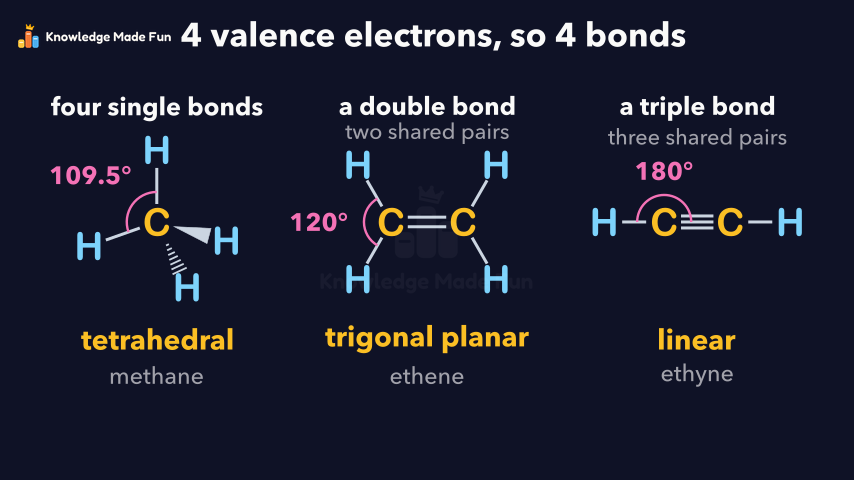
Carbon makes four bonds
Grade 11 · 2 min 2 s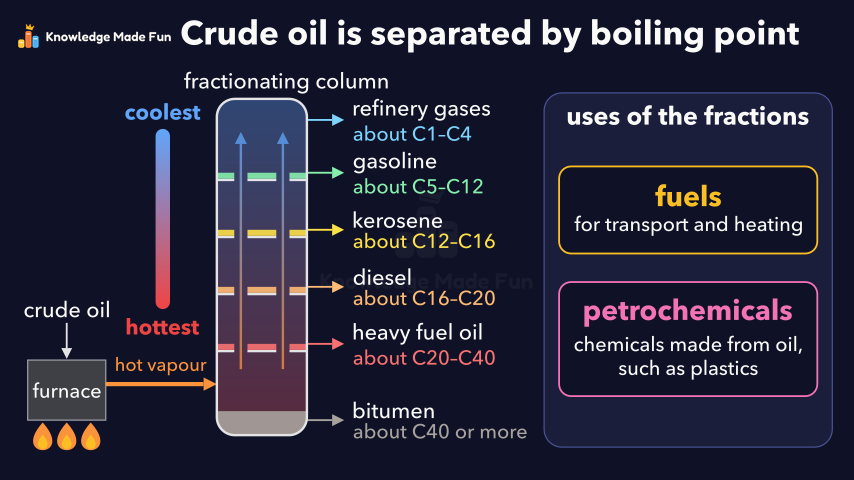 1 min 48 s
Fractional Distillation: Separating Crude Oil by Boiling Point
Grade 11 · 1 min 48 s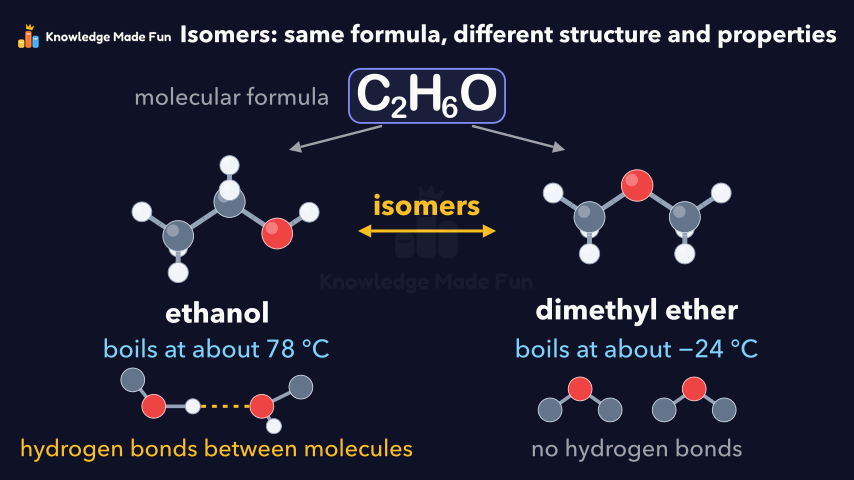 1 min 51 s
Isomers: Same Formula, Different Structure
Grade 11 · 1 min 51 s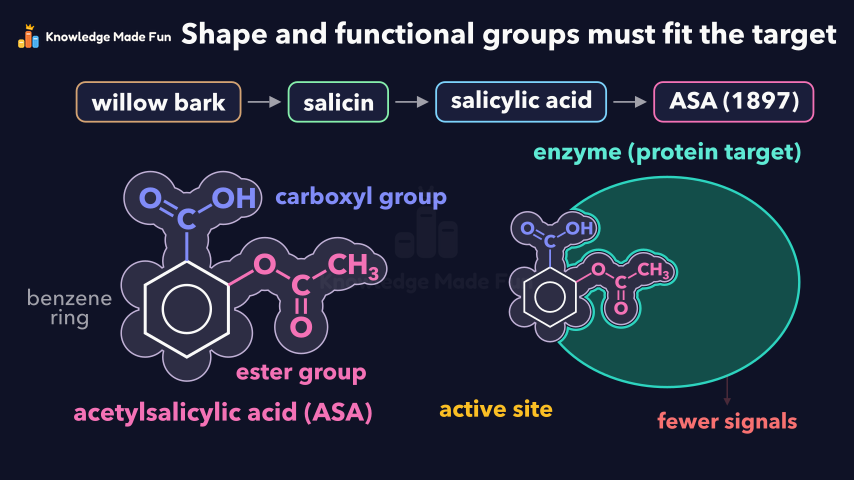 1 min 48 s
Medicines from Organic Molecules: Shape Fits the Target
Grade 11 · 1 min 48 s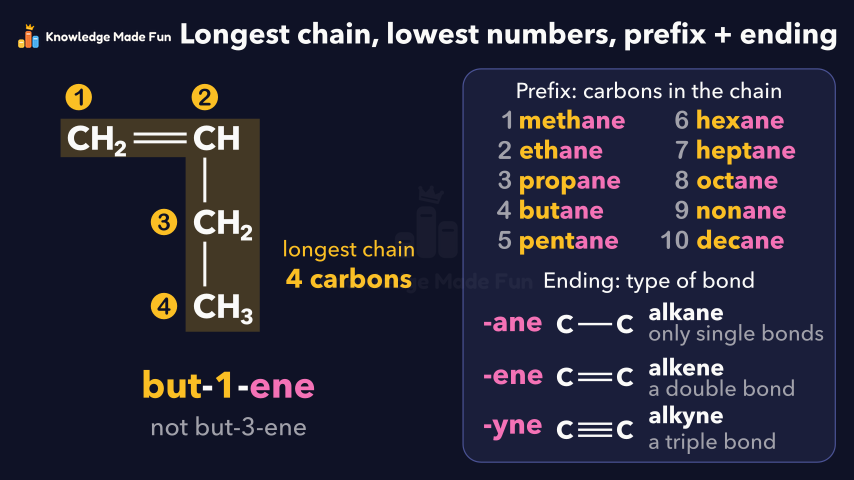 2 min 6 s
Naming Alkanes, Alkenes and Alkynes
Grade 11 · 2 min 6 s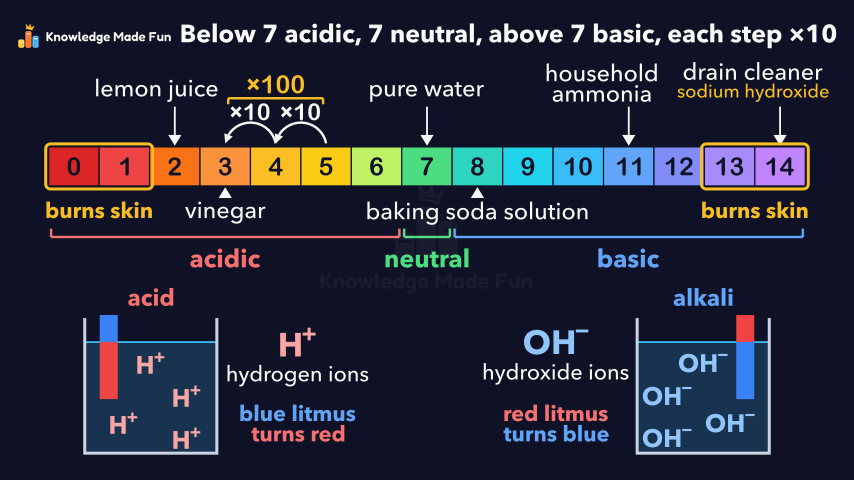 1 min 40 s
Acids and bases: the pH scale
Grade 10 · 1 min 40 s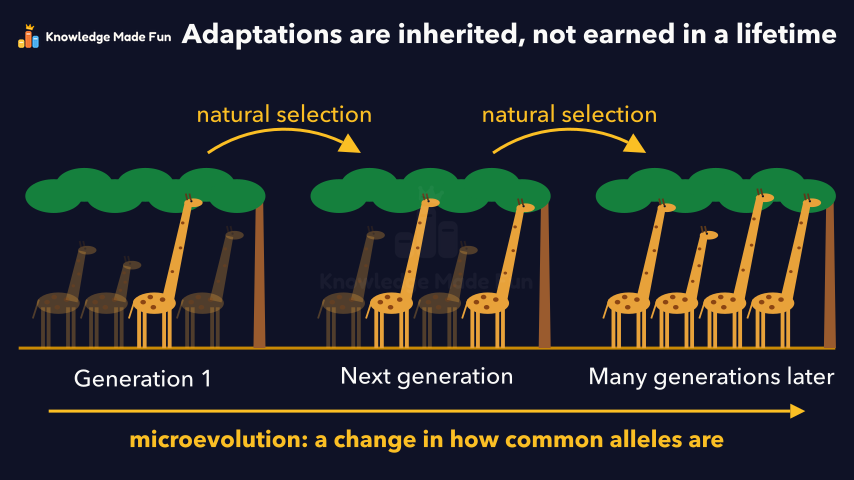 1 min 39 s
Adaptations Are Inherited, Not Earned in a Lifetime
Grade 11 · 1 min 39 s 1 min 48 s
Adaptive radiation: one ancestor, many species
Grade 10 · 1 min 48 s
- All Grade 11 Chemistry lessons
- Create a free account to watch three lessons a day, no payment and no card.