Lesson · Grade 11 · Chemistry
Ionic compounds split into ions; molecular ones stay whole
- Grade 11
- Chemistry
- 1 min 51 s
- British Columbia
- BC11-SC-36
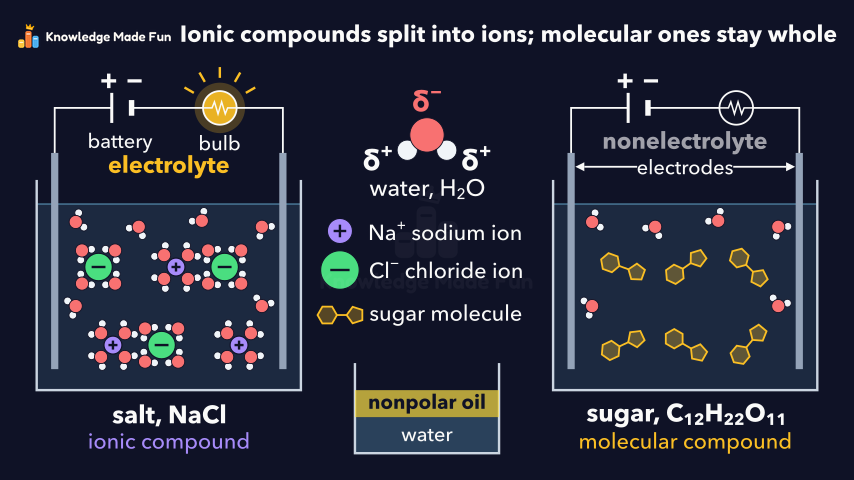
Polar water molecules pull a salt crystal apart into separate sodium and chloride ions, while sugar dissolves as whole, neutral C₁₂H₂₂O₁₁ molecules. A conductivity test lights a bulb only in the salt water, and nonpolar oil that floats on water shows the "like dissolves like" rule.
Anyone can watch two lessons on the website without an account. Signing in is free, no payment and no card, and opens three a day; Plus has no limit.
Loading
In one sentence
The question this lesson answers
Salt and sugar both dissolve in water. Do they dissolve the same way?
Water molecules are polar: the oxygen end is slightly negative, delta minus, and the hydrogen ends slightly positive, delta plus.
Transcript
What the lesson says
Salt and sugar both dissolve in water. Do they dissolve the same way?
Water molecules are polar: the oxygen end is slightly negative, delta minus, and the hydrogen ends slightly positive, delta plus.
Salt, sodium chloride, is an ionic compound: a lattice of positive sodium ions and negative chloride ions.
Water molecules turn their oxygen ends toward sodium ions and their hydrogen ends toward chloride ions.
They pull the ions out of the crystal and surround each one. This is called dissociation.
This is not melting. Salt melts at 801 degrees Celsius, but water pulls it apart at room temperature.
Sugar, C twelve H twenty-two O eleven, is a molecular compound, made of neutral molecules.
Water pulls sugar molecules off the crystal, but each one stays whole. No ions form.
To test for ions, we put two metal electrodes, wired to a battery and a bulb, in each solution.
In salt water, moving ions carry charge, so the bulb lights. Salt is an electrolyte: its solution conducts.
In sugar water there are no ions, so the bulb stays dark. Sugar is a nonelectrolyte.
Polar water dissolves many ionic and polar substances. This rule of thumb is called like dissolves like.
Cooking oil is nonpolar, so it does not dissolve in water. It floats in a separate layer.
So ionic compounds split into ions when they dissolve; molecular compounds stay whole.
Curriculum
Where this fits
- British Columbia, Grade 11
Chemistry 11, Solutions: solubility of molecular and ionic compoundsBC11-SC-36
The outcomes and strands follow the British Columbia curriculum.
Keep going
 2 min 10 s
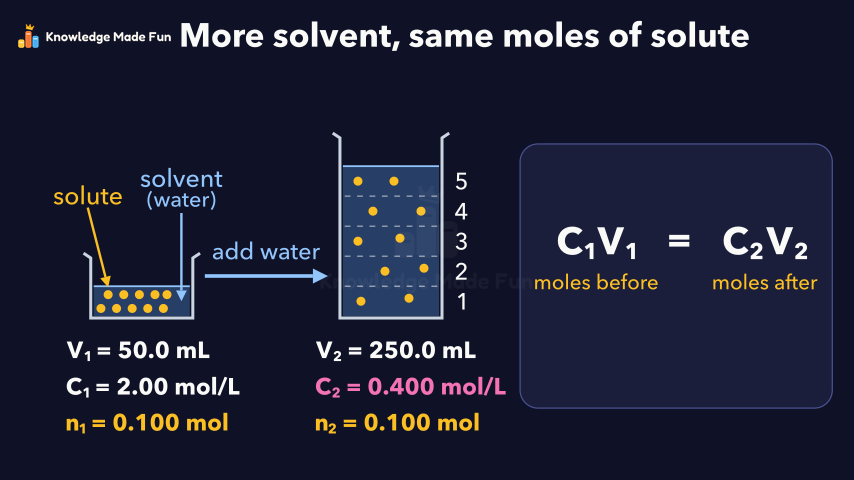
Dilution: More Solvent, Same Moles of Solute
Grade 11 · 2 min 10 s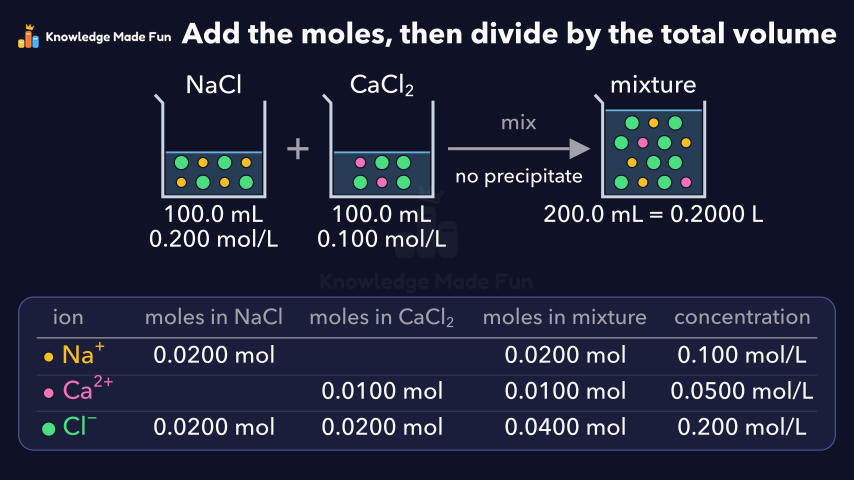 2 min 41 s
Ion concentrations when two solutions are mixed
Grade 11 · 2 min 41 s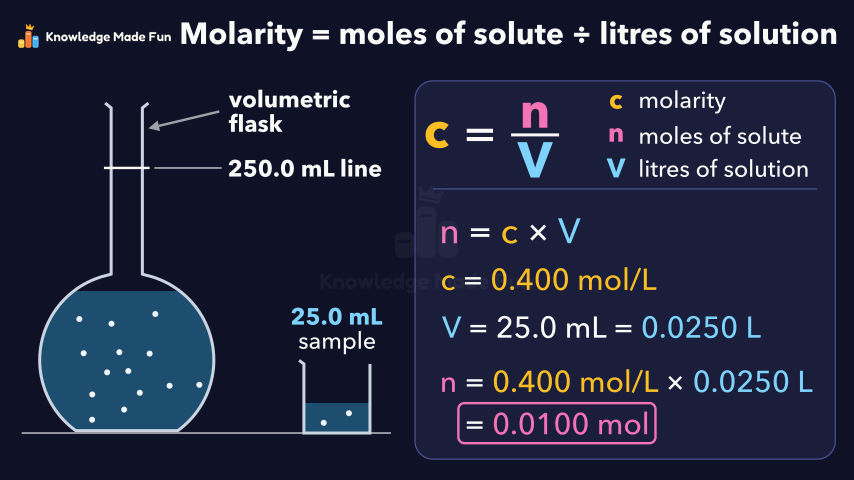 2 min 19 s
Molarity: moles of solute per litre of solution
Grade 11 · 2 min 19 s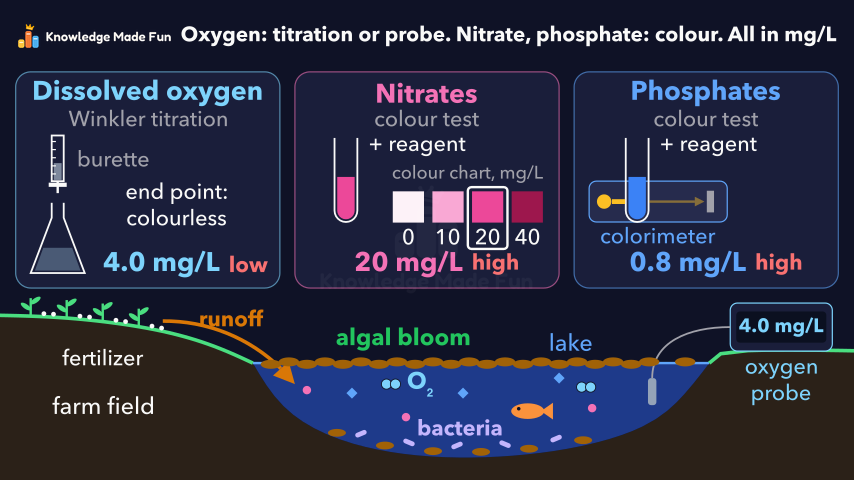 1 min 52 s
Testing Water: Dissolved Oxygen, Nitrates and Phosphates
Grade 11 · 1 min 52 s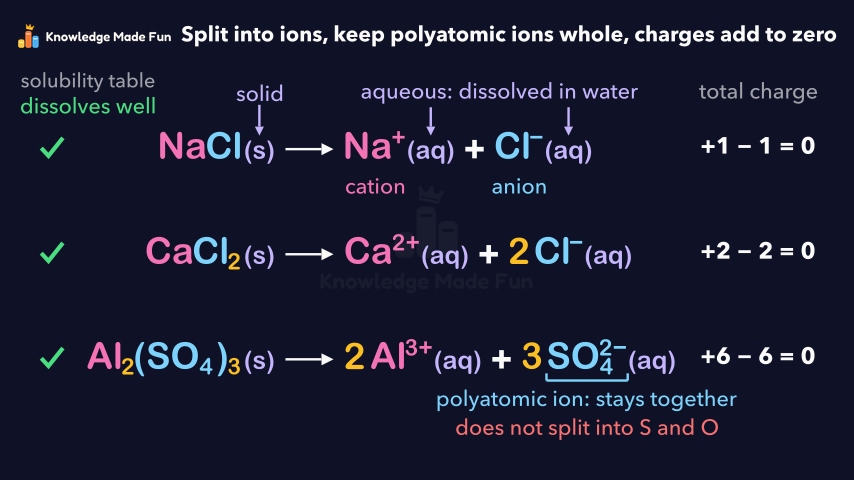 1 min 56 s
Writing Dissociation Equations
Grade 11 · 1 min 56 s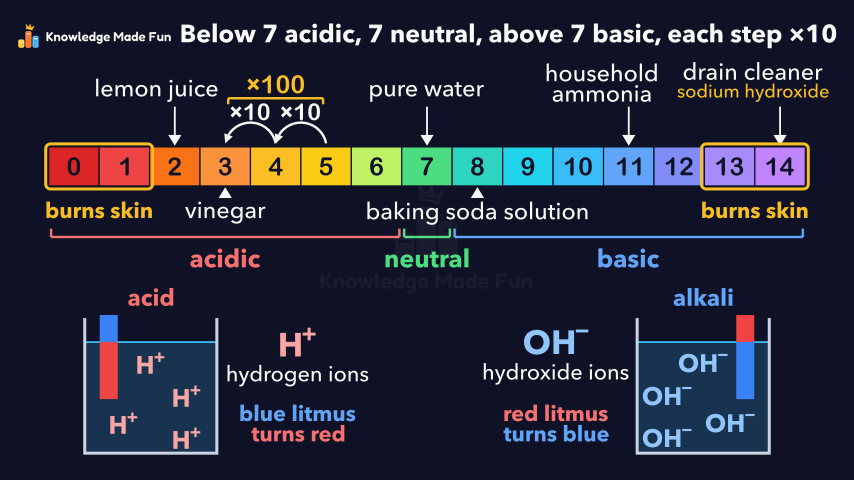 1 min 40 s
Acids and bases: the pH scale
Grade 10 · 1 min 40 s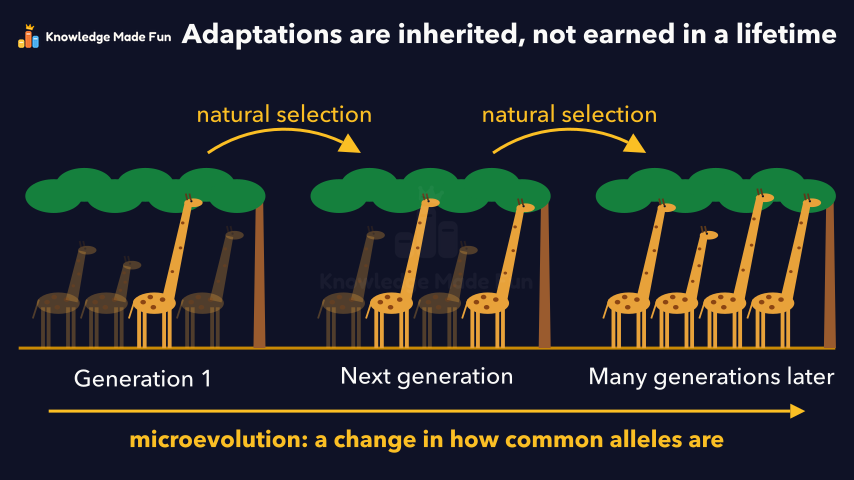 1 min 39 s
Adaptations Are Inherited, Not Earned in a Lifetime
Grade 11 · 1 min 39 s 1 min 48 s
Adaptive radiation: one ancestor, many species
Grade 10 · 1 min 48 s
- All Grade 11 Chemistry lessons
- Create a free account to watch three lessons a day, no payment and no card.