Lesson · Grade 7 · Science
How people are changing the climate
- Grade 7
- Science
- 1 min 14 s
- British Columbia
- BC7-SC-41
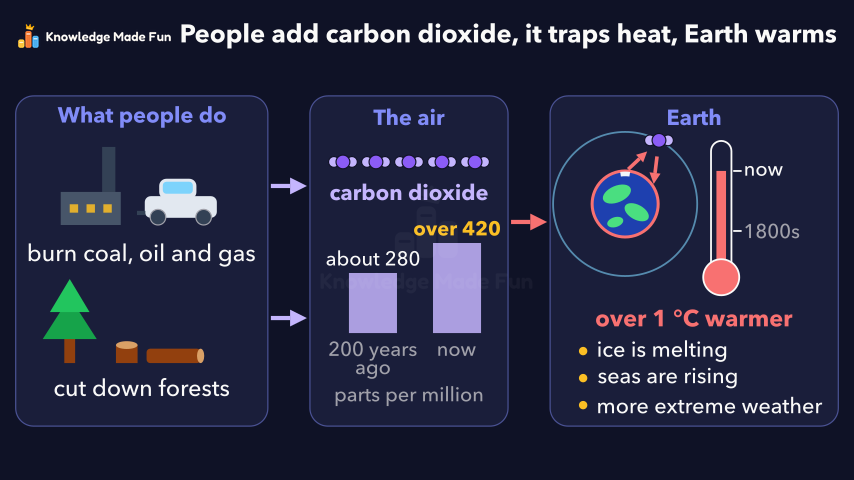
A three-box chain diagram builds up left to right: what people do (burning coal, oil and gas; cutting down forests), what that does to the air (carbon dioxide molecules gathering, with bars showing about 280 parts per million 200 years ago against over 420 now), and what happens to Earth (heat trapped by the gas, a thermometer rising to over 1 °C warmer than the 1800s, the polar ice shrinking, and a list of impacts). It opens with Earth alone and the contrast between slow past changes and today's fast change, and ends on the one-line recap that people add carbon dioxide, it traps heat, and Earth warms.
Anyone can watch two lessons on the website without an account. Signing in is free, no payment and no card, and opens three a day; Plus has no limit.
Loading
In one sentence
The question this lesson answers
How are people changing Earth's climate?
Earth's climate has changed before, but slowly, over thousands of years.
Transcript
What the lesson says
How are people changing Earth's climate?
Earth's climate has changed before, but slowly, over thousands of years.
Today it is changing much faster, and people are the main reason.
For about 200 years, people have burned coal, oil and gas for energy.
Burning these fuels gives off carbon dioxide, a greenhouse gas.
Trees take carbon dioxide out of the air.
Cutting down forests means less of it is taken back out.
Two hundred years ago, the air held about 280 parts per million of carbon dioxide.
Now it holds over 420 parts per million, about half as much again.
Carbon dioxide traps heat that would have escaped to space.
Earth is now more than 1 degree Celsius warmer than in the late 1800s.
Ice is melting, and sea levels are rising.
Heat waves and heavy rain are becoming more common.
People add carbon dioxide to the air, it traps more heat, and Earth warms up.
Curriculum
Where this fits
- British Columbia, Grade 7
Science, Earth science: evidence of climate change over geological time and the recent impacts of humansBC7-SC-41
Previous: Reading Past Climate: Ice Cores, Tree Rings and FossilsNext: Climate Change and Living Things: Move, Change, or Die Out
The outcomes and strands follow the British Columbia curriculum.
Keep going
 1 min 43 s
Absolute dating: radioactive decay is a clock for rocks
Grade 7 · 1 min 43 s 1 min 19 s
Climate Change and Living Things: Move, Change, or Die Out
Grade 7 · 1 min 19 s 1 min 14 s
Day and Night: Earth Spins on Its Axis
Grade 4 · 1 min 14 s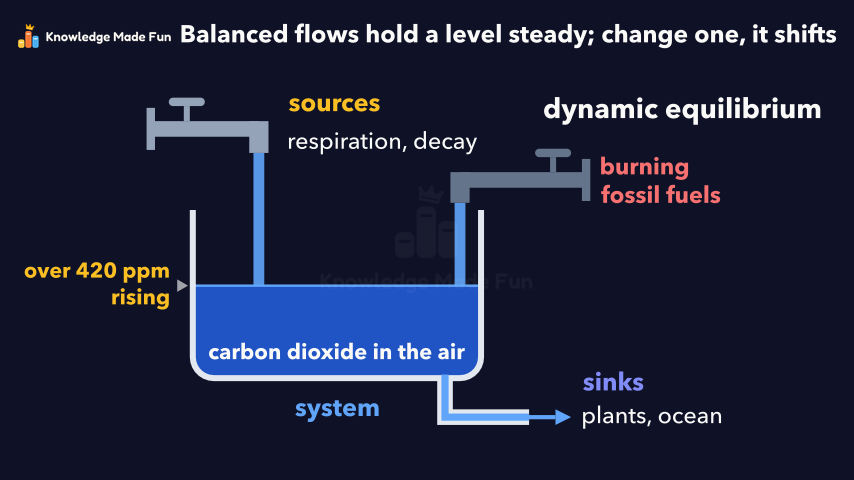 1 min 50 s
Dynamic equilibrium: balanced but always changing
Grade 9 · 1 min 50 s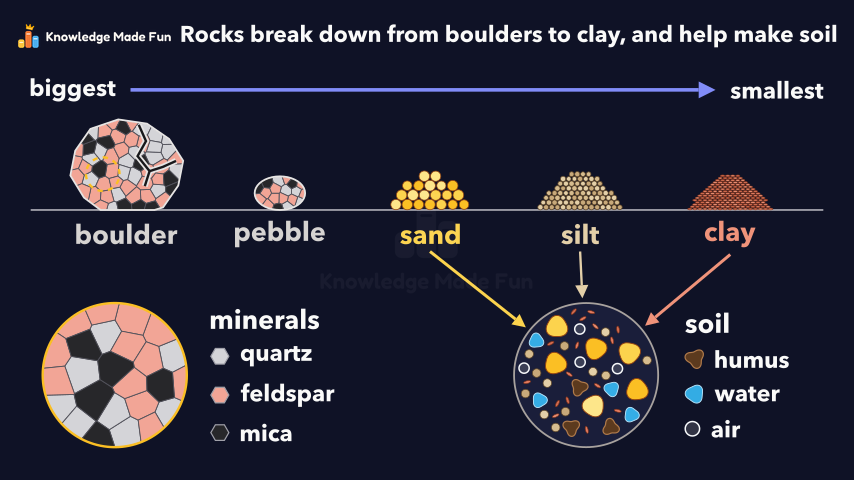 1 min 11 s
Earth Materials: From Boulders to Clay
Grade 5 · 1 min 11 s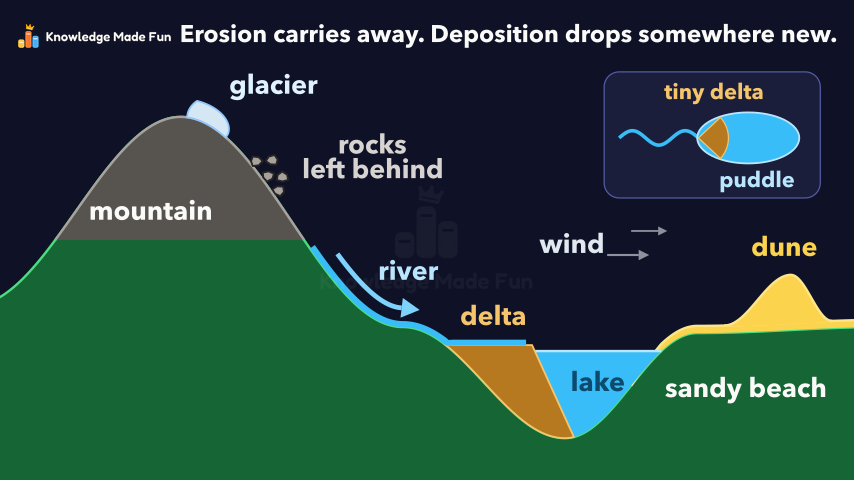 1 min 11 s
Erosion and Deposition: How Wind, Water and Ice Move Land
Grade 3 · 1 min 11 s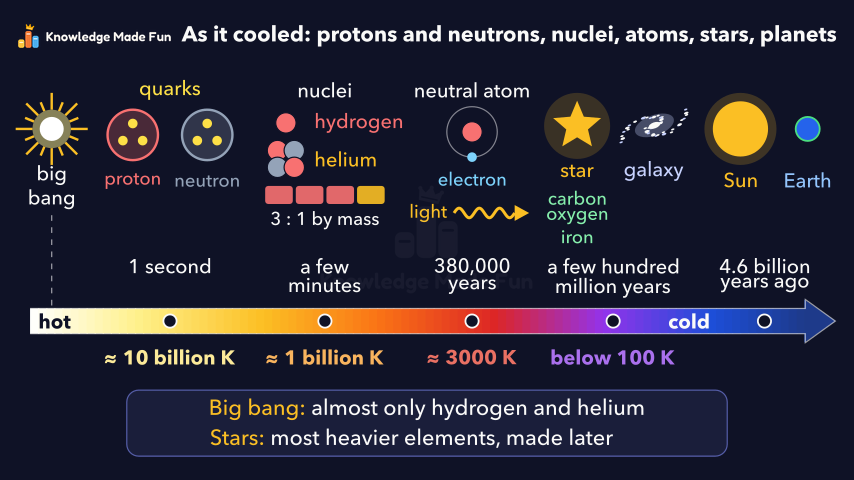 1 min 53 s
From quarks to galaxies: how the universe's matter formed
Grade 10 · 1 min 53 s 47 s
Hot, Warm, Cool and Cold: What Do We Wear?
Kindergarten · 47 s
- All Grade 7 Science lessons
- Create a free account to watch three lessons a day, no payment and no card.