Lesson · Grade 6 · Science
How Old Is the Universe? The Big Bang
- Grade 6
- Science
- 1 min 24 s
- British Columbia
- BC6-SC-16
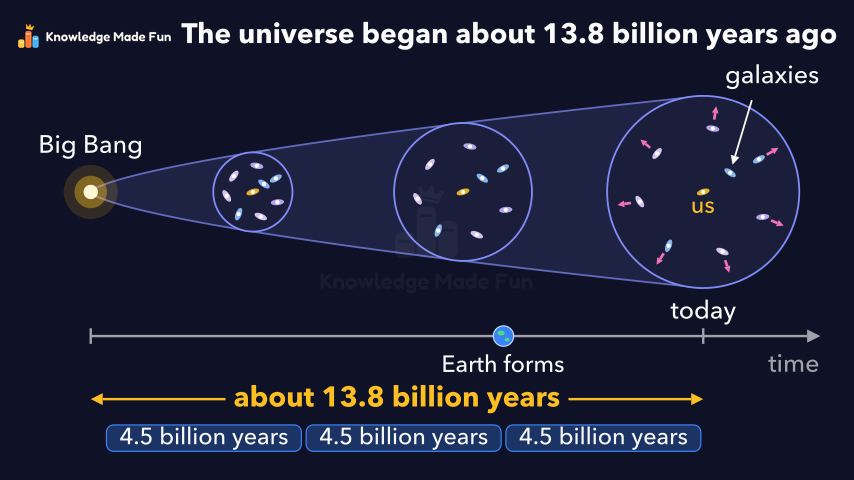
Starting from today's universe full of galaxies, with the distant ones moving away from us, the video runs time backwards through ever smaller, more crowded pictures of the universe to a hot, dense start called the Big Bang. A time line beneath the diagram measures the age, about 13.8 billion years, and lays Earth's 4.5 billion years along it three times to show the universe is about three times as old as Earth.
Concept: How old the universe is: the Big Bang
Anyone can watch two lessons on the website without an account. Signing in is free, no payment and no card, and opens three a day; Plus has no limit.
Loading
In one sentence
The question this lesson answers
How old is the universe, and how do we know?
Space is filled with billions of galaxies, which are huge groups of stars.
Transcript
What the lesson says
How old is the universe, and how do we know?
Space is filled with billions of galaxies, which are huge groups of stars.
Astronomers see that distant galaxies are moving away from us.
This tells us that space itself is stretching, so the universe is expanding.
Now imagine running time backwards, like rewinding a video.
As we go back, the galaxies get closer and closer together.
Long ago, everything was packed together, and it was extremely hot and dense.
Scientists call this hot, dense start the Big Bang.
The Big Bang was not an explosion in space; it was space itself starting to stretch.
By measuring how fast space is stretching, scientists work out when it began.
The Big Bang happened about 13.8 billion years ago.
A billion is a thousand million, so that is a very long time.
Our Earth formed much later, about 4.5 billion years ago.
So the universe is about three times as old as Earth.
The universe began with the Big Bang, about 13.8 billion years ago.
Curriculum
Where this fits
- British Columbia, Grade 6
Science, Earth science: the overall scale, structure, and age of the universeBC6-SC-16
Previous: The Scale of the Universe: From Planets to GalaxiesNext: Our Solar System: The Sun and Everything That Orbits It
The outcomes and strands follow the British Columbia curriculum.
Keep going
 1 min 43 s
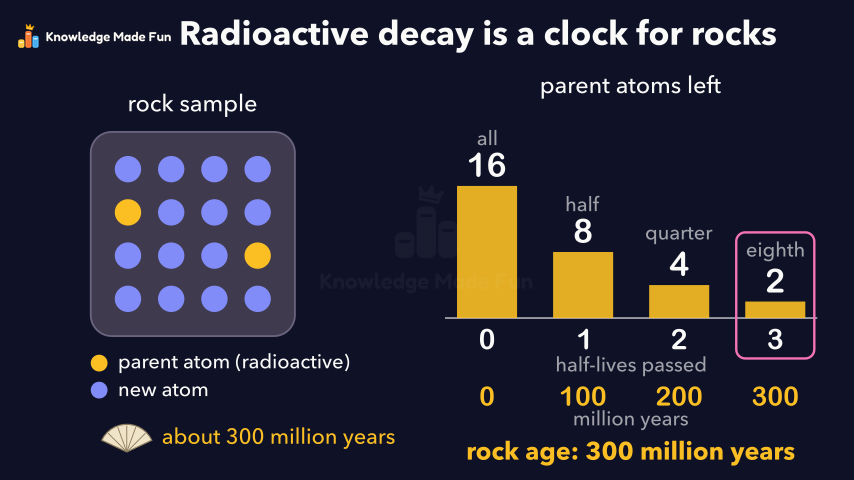
Absolute dating: radioactive decay is a clock for rocks
Grade 7 · 1 min 43 s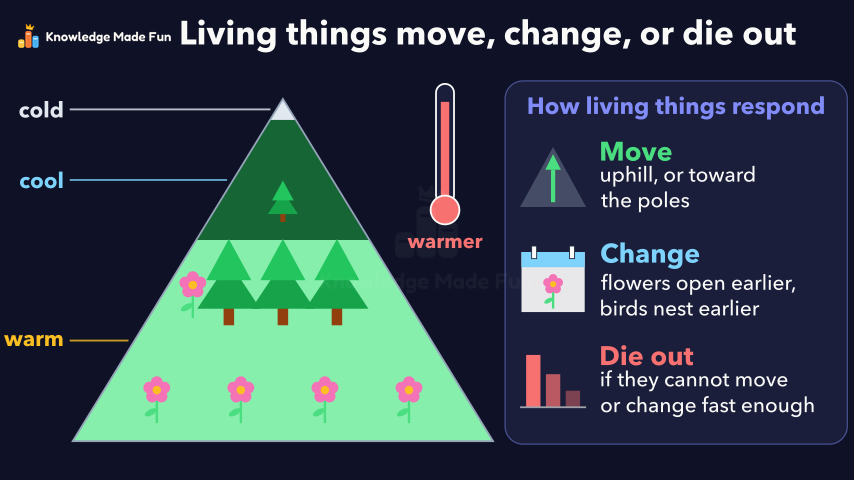 1 min 19 s
Climate Change and Living Things: Move, Change, or Die Out
Grade 7 · 1 min 19 s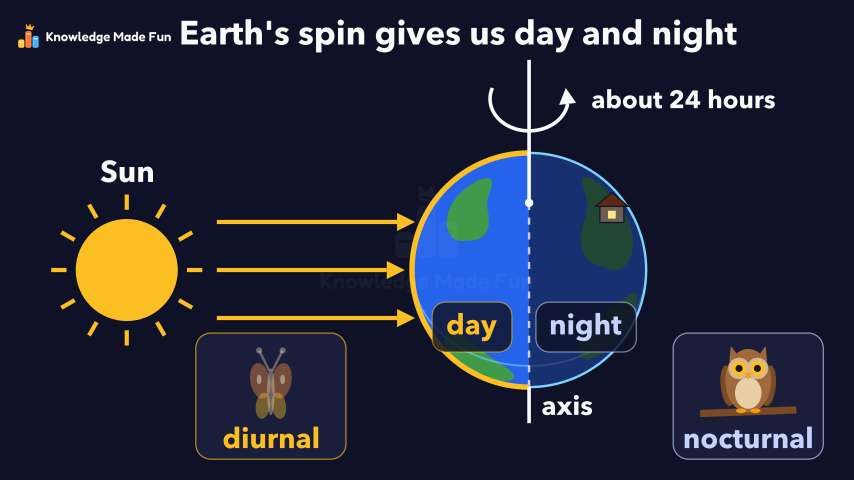 1 min 14 s
Day and Night: Earth Spins on Its Axis
Grade 4 · 1 min 14 s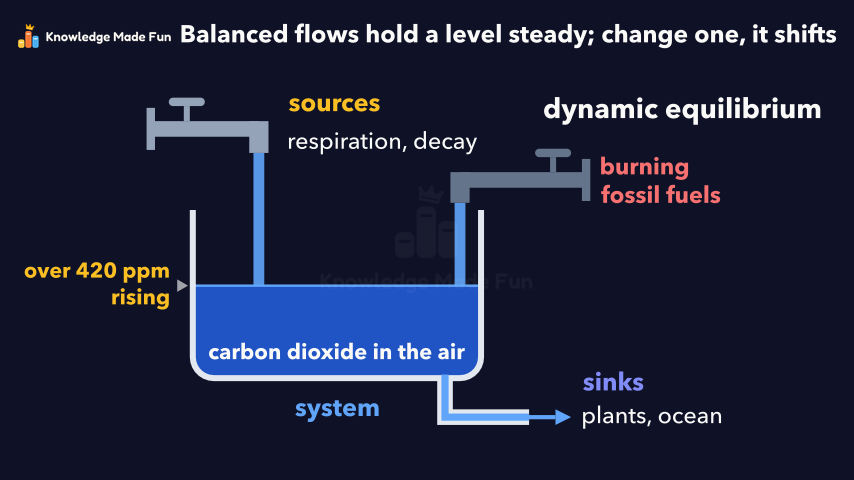 1 min 50 s
Dynamic equilibrium: balanced but always changing
Grade 9 · 1 min 50 s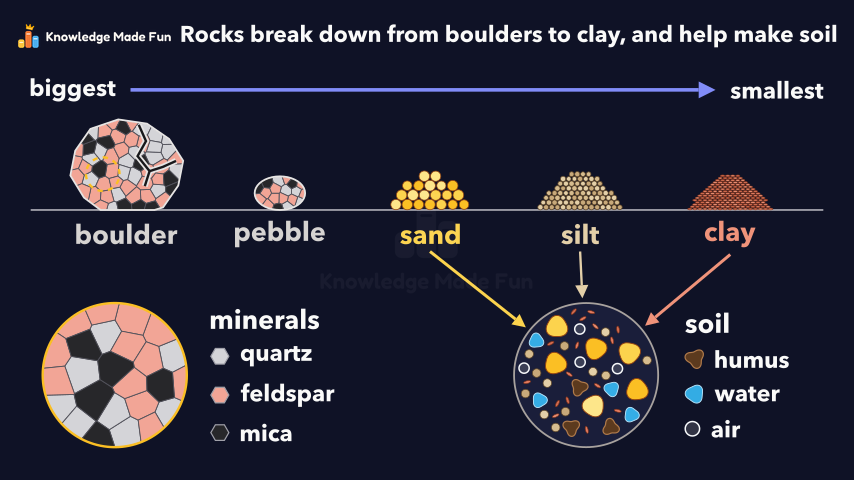 1 min 11 s
Earth Materials: From Boulders to Clay
Grade 5 · 1 min 11 s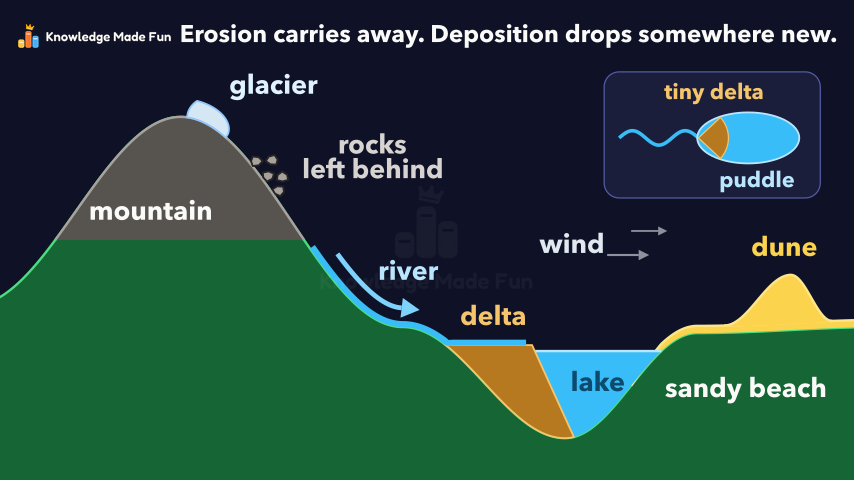 1 min 11 s
Erosion and Deposition: How Wind, Water and Ice Move Land
Grade 3 · 1 min 11 s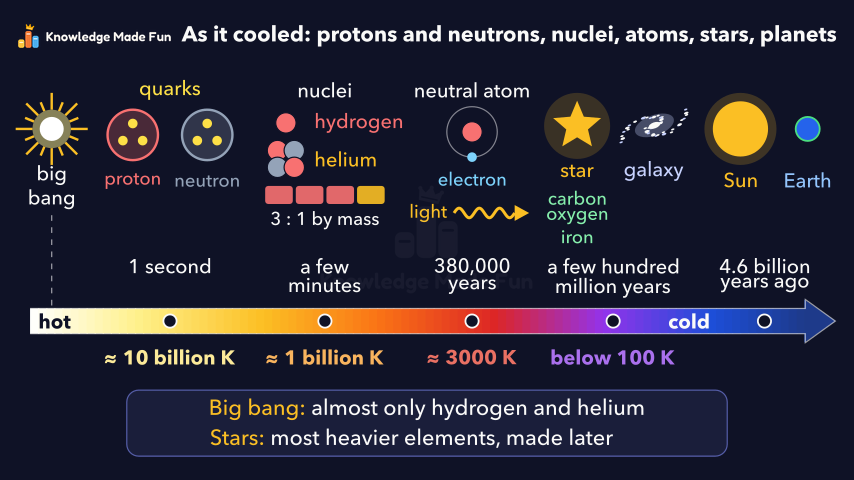 1 min 53 s
From quarks to galaxies: how the universe's matter formed
Grade 10 · 1 min 53 s 47 s
Hot, Warm, Cool and Cold: What Do We Wear?
Kindergarten · 47 s
- All Grade 6 Science lessons
- Create a free account to watch three lessons a day, no payment and no card.