Lesson · Grade 4 · Science
Heating and Cooling: Particles Speed Up or Slow Down
- Grade 4
- Science
- 1 min 14 s
- British Columbia
- BC4-SC-06
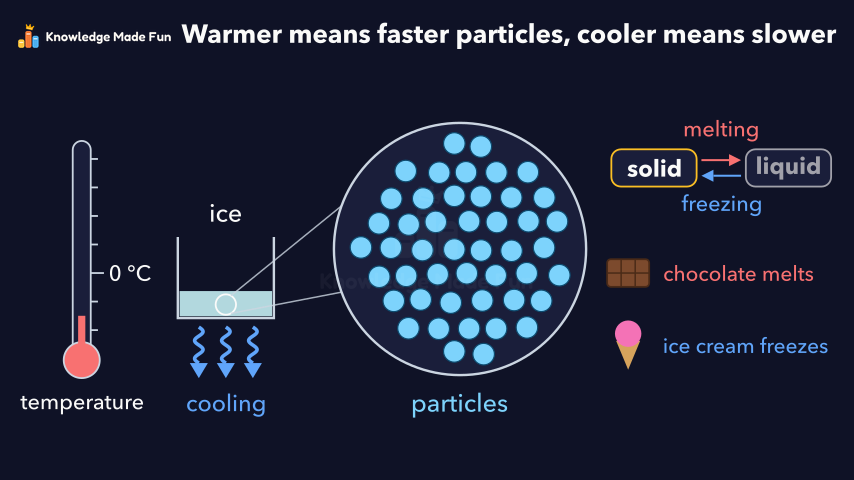
A close-up of the particles in a cup of ice shows them jiggling in neat rows, jiggling faster as the ice is heated, breaking out at 0 °C to slide past each other as it melts into water, and moving faster still as the water gets warmer. Cooling then slows them down until they settle back into rows and the water freezes again, showing that melting and freezing can be reversed (like chocolate melting and ice cream freezing), and the video ends on the recap that warmer means faster particles and cooler means slower.
Anyone can watch two lessons on the website without an account. Signing in is free, no payment and no card, and opens three a day; Plus has no limit.
Loading
In one sentence
The question this lesson answers
What do the tiny particles in ice do when it warms up?
Ice is made of tiny particles, much too small to see.
Transcript
What the lesson says
What do the tiny particles in ice do when it warms up?
Ice is made of tiny particles, much too small to see.
In solid ice, the particles sit in neat rows and jiggle in place.
When we heat the ice, its particles jiggle faster and faster.
At zero degrees Celsius, they jiggle so hard that they break out of their rows.
They slide past each other, and the solid ice melts into liquid water.
Heat the water more, and its particles move even faster.
Now we cool the water, and its particles slow down.
At zero degrees Celsius, they settle back into neat rows.
The liquid water freezes into solid ice again.
Melting and freezing are changes that can be reversed.
Chocolate melts when it gets warm, and ice cream freezes when it gets cold.
When something gets warmer, its particles move faster, and when it gets cooler, they move slower.
Curriculum
Where this fits
- British Columbia, Grade 4
Science, Chemistry: the effect of temperature on particle movementBC4-SC-06
Previous: Solids, Liquids and Gases: How the Particles Are Arranged
The outcomes and strands follow the British Columbia curriculum.
Keep going
 1 min 40 s
Acids and bases: the pH scale
Grade 10 · 1 min 40 s 1 min 39 s
Activation energy: the push a reaction needs to start
Grade 10 · 1 min 39 s 1 min 54 s
Atomic Size: Bigger Down a Group, Smaller Across a Period
Grade 9 · 1 min 54 s 1 min 18 s
Atoms rearrange: vinegar and baking soda
Grade 7 · 1 min 18 s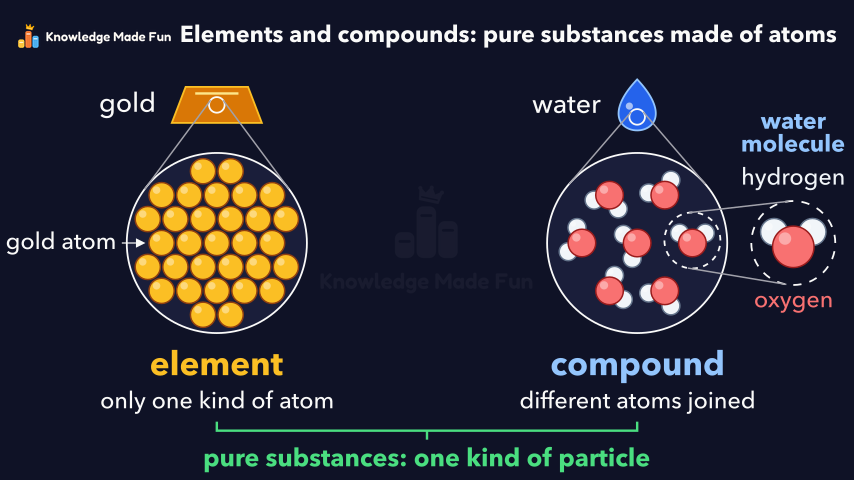 1 min 16 s
Atoms: What Everything Is Made Of
Grade 7 · 1 min 16 s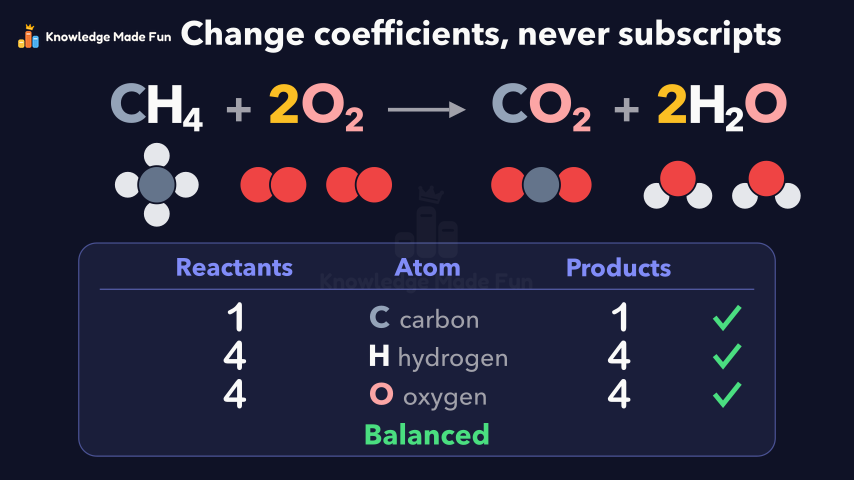 2 min 3 s
Balancing Chemical Equations
Grade 10 · 2 min 3 s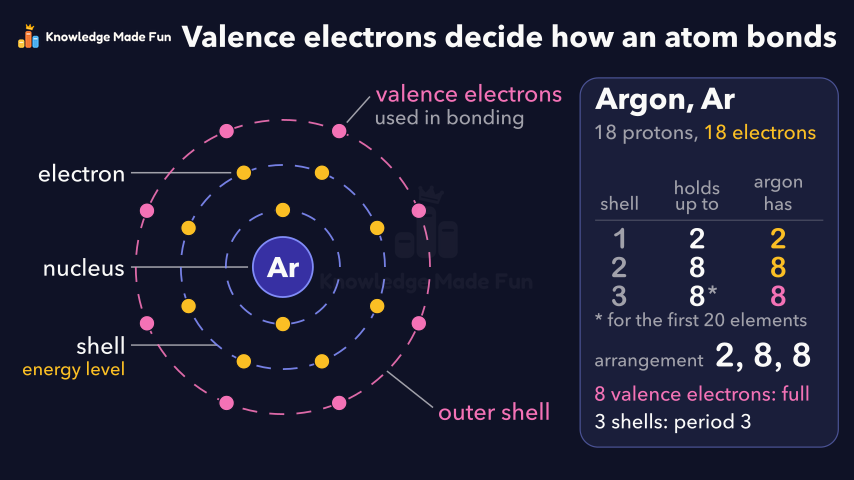 1 min 54 s
Bohr Diagrams: Electrons in Shells and Valence Electrons
Grade 9 · 1 min 54 s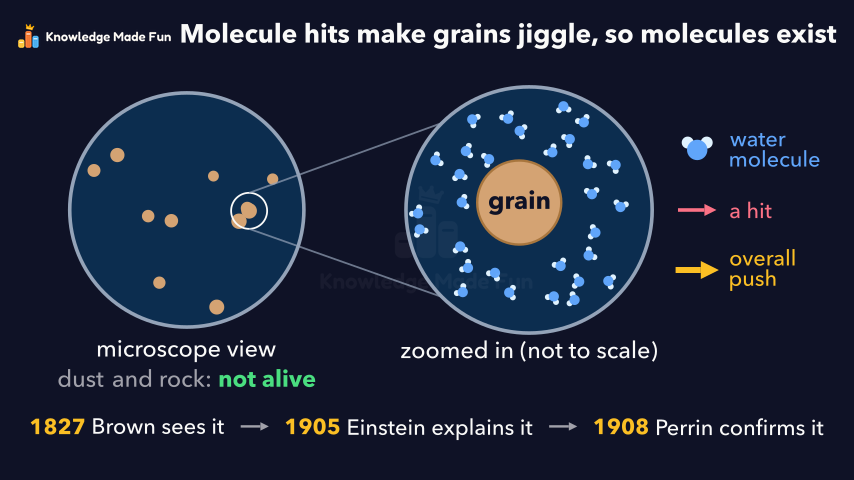 1 min 45 s
Brownian motion: evidence that molecules exist
Grade 8 · 1 min 45 s
- All Grade 4 Science lessons
- Create a free account to watch three lessons a day, no payment and no card.