Lesson · Grade 10 · Science
Conservation of Mass: Atoms Rearrange but Are Never Lost
- Grade 10
- Science
- 1 min 58 s
- British Columbia
- BC10-SC-24
A sealed bag of vinegar and baking soda keeps the same reading on a scale after the reaction, and counting the atoms shows the same 14 atoms before and after, only rearranged. Opening the bag lets the carbon dioxide escape, so the reading drops, which explains why burning wood seems to lose mass even though no atoms are destroyed.
Anyone can watch two lessons on the website without an account. Signing in is free, no payment and no card, and opens three a day; Plus has no limit.
Loading
In one sentence
The question this lesson answers
When wood burns, only a little ash is left. Does mass really disappear?
Put two reactants, the substances that react, in a bag: vinegar and baking soda. Then seal it.
Transcript
What the lesson says
When wood burns, only a little ash is left. Does mass really disappear?
Put two reactants, the substances that react, in a bag: vinegar and baking soda. Then seal it.
Place the bag on a scale. It reads 250 grams.
Tip the vinegar onto the baking soda. They react and make carbon dioxide gas.
The sealed bag is a closed system: nothing can get in or out. The scale still reads 250 grams.
To see why, zoom in on one particle of baking soda and one of acetic acid, the acid in vinegar.
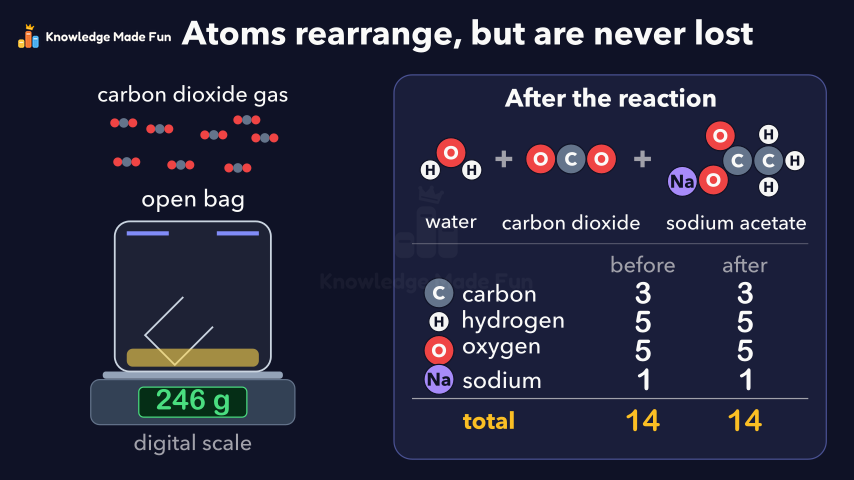
Count the atoms: 3 carbon, 5 hydrogen, 5 oxygen and 1 sodium. That is 14 atoms.
In the reaction, the atoms rearrange into new substances, called products.
The products are water, carbon dioxide and sodium acetate.
Count again: 3 carbon, 5 hydrogen, 5 oxygen and 1 sodium. Still 14 atoms, none made and none lost.
This is the law of conservation of mass: in a chemical reaction, the total mass stays the same.
In the 1700s, Antoine Lavoisier showed this by weighing reactions in sealed containers, like this bag.
Now open the bag. The carbon dioxide escapes, and the reading drops to 246 grams.
Those atoms are not destroyed. They have only moved into the air, off the scale.
That is why burning wood seems to lose mass: its gases go into the air too.
In a chemical reaction, atoms rearrange, but they are never lost, so the total mass stays the same.
Curriculum
Where this fits
- British Columbia, Grade 10
Science 10, Chemistry: law of conservation of massBC10-SC-24
Previous: Neutralization: Acid + Base Makes Salt + WaterNext: Balancing Chemical Equations
The outcomes and strands follow the British Columbia curriculum.
Keep going
 1 min 40 s
Acids and bases: the pH scale
Grade 10 · 1 min 40 s 1 min 39 s
Activation energy: the push a reaction needs to start
Grade 10 · 1 min 39 s 1 min 54 s
Atomic Size: Bigger Down a Group, Smaller Across a Period
Grade 9 · 1 min 54 s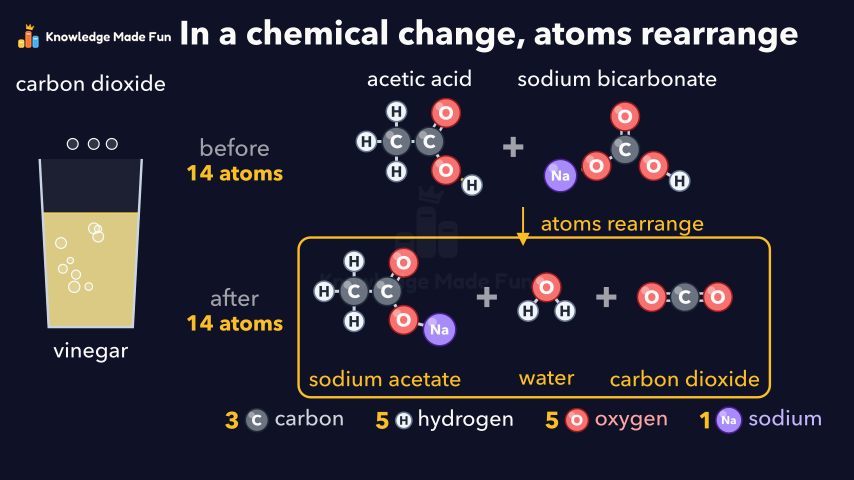 1 min 18 s
Atoms rearrange: vinegar and baking soda
Grade 7 · 1 min 18 s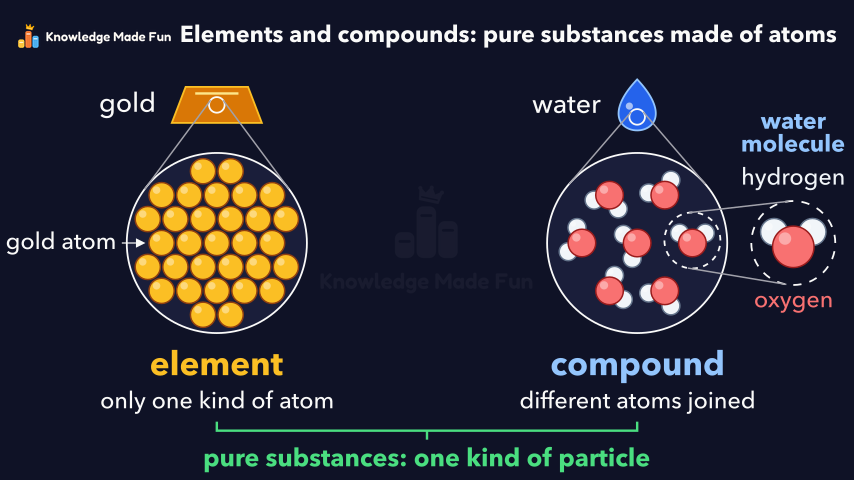 1 min 16 s
Atoms: What Everything Is Made Of
Grade 7 · 1 min 16 s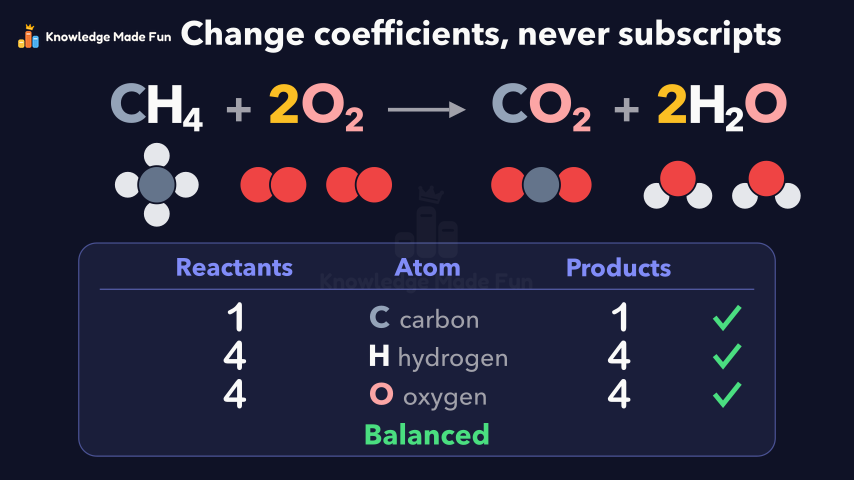 2 min 3 s
Balancing Chemical Equations
Grade 10 · 2 min 3 s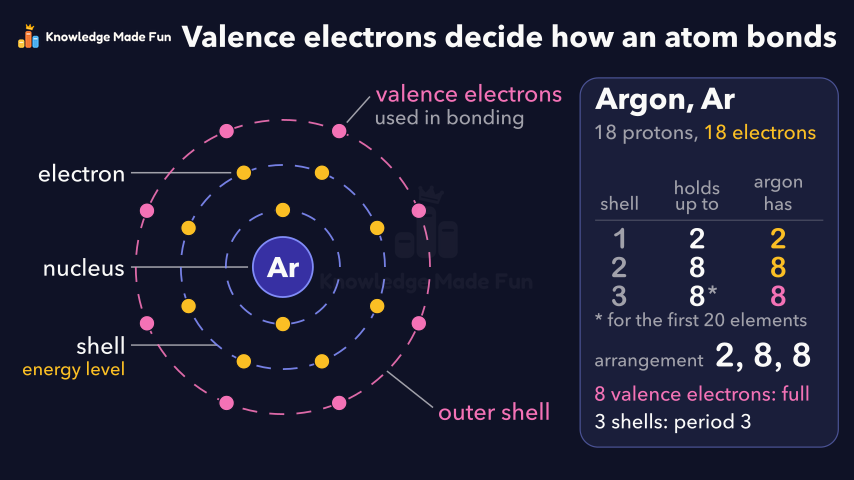 1 min 54 s
Bohr Diagrams: Electrons in Shells and Valence Electrons
Grade 9 · 1 min 54 s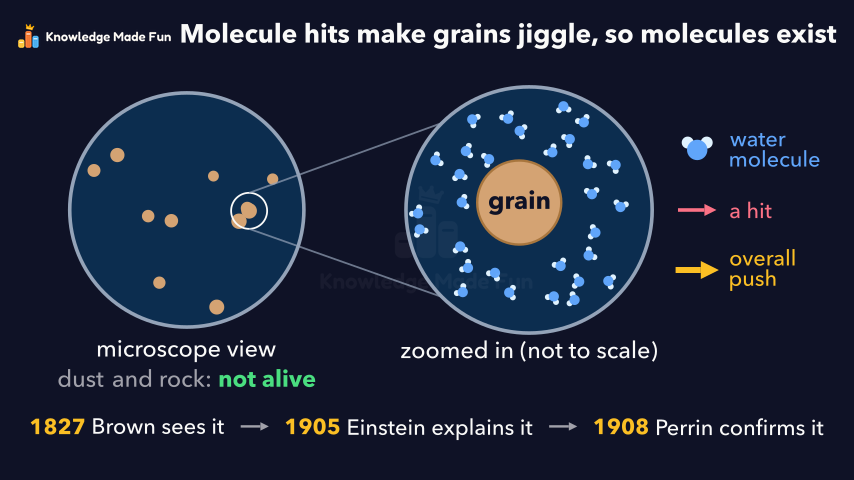 1 min 45 s
Brownian motion: evidence that molecules exist
Grade 8 · 1 min 45 s
- All Grade 10 Science lessons
- Create a free account to watch three lessons a day, no payment and no card.