Lesson · Grade 5 · Physical and Health Education
The FITT Principle: How Often, How Hard, How Long, What Kind
- Grade 5
- Physical and Health Education
- 1 min 17 s
- British Columbia
- BC5-PH-06
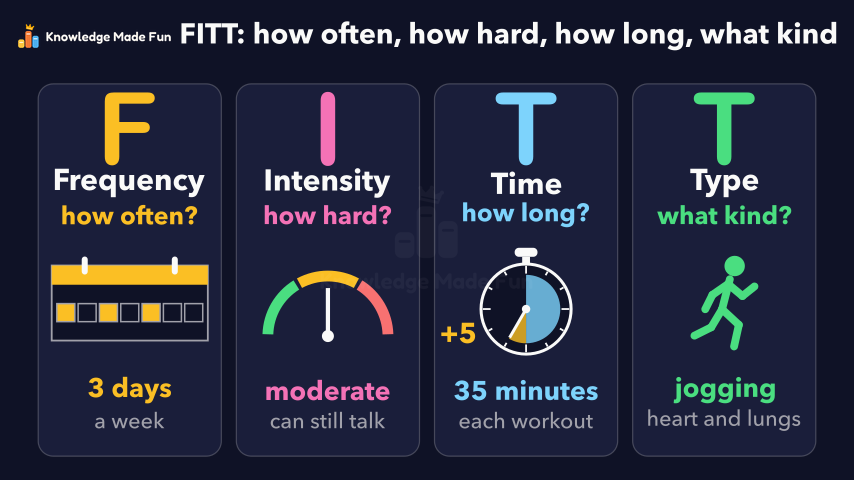
Four cards spell FITT, and each letter gets its name, its question and a picture: a calendar for frequency, an effort gauge for intensity, a stopwatch for time and a runner for type. One example plan then fills the pictures in (3 days a week, moderate effort where you can still talk, 30 minutes, jogging for heart and lungs), shows how adding 5 minutes to one part helps you get fitter, and ends on the recap "how often, how hard, how long, what kind".
Anyone can watch two lessons on the website without an account. Signing in is free, no payment and no card, and opens three a day; Plus has no limit.
Loading
In one sentence
The question this lesson answers
How can you plan your exercise so that you get fitter?
One way is the FITT principle, which has four parts.
Transcript
What the lesson says
How can you plan your exercise so that you get fitter?
One way is the FITT principle, which has four parts.
F stands for frequency, which is how often you exercise.
I stands for intensity, which is how hard you work.
The first T stands for time, which is how long each workout lasts.
The second T stands for type, which is what kind of activity you do.
In one example plan, you exercise 3 days a week.
The intensity is moderate, so you can still talk.
Each workout lasts 30 minutes.
The type is jogging, which works your heart and lungs.
This plan is one part of your week. Kids your age need at least 60 minutes of active play every day.
As you get fitter, add a little to just one part, like 5 more minutes.
If exercise hurts or you feel unwell, stop and ask a trusted adult.
FITT means how often, how hard, how long, and what kind.
Curriculum
Where this fits
- British Columbia, Grade 5
Physical and Health Education, Healthy and active living: training principles to enhance personal fitness levels, including the FITT principleBC5-PH-06
Previous: The Five Health Components of FitnessNext: Why Being Active Is Good for Body and Mind
- British Columbia, Grade 6
Physical and Health Education, Healthy and active living: training principles to enhance personal fitness levels, including the FITT principle and the SAID principleBC6-PH-03
Next: Your Body Adapts to What You Train: The SAID Principle
- British Columbia, Grade 7
Physical and Health Education, Healthy and active living: training principles to enhance personal fitness levels, including the FITT principle, SAID principle, and specificityBC7-PH-05
Next: Your Body Adapts to What You Train: The SAID Principle
This lesson is also listed in Grade 6 and Grade 7.
The outcomes and strands follow the British Columbia curriculum.
Keep going
 59 s
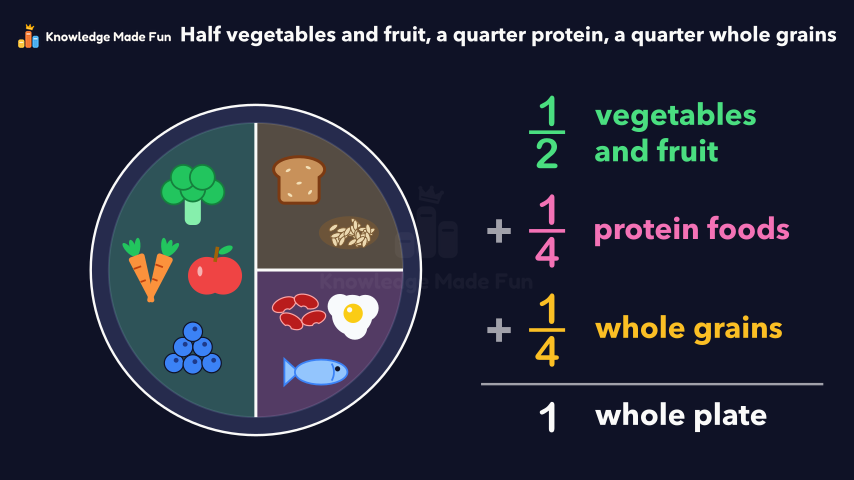
A Balanced Plate: Half, a Quarter and a Quarter
Grade 4 · 59 s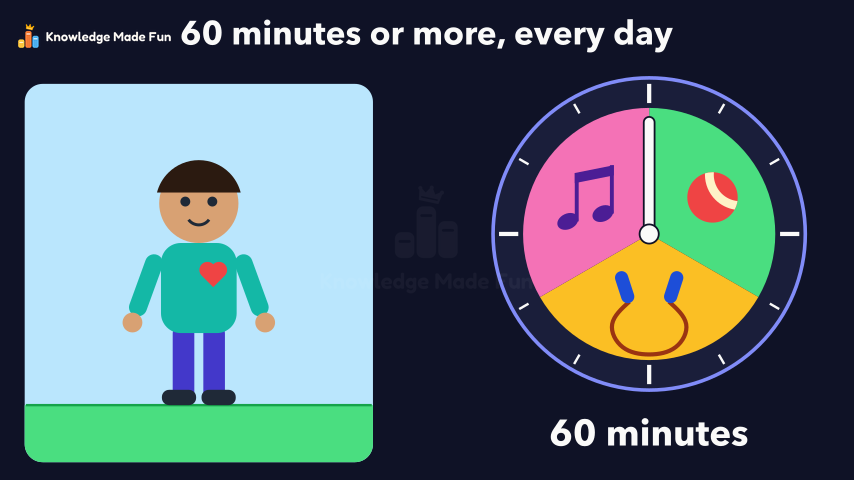 59 s
Being Active Every Day: Fill Up Your 60 Minutes
Grade 2 · 59 s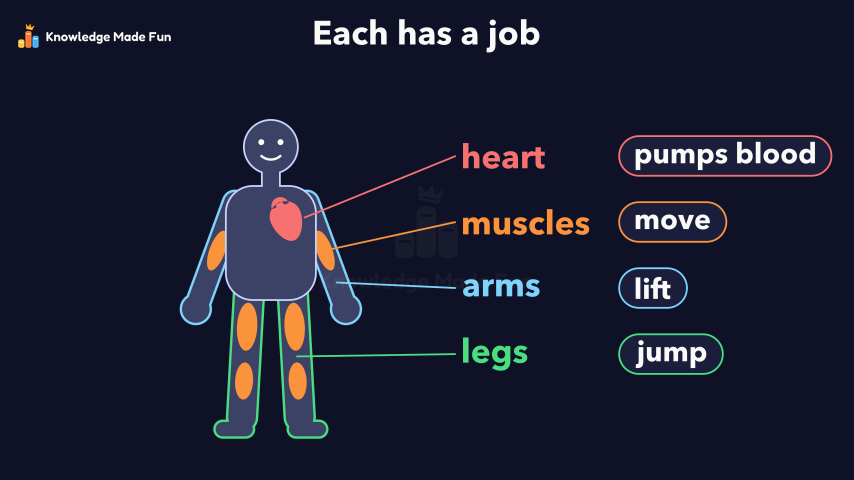 52 s
Body parts and their jobs: heart, muscles, arms and legs
Grade 1 · 52 s 1 min 6 s
Choosing foods for energy and health
Grade 5 · 1 min 6 s 49 s
Finding a Trusted Adult for Health Questions
Grade 3 · 49 s 1 min 2 s
Finding Health Information You Can Trust
Grade 6 · 1 min 2 s 1 min
Food and Water Fuel Your Body
Grade 3 · 1 min 51 s
Food and Water: Energy to Grow, Learn and Play
Grade 1 · 51 s
- All Grade 5 Physical and Health Education lessons
- Create a free account to watch three lessons a day, no payment and no card.