Lesson · Grade 4 · Physical and Health Education
How Hard Am I Working? Check Your Pulse and Rate Your Effort
- Grade 4
- Physical and Health Education
- 1 min 35 s
- British Columbia
- BC4-PH-03
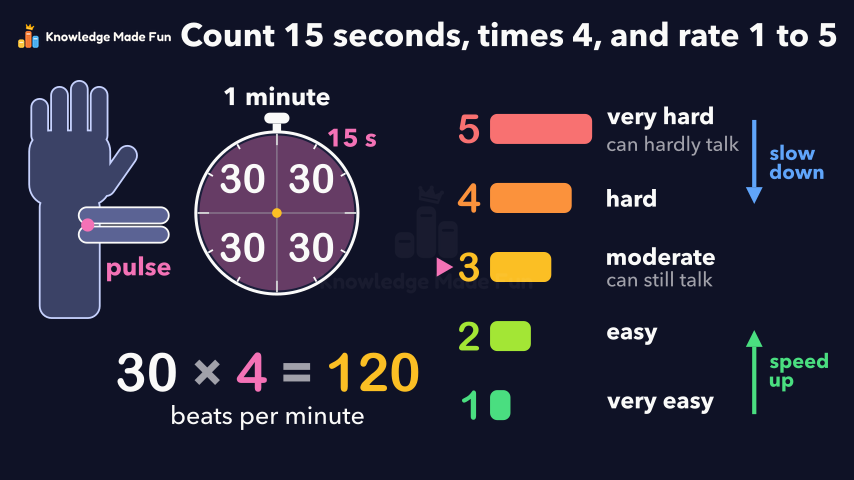
Two fingers find the pulse on the wrist below the thumb, and a stopwatch split into four 15-second quarters shows why counting 30 beats in 15 seconds and multiplying by 4 gives 120 beats per minute. A five-step effort meter from very easy to very hard, with talking as a clue, shows how to rate the effort and adjust it: slow down if it is too hard, speed up if it is too easy, and stop and ask a trusted adult if you feel dizzy or unwell.
Concept: How hard am I working? Checking your pulse and rating your effort
Anyone can watch two lessons on the website without an account. Signing in is free, no payment and no card, and opens three a day; Plus has no limit.
Loading
In one sentence
The question this lesson answers
During exercise, how can you tell how hard you are working?
One clue is your pulse, your heartbeat that you can feel in your wrist.
Transcript
What the lesson says
During exercise, how can you tell how hard you are working?
One clue is your pulse, your heartbeat that you can feel in your wrist.
Press two fingers gently on the inside of your wrist, just below your thumb.
The harder you work, the faster your pulse beats.
After a jog, count the beats you feel for 15 seconds.
A minute is 4 times 15 seconds, so multiply by 4.
30 times 4 is 120, so your heart is beating 120 times a minute.
You can also rate how hard the exercise feels, on a scale from 1 to 5.
One is very easy, 2 is easy, 3 is moderate, 4 is hard, and 5 is very hard.
Talking is a clue: at 3 you can still talk, but at 5 you can hardly talk.
After your jog, your pulse was 120 beats per minute, and the jog felt like a 3.
If it feels too hard, slow down, and if it feels too easy, speed up.
If you ever feel dizzy or unwell, stop and ask a trusted adult for help.
To check how hard you are working, count your pulse for 15 seconds, multiply by 4, and rate your effort from 1 to 5.
Curriculum
Where this fits
- British Columbia, Grade 4
Physical and Health Education, Physical literacy: ways to monitor physical exertion levelsBC4-PH-03
- British Columbia, Grade 5
Physical and Health Education, Physical literacy: ways to monitor and adjust physical exertion levelsBC5-PH-03
- British Columbia, Grade 6
Physical and Health Education, Physical literacy: ways to monitor and adjust physical exertion levelsBC6-PH-02
- British Columbia, Grade 7
Physical and Health Education, Physical literacy: ways to monitor and adjust physical exertion levelsBC7-PH-03
This lesson is also listed in Grade 5, Grade 6 and Grade 7.
The outcomes and strands follow the British Columbia curriculum.
Keep going
 1 min 2 s
Get Open: Move Into Open Space for a Pass
Grade 3 · 1 min 2 s 1 min
How Hard Is My Body Working?
Grade 2 · 1 min 59 s
A Balanced Plate: Half, a Quarter and a Quarter
Grade 4 · 59 s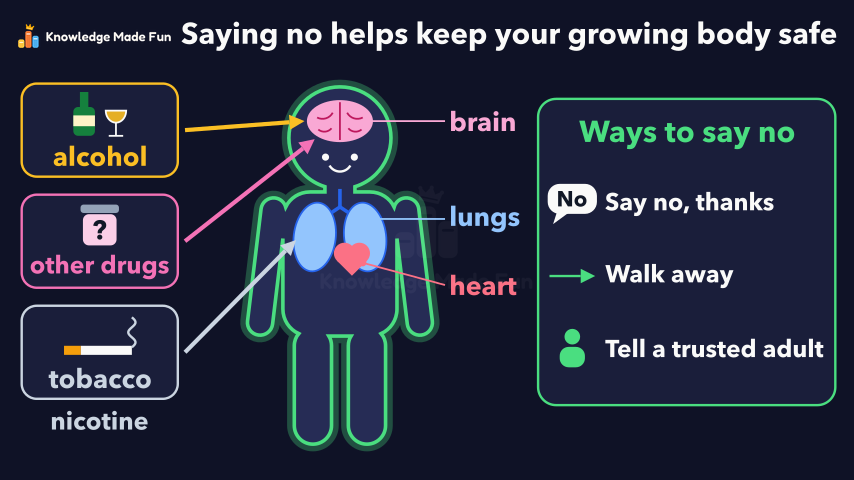 52 s
Alcohol, Tobacco and Other Drugs: Keeping a Growing Body Safe
Grade 4 · 52 s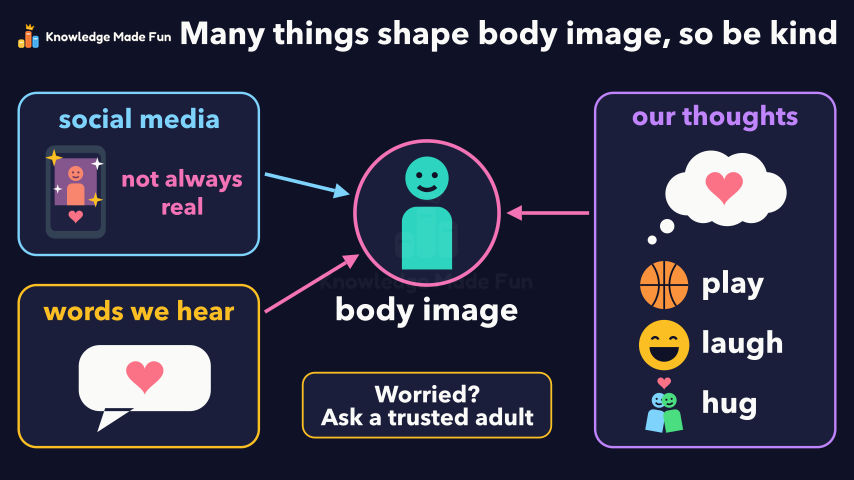 58 s
Body Image: What Shapes How We See Ourselves
Grade 4 · 58 s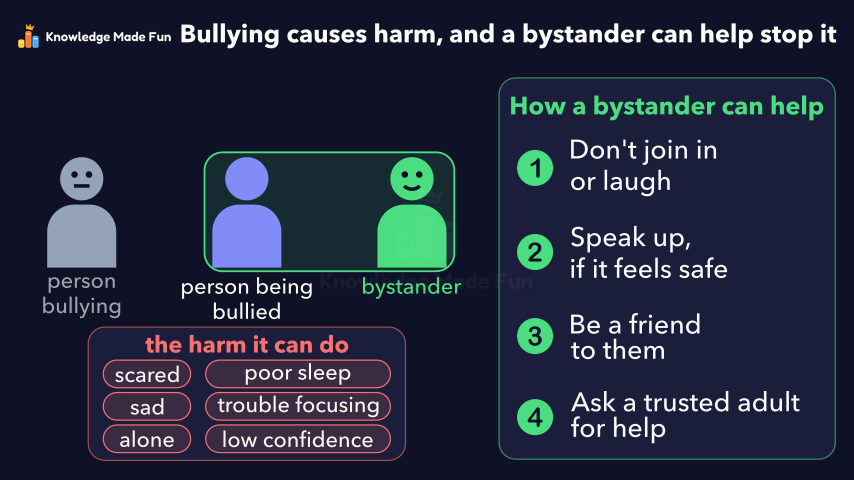 1 min 3 s
Bullying: The Harm It Does and How a Bystander Can Help
Grade 3 · 1 min 3 s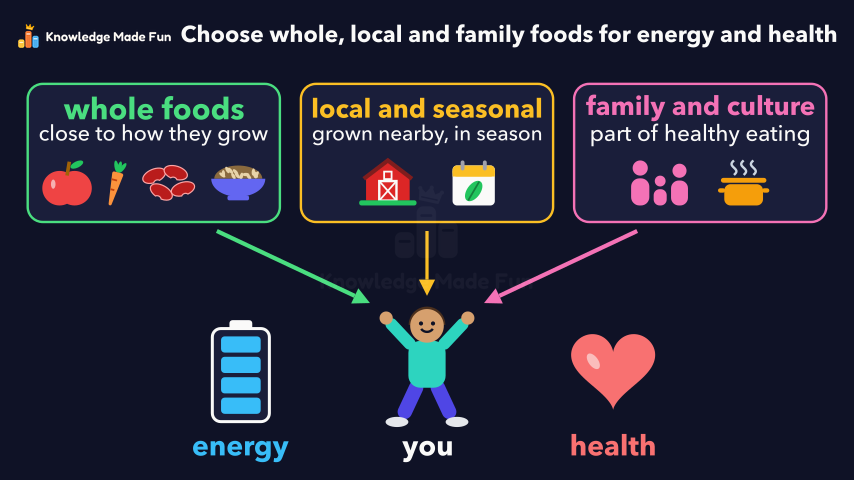 1 min 6 s
Choosing foods for energy and health
Grade 5 · 1 min 6 s 1 min 2 s
Finding Health Information You Can Trust
Grade 6 · 1 min 2 s
- All Grade 4 Physical and Health Education lessons
- Create a free account to watch three lessons a day, no payment and no card.