Lesson · Grade 8 · Mathematics
Why the Pythagorean theorem works: a rearrangement proof
- Grade 8
- Mathematics
- 2 min 9 s
- British Columbia
- BC8-MA-31
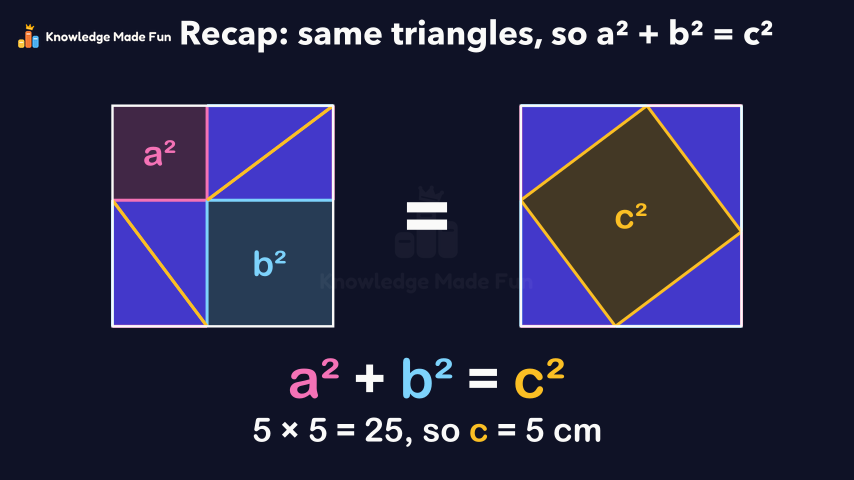
Four copies of a right triangle with legs 3 cm and 4 cm fit into the corners of a 7 cm square and leave a tilted square gap of area c², which works out to 49 − 24 = 25 cm². Sliding three triangles without turning them changes the gap into two squares, a² = 9 and b² = 16, and because the big square and the triangles did not change, a² + b² = c² (9 + 16 = 25, so c = 5 cm).
Concept: A proof of the Pythagorean theorem by rearranging triangles
Anyone can watch two lessons on the website without an account. Signing in is free, no payment and no card, and opens three a day; Plus has no limit.
Loading
In one sentence
The question this lesson answers
This is a right triangle: one of its angles is a right angle, 90 degrees.
The two shorter sides are the legs, a and b. The longest side, opposite the right angle, is the hypotenuse, c.
Transcript
What the lesson says
This is a right triangle: one of its angles is a right angle, 90 degrees.
The two shorter sides are the legs, a and b. The longest side, opposite the right angle, is the hypotenuse, c.
In our example, a is 3 centimetres and b is 4 centimetres.
The Pythagorean theorem says that in a right triangle, a squared plus b squared equals c squared, where a squared means a times a.
Why is it true? Put four copies of the triangle in the corners of a big square.
Each side of the big square is a plus b: 3 plus 4, or 7 centimetres.
The gap in the middle has four sides of length c and four right angles: a square with area c squared.
With our numbers, the big square is 7 times 7, or 49 square centimetres.
Each triangle has area 3 times 4, divided by 2, or 6. All four cover 4 times 6, or 24.
So the gap, c squared, is 49 minus 24, or 25 square centimetres.
Now slide three of the triangles to new places, without turning them.
Now the gap is two squares, one with side a and one with side b.
Their areas are a squared, 3 times 3, or 9, and b squared, 4 times 4, or 16: 25 in total, the same as before.
The big square and the four triangles did not change, so the gap has the same area both ways.
So a squared plus b squared equals c squared. Since 5 times 5 is 25, c is 5 centimetres.
Recap: moving the same triangles turns a gap of c squared into a squared plus b squared, so the two are equal.
Curriculum
Where this fits
- British Columbia, Grade 8
Mathematics, Geometry and measurement: Pythagorean theoremBC8-MA-31
Previous: The Pythagorean Theorem: Squares on the Sides of a Right TriangleNext: Finding the Hypotenuse with the Pythagorean Theorem
- British Columbia, Grade 11
History of Mathematics 11, Geometry: of lines, angles, trianglesBC11-MA-52
This lesson is also listed in Grade 11.
The outcomes and strands follow the British Columbia curriculum.
Keep going
 1 min 58 s
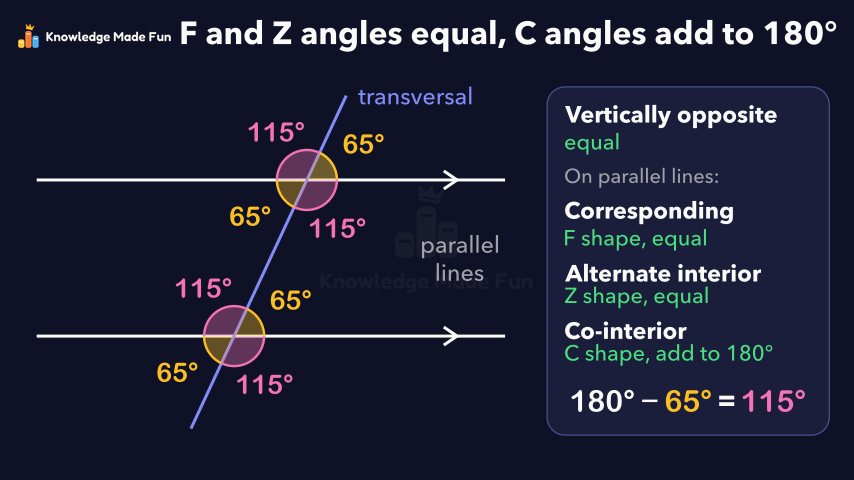
Angles made by parallel lines and a transversal
Grade 11 · 1 min 58 s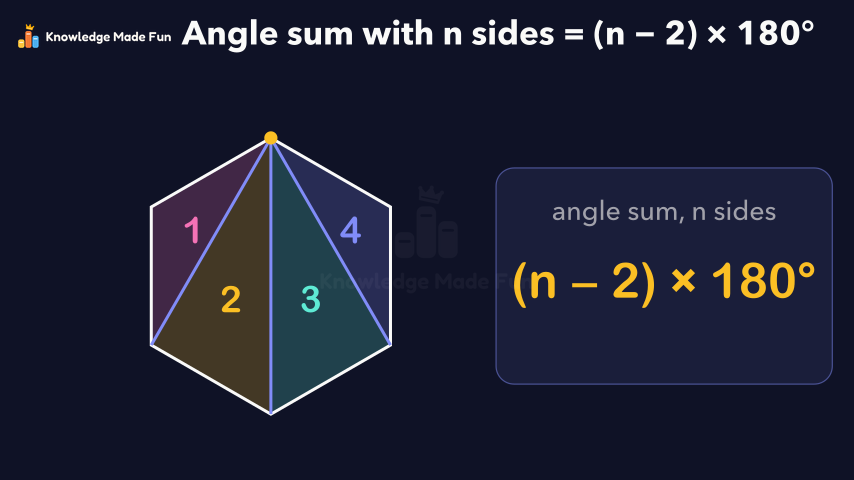 2 min 16 s
Proving the angle sums of triangles and polygons
Grade 11 · 2 min 16 s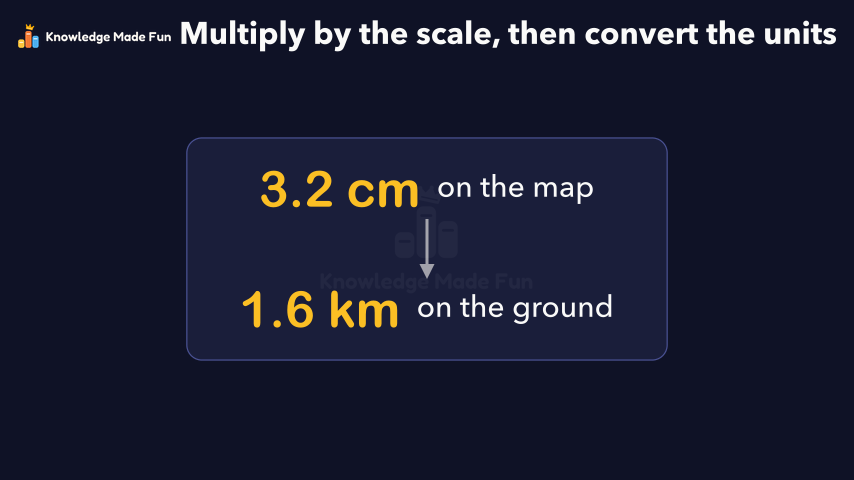 1 min 57 s
Reading a Map Scale: From Centimetres to Kilometres
Grade 9 · 1 min 57 s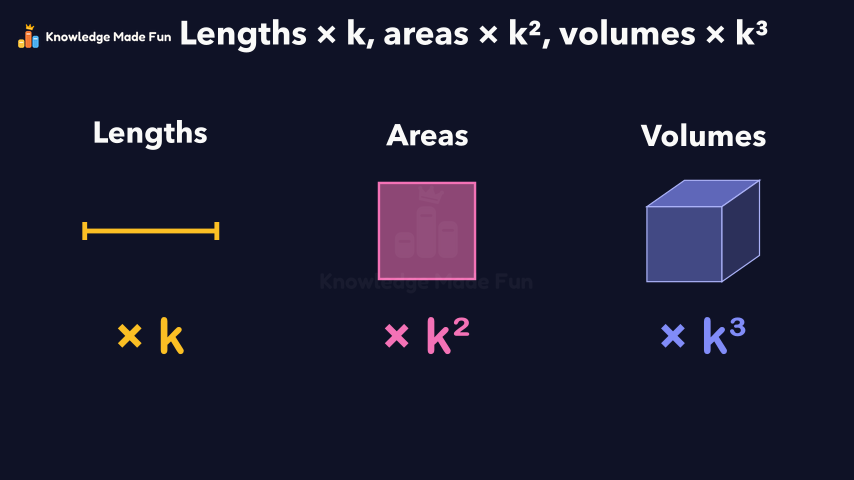 2 min 10 s
Scale Factor: Lengths by k, Areas by k², Volumes by k³
Grade 11 · 2 min 10 s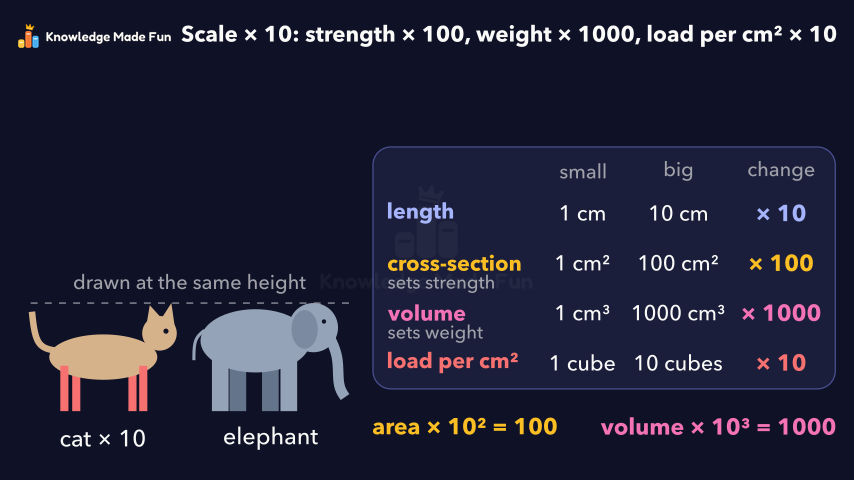 1 min 58 s
The Square-Cube Law: Why Giants Can't Just Be Scaled Up
Grade 11 · 1 min 58 s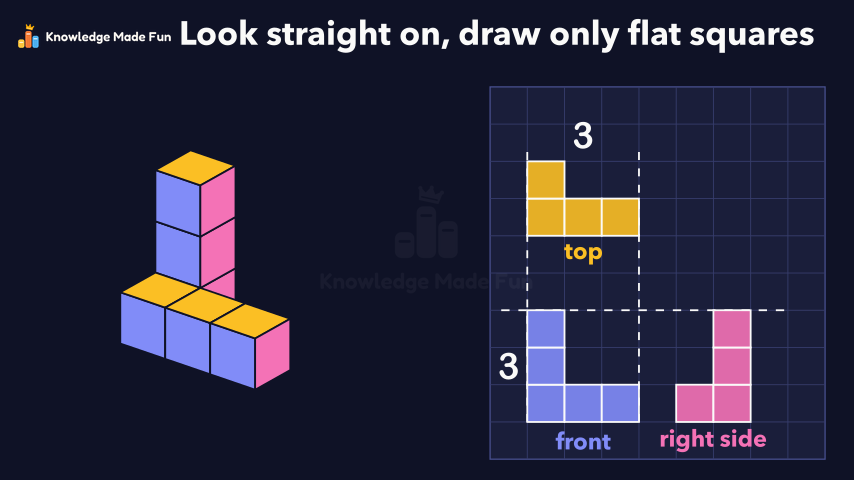 1 min 46 s
Top, Front and Side Views of a 3D Object
Grade 8 · 1 min 46 s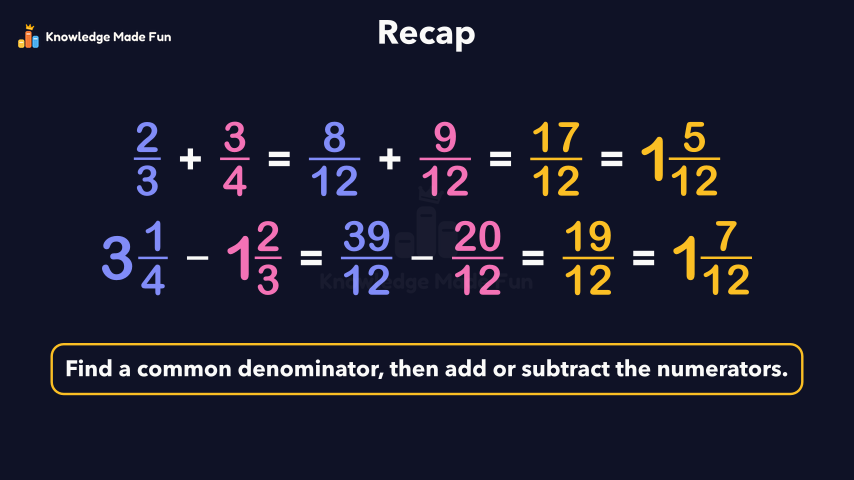 2 min 9 s
Adding and Subtracting Fractions with Different Denominators
Grade 8 · 2 min 9 s 2 min 11 s
Adding and Subtracting Rational Expressions
Grade 11 · 2 min 11 s
- All Grade 8 Mathematics lessons
- Try the graph paper, free for everyone, no account needed.
- Create a free account to watch three lessons a day, no payment and no card.