Lesson · Grade 11 · Foundations of Mathematics
Angles made by parallel lines and a transversal
- Grade 11
- Foundations of Mathematics
- 1 min 58 s
- British Columbia
- BC11-MA-24
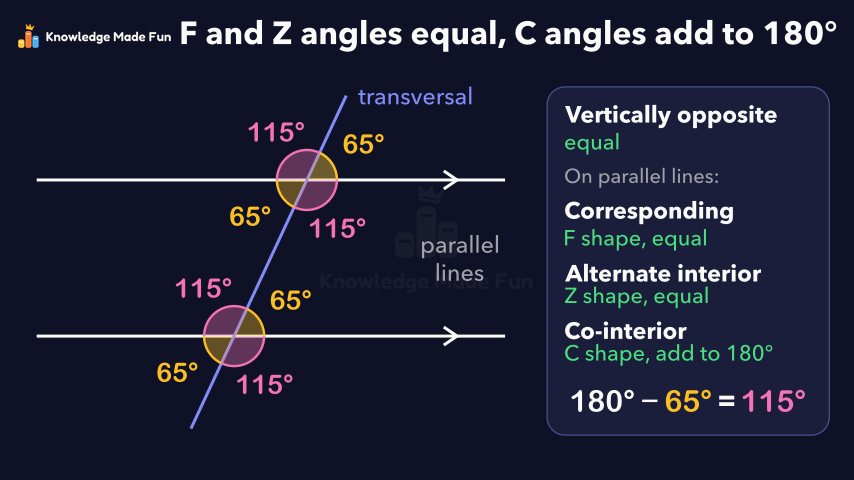
Two parallel lines are cut by a transversal at 65°, and the angle rules fill in all eight angles one at a time: vertically opposite, corresponding (F) and alternate interior (Z) angles are 65°, co-interior (C) angles add to 180°, and each of the other angles is 180° − 65° = 115°. A two-step problem then finds x = 115° using vertically opposite and then co-interior angles, and tilting one line shows the common mistake: the corresponding angle becomes 50°, not 65°, so the F, Z and C rules need parallel lines.
Anyone can watch two lessons on the website without an account. Signing in is free, no payment and no card, and opens three a day; Plus has no limit.
Loading
In one sentence
The question this lesson answers
Parallel lines never meet. Arrow marks show that two lines are parallel.
A transversal is a line that crosses both, making four angles at each crossing.
Transcript
What the lesson says
Parallel lines never meet. Arrow marks show that two lines are parallel.
A transversal is a line that crosses both, making four angles at each crossing.
One angle is 65 degrees. Can we find the other seven?
Vertically opposite angles face each other at a crossing, and are equal. So this one is 65 degrees.
Corresponding angles are in the same position at each crossing, in an F shape. On parallel lines, they are equal.
Alternate interior angles are between the lines, on opposite sides of the transversal, in a Z shape. They are equal too.
Co-interior angles are between the lines on the same side, in a C shape. They add up to 180 degrees.
So this angle is 180 minus 65, which is 115 degrees.
The last three each sit on a straight line with a 65 degree angle, so each is 115 degrees.
Now a two-step problem: from the 65 degree angle alone, find x.
Step 1: vertically opposite angles are equal, so this angle is 65 degrees.
Step 2: it and x are co-interior, so x is 180 minus 65, which is 115 degrees, as we found earlier.
A common mistake is using F, Z and C on lines that are not parallel. Tilt one line, and the corresponding angle becomes 50 degrees, not 65.
With parallel lines, corresponding and alternate interior angles are equal, and co-interior angles add up to 180 degrees.
Curriculum
Where this fits
- British Columbia, Grade 11
Foundations of Mathematics 11, Geometry: angle relationshipsBC11-MA-24
The outcomes and strands follow the British Columbia curriculum.
Keep going
 2 min 16 s
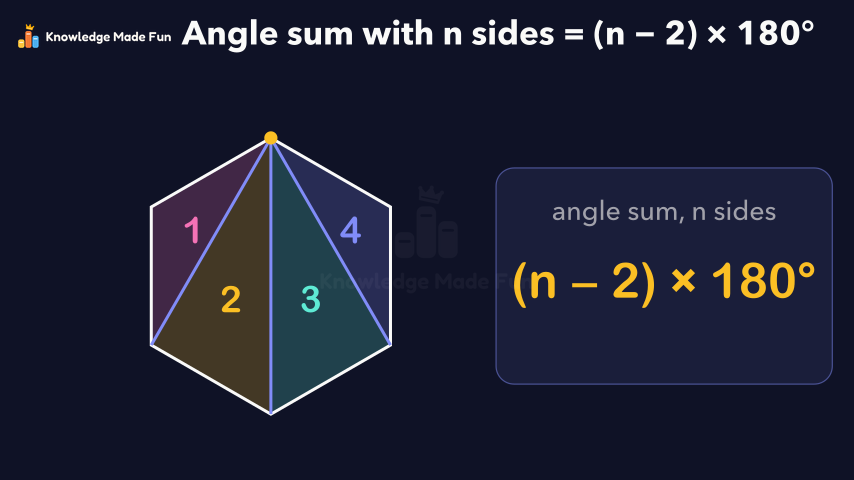
Proving the angle sums of triangles and polygons
Grade 11 · 2 min 16 s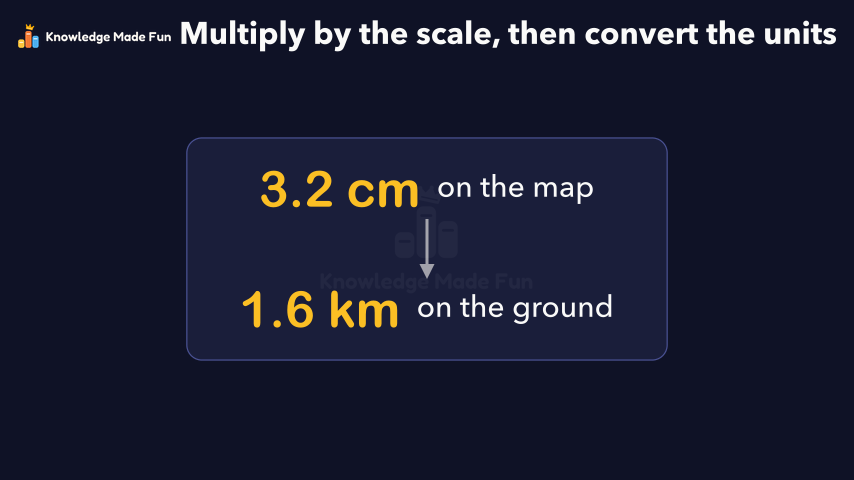 1 min 57 s
Reading a Map Scale: From Centimetres to Kilometres
Grade 9 · 1 min 57 s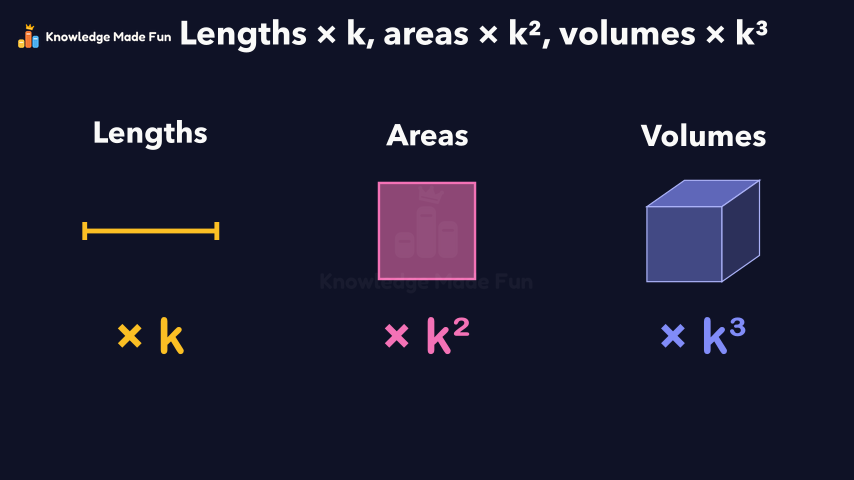 2 min 10 s
Scale Factor: Lengths by k, Areas by k², Volumes by k³
Grade 11 · 2 min 10 s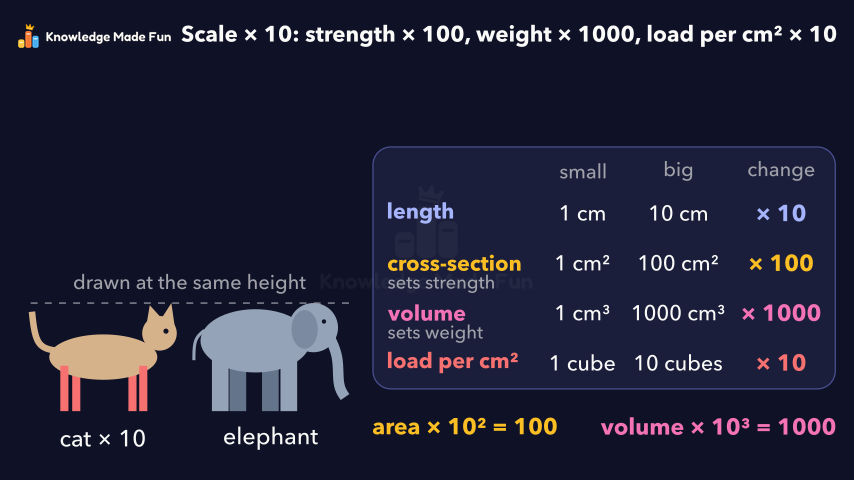 1 min 58 s
The Square-Cube Law: Why Giants Can't Just Be Scaled Up
Grade 11 · 1 min 58 s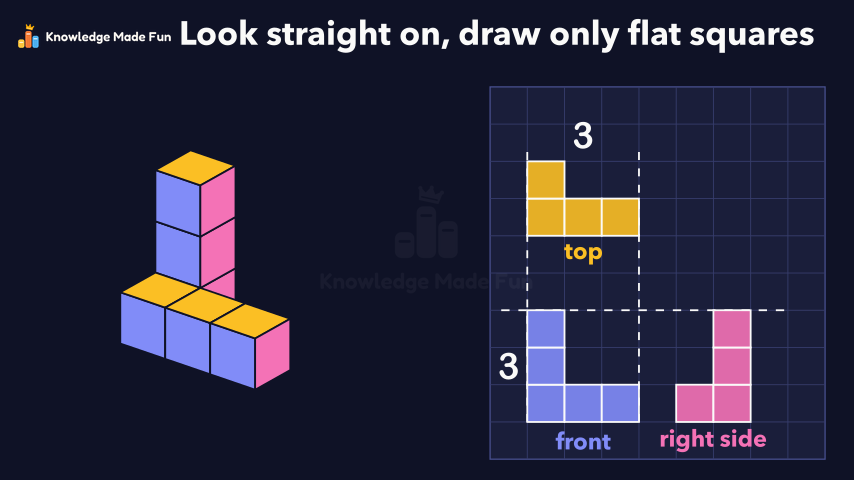 1 min 46 s
Top, Front and Side Views of a 3D Object
Grade 8 · 1 min 46 s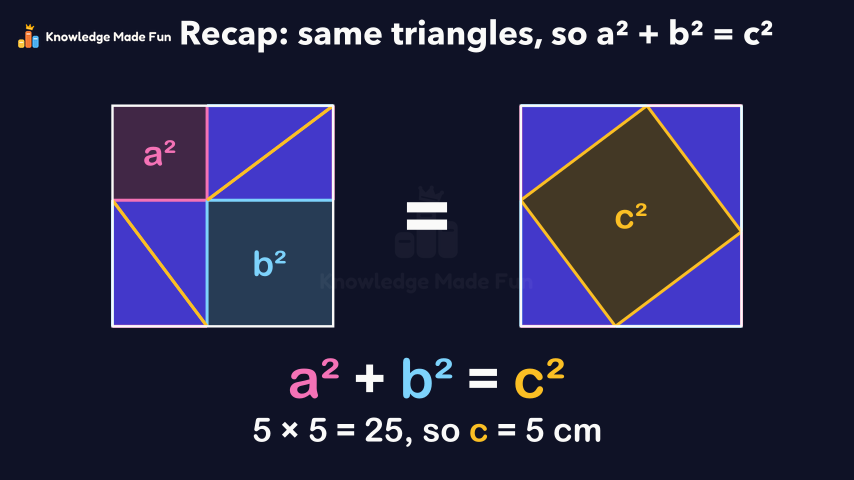 2 min 9 s
Why the Pythagorean theorem works: a rearrangement proof
Grade 8 · 2 min 9 s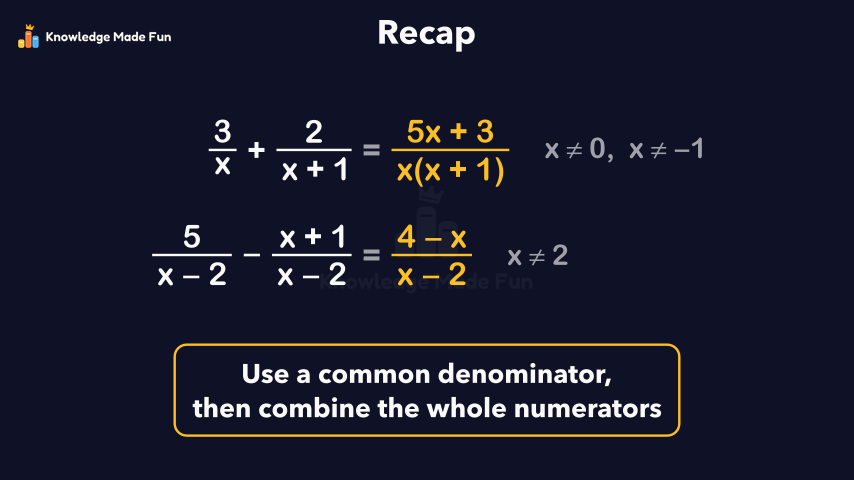 2 min 11 s
Adding and Subtracting Rational Expressions
Grade 11 · 2 min 11 s 2 min 3 s
Angles in Standard Position and Reference Angles
Grade 11 · 2 min 3 s
- All Grade 11 Foundations of Mathematics lessons
- Create a free account to watch three lessons a day, no payment and no card.