Lesson · Grade 4 · Mathematics
Probability Experiments: Predict, Spin and Tally
- Grade 4
- Mathematics
- 1 min 30 s
- British Columbia
- BC4-MA-27
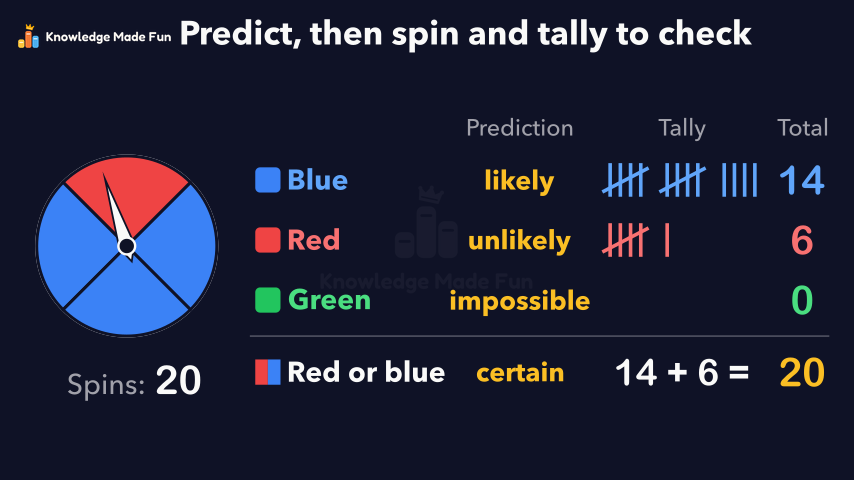
A spinner with 3 blue parts and 1 red part is used to predict outcomes: landing on blue is likely, red is unlikely, green is impossible, and red or blue is certain. The spinner is then spun 20 times and tallied in groups of 5, giving 14 blue, 6 red and 0 green, which add up to all 20 spins and match the predictions.
Anyone can watch two lessons on the website without an account. Signing in is free, no payment and no card, and opens three a day; Plus has no limit.
Loading
In one sentence
The question this lesson answers
Can we predict where this spinner will land?
This spinner has 4 equal parts: 3 blue and 1 red.
Transcript
What the lesson says
Can we predict where this spinner will land?
This spinner has 4 equal parts: 3 blue and 1 red.
Blue covers 3 of the 4 parts, so we predict that landing on blue is likely.
Red covers only 1 part, so landing on red is unlikely.
There is no green part, so landing on green is impossible.
Every part is red or blue, so landing on red or blue is certain.
Now we spin 20 times to test our predictions.
We make one tally mark for each spin.
Every fifth mark goes across the other four.
Count the blue marks: 5, 10, 11, 12, 13, 14.
Red has 6 marks, and green has 0.
14 plus 6 is 20, so every spin landed on red or blue.
Blue came up most often, just as we predicted.
If you try it, your counts may be a little different.
Predict first, then spin and tally to check your prediction.
Curriculum
Where this fits
- British Columbia, Grade 4
Mathematics, Data and probability: probability experimentsBC4-MA-27
The outcomes and strands follow the British Columbia curriculum.
Keep going
 1 min 23 s
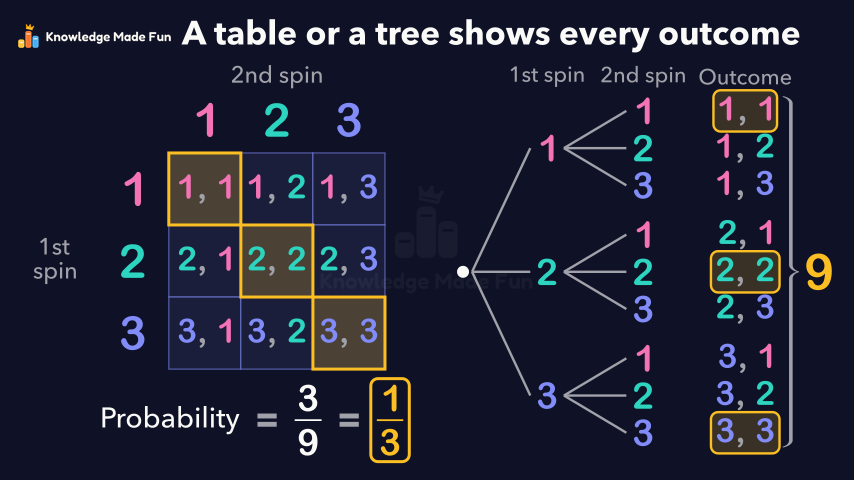
All the Outcomes of Two Spins: Tables and Tree Diagrams
Grade 7 · 1 min 23 s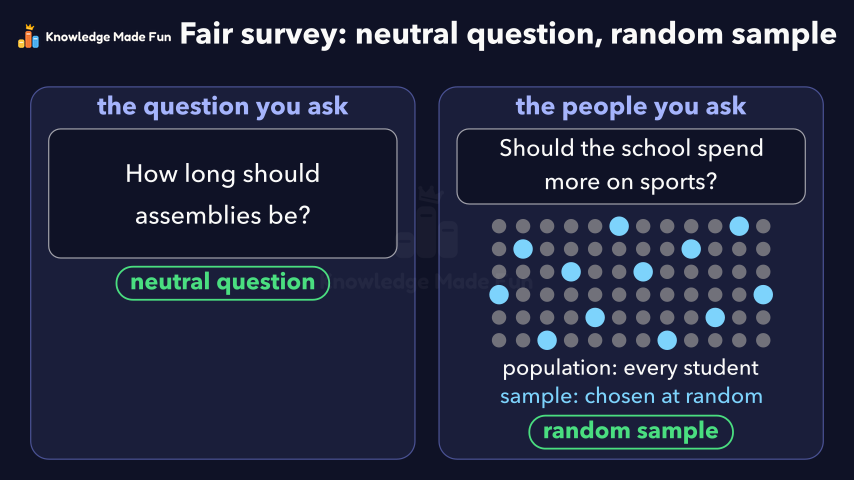 1 min 47 s
Bias in a Survey: Leading Questions and Unfair Samples
Grade 9 · 1 min 47 s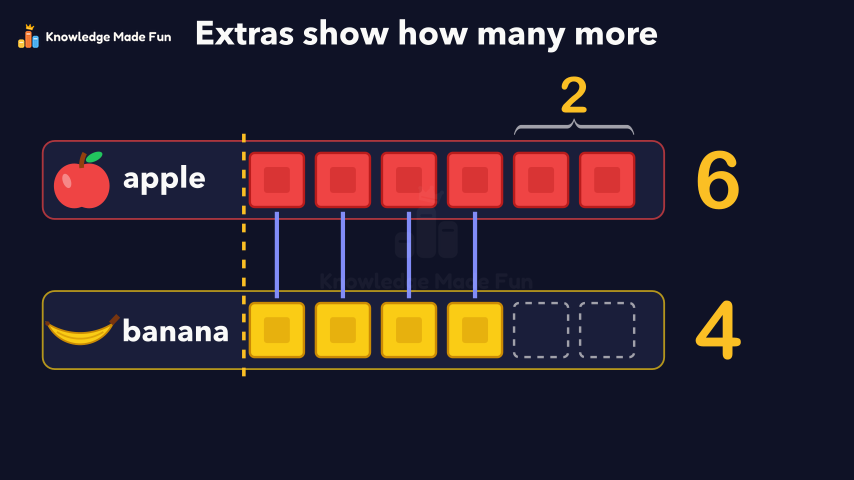 1 min
Block Graphs: Which Row Is Longer?
Grade 1 · 1 min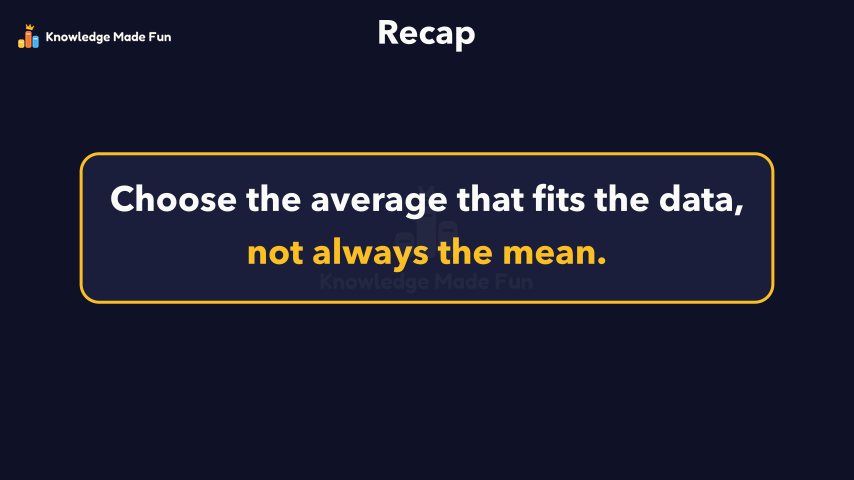 1 min 58 s
Choosing the best average: mean, median or mode
Grade 8 · 1 min 58 s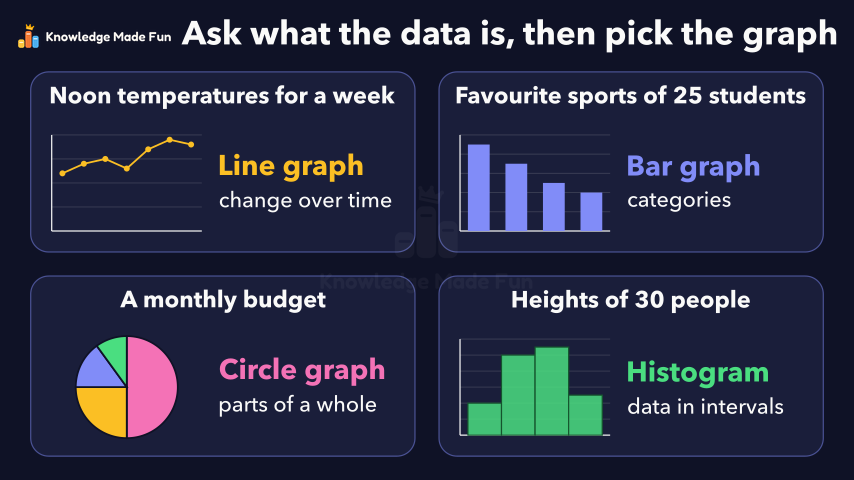 1 min 56 s
Choosing the right graph for the data
Grade 10 · 1 min 56 s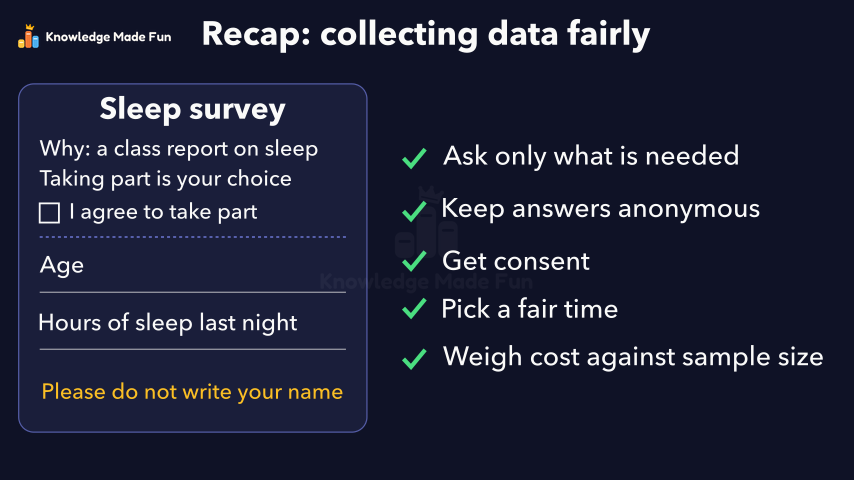 1 min 50 s
Collecting Data Fairly: Privacy, Consent, Timing and Cost
Grade 9 · 1 min 50 s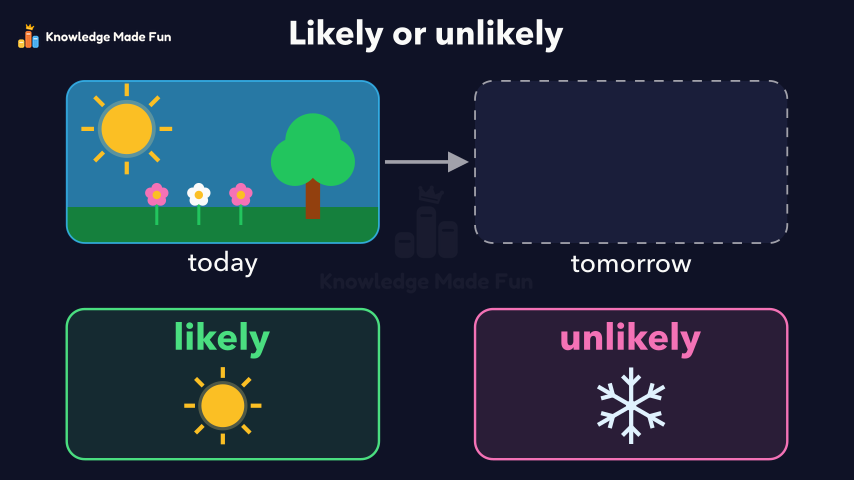 55 s
Could It Snow Tomorrow? Likely or Unlikely
Kindergarten · 55 s 1 min 27 s
Double bar graphs with a scale
Grade 5 · 1 min 27 s
- All Grade 4 Mathematics lessons
- Teachers: the maths worksheets for Grade 4 are in the dashboard, each with a worked example and a proven answer key.
- Try the graph paper, free for everyone, no account needed.
- Create a free account to watch three lessons a day, no payment and no card.