Lesson · Grade 1 · Mathematics
Block Graphs: Which Row Is Longer?
- Grade 1
- Mathematics
- 1 min
- British Columbia
- BC1-MA-18
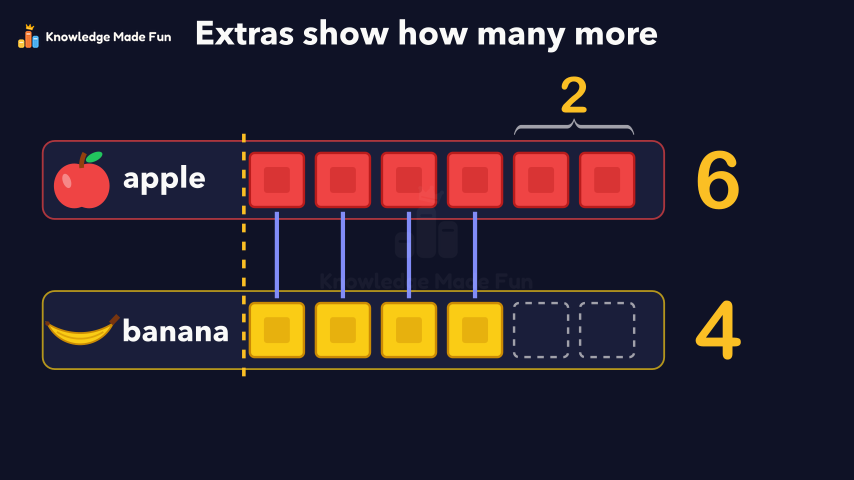
Ten children each put one block in the row for their favourite fruit, making a concrete graph with 6 apple blocks and 4 banana blocks lined up from the same start. Matching one apple block to each banana block leaves 2 apple blocks without a match, so the apple row has 2 more, and counting both rows checks it.
Concept: A concrete graph: one object for each, then compare the rows
Anyone can watch two lessons on the website without an account. Signing in is free, no payment and no card, and opens three a day; Plus has no limit.
Loading
In one sentence
The question this lesson answers
These children pick a favourite fruit: apple or banana.
Each child puts one block in their fruit's row.
Transcript
What the lesson says
These children pick a favourite fruit: apple or banana.
Each child puts one block in their fruit's row.
A graph made of blocks is a concrete graph.
Both rows start at the same line.
Which row is longer? The apple row!
But how many more blocks does it have?
Match one apple block with one banana block.
Two apple blocks have no match.
So the apple row has two more.
Count to check. One, two, three, four, five, six.
Now the bananas. One, two, three, four.
Six is two more than four.
Match the rows, and the extras show how many more.
Curriculum
Where this fits
- British Columbia, Grade 1
Mathematics, Data and probability: concrete graphs, using one-to-one correspondenceBC1-MA-18
The outcomes and strands follow the British Columbia curriculum.
Keep going
 1 min 23 s
All the Outcomes of Two Spins: Tables and Tree Diagrams
Grade 7 · 1 min 23 s 1 min 47 s
Bias in a Survey: Leading Questions and Unfair Samples
Grade 9 · 1 min 47 s 1 min 58 s
Choosing the best average: mean, median or mode
Grade 8 · 1 min 58 s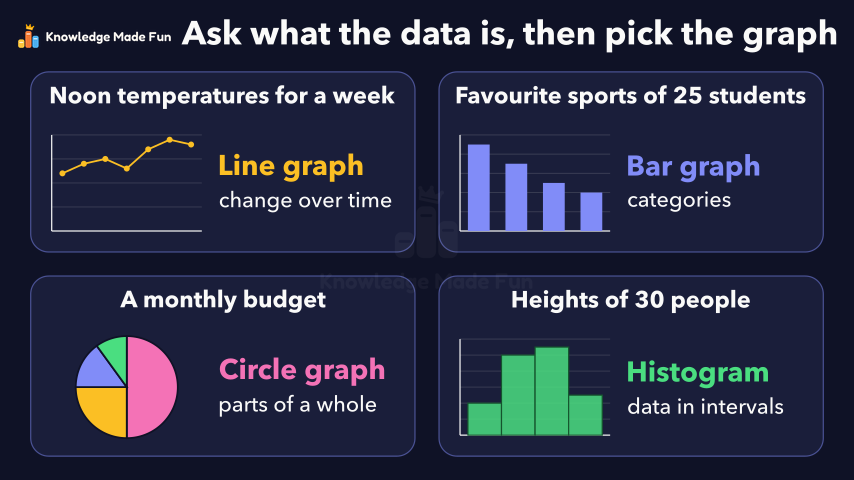 1 min 56 s
Choosing the right graph for the data
Grade 10 · 1 min 56 s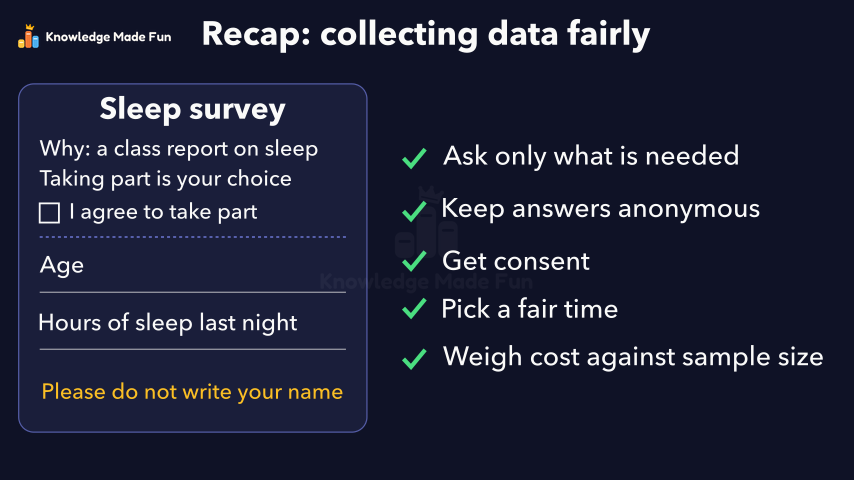 1 min 50 s
Collecting Data Fairly: Privacy, Consent, Timing and Cost
Grade 9 · 1 min 50 s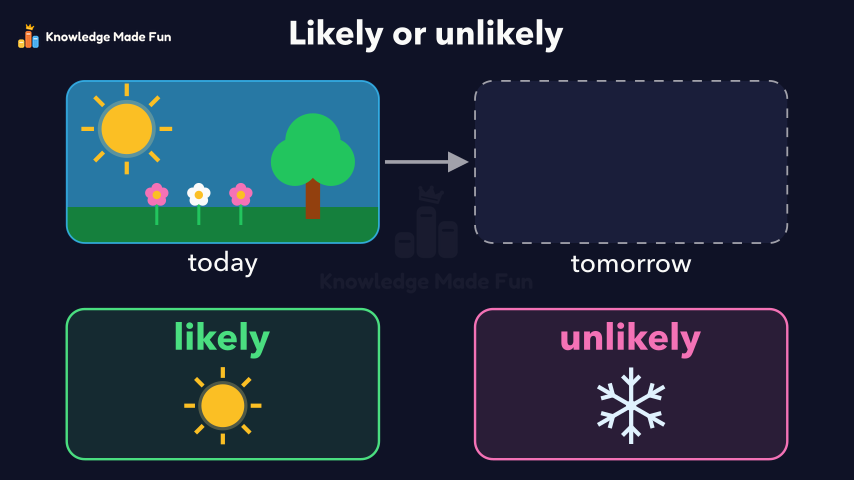 55 s
Could It Snow Tomorrow? Likely or Unlikely
Kindergarten · 55 s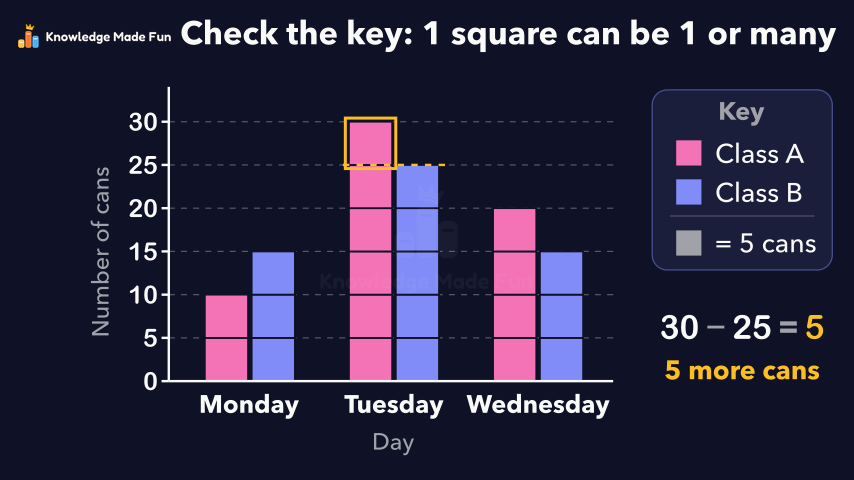 1 min 27 s
Double bar graphs with a scale
Grade 5 · 1 min 27 s 1 min 21 s
Drawing a circle graph from data
Grade 7 · 1 min 21 s
- All Grade 1 Mathematics lessons
- Teachers: the maths worksheets for Grade 1 are in the dashboard, each with a worked example and a proven answer key.
- Try the graph paper, free for everyone, no account needed.
- Create a free account to watch three lessons a day, no payment and no card.