Lesson · Grade 6 · Mathematics
Order of Operations: Brackets, Then Divide, Then Subtract
- Grade 6
- Mathematics
- 1 min 5 s
- British Columbia
- BC6-MA-06
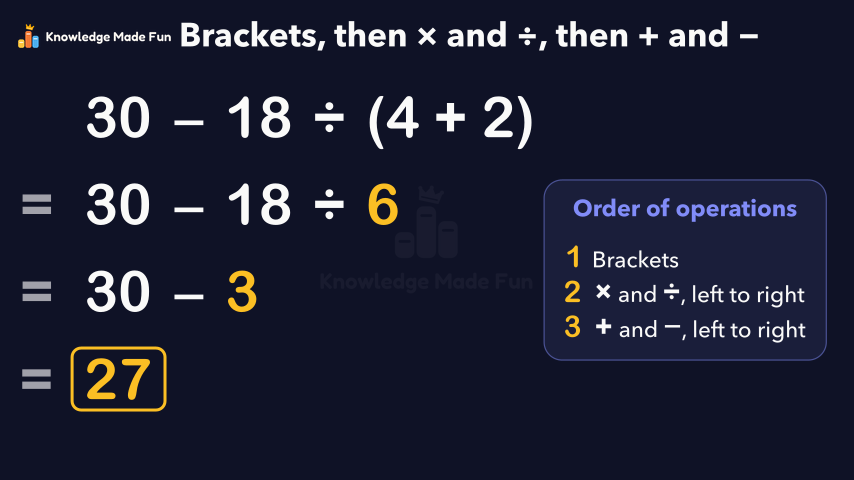
The video works out 30 − 18 ÷ (4 + 2) one step at a time, following a panel listing the order of operations: brackets first (4 + 2 = 6), then the division (18 ÷ 6 = 3, checked by 3 × 6 = 18), and the subtraction last (30 − 3 = 27). It shows that dividing comes before subtracting even though the minus sign is written first, and ends with the recap: brackets, then × and ÷, then + and −.
Concept: Order of operations with whole numbers and brackets
Anyone can watch two lessons on the website without an account. Signing in is free, no payment and no card, and opens three a day; Plus has no limit.
Loading
In one sentence
The question this lesson answers
What is 30 minus 18 divided by, in brackets, 4 plus 2?
When there is more than one operation, we follow the order of operations.
Transcript
What the lesson says
What is 30 minus 18 divided by, in brackets, 4 plus 2?
When there is more than one operation, we follow the order of operations.
First, work out what is inside the brackets.
Next, multiply and divide, from left to right.
Last, add and subtract, from left to right.
Start with the brackets, where 4 plus 2 is 6.
The minus sign comes first, but dividing comes before subtracting.
So next, 18 divided by 6 is 3.
Check it: 3 times 6 is 18.
Last, subtract. 30 minus 3 is 27.
So 30 minus 18 divided by, in brackets, 4 plus 2, equals 27.
Remember: brackets first, then multiply and divide, then add and subtract.
Curriculum
Where this fits
- British Columbia, Grade 6
Mathematics, Number: order of operations with whole numbersBC6-MA-06
Previous: Division facts from multiplication factsNext: Prime and Composite Numbers: Count the Factors
The outcomes and strands follow the British Columbia curriculum.
Keep going
 1 min 26 s
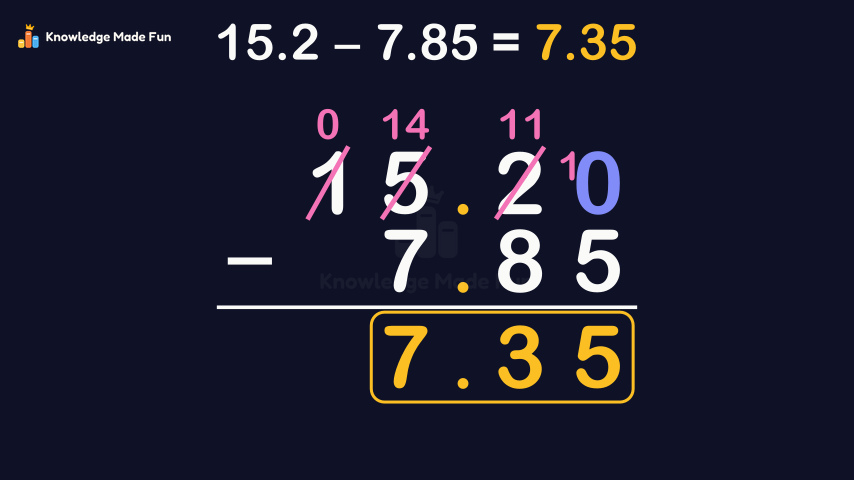
15.2 − 7.85
Grade 4 · 1 min 26 s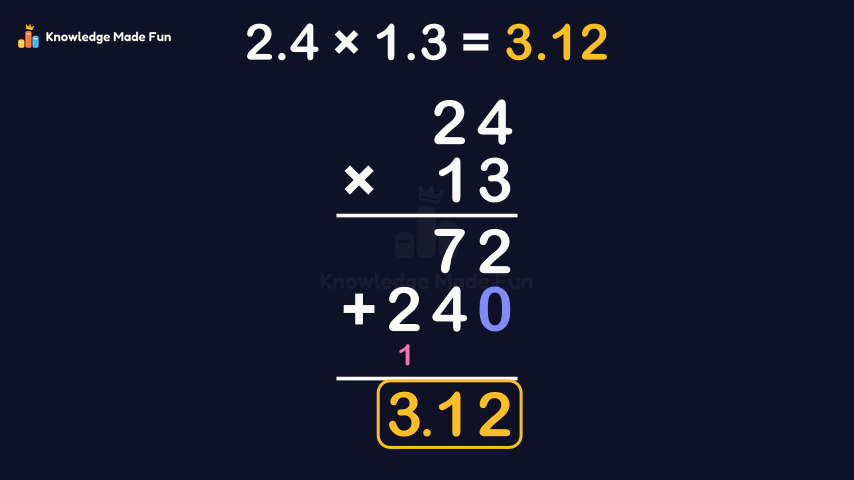 1 min 37 s
2.4 × 1.3
Grade 7 · 1 min 37 s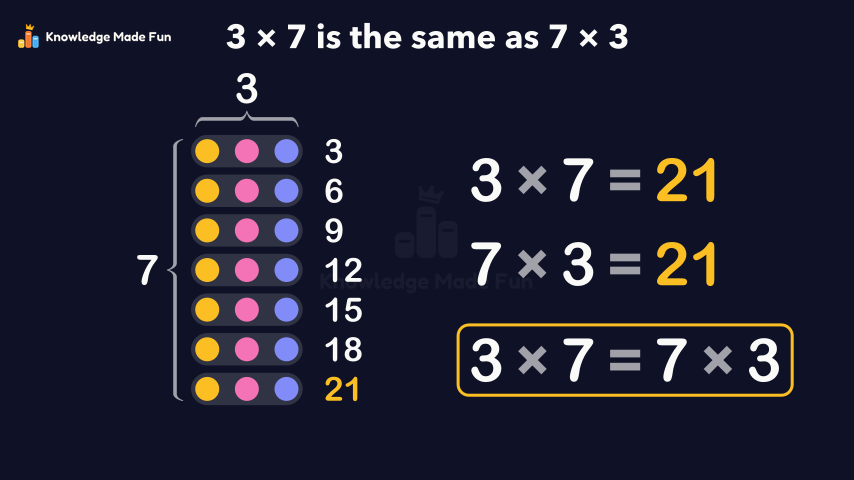 1 min 4 s
3 × 7 = 7 × 3: Equal Groups, Skip Counting and Arrays
Grade 4 · 1 min 4 s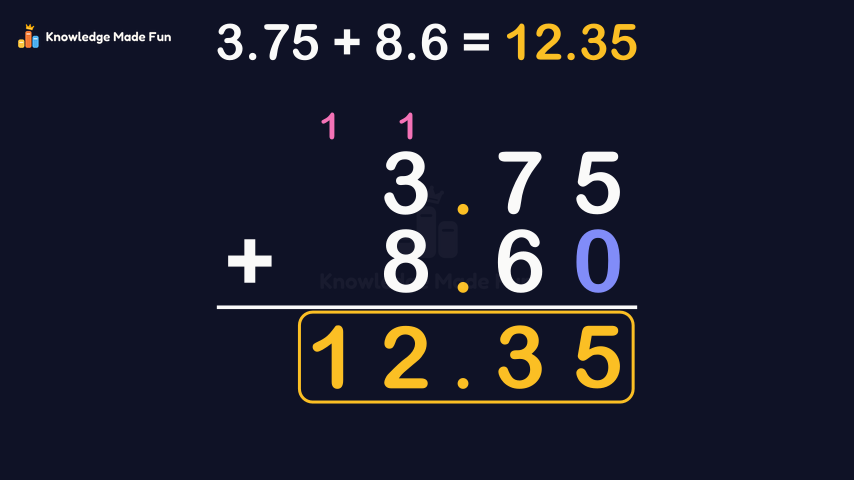 59 s
3.75 + 8.6
Grade 4 · 59 s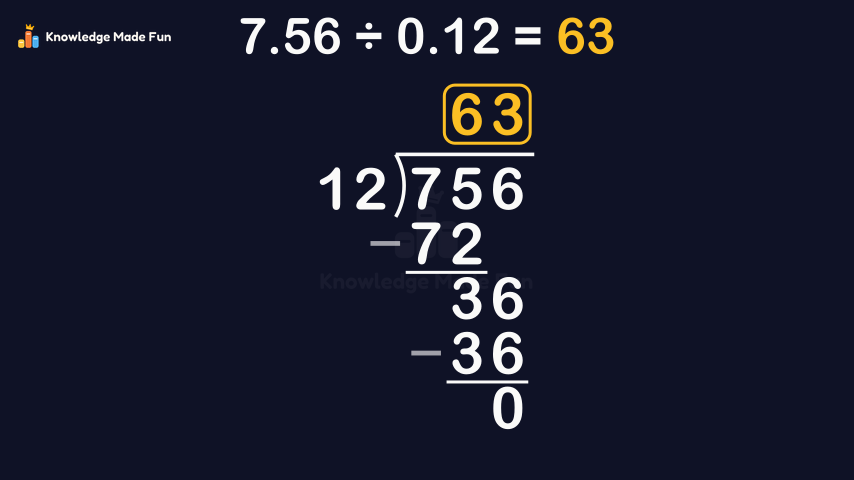 1 min 32 s
7.56 ÷ 0.12
Grade 7 · 1 min 32 s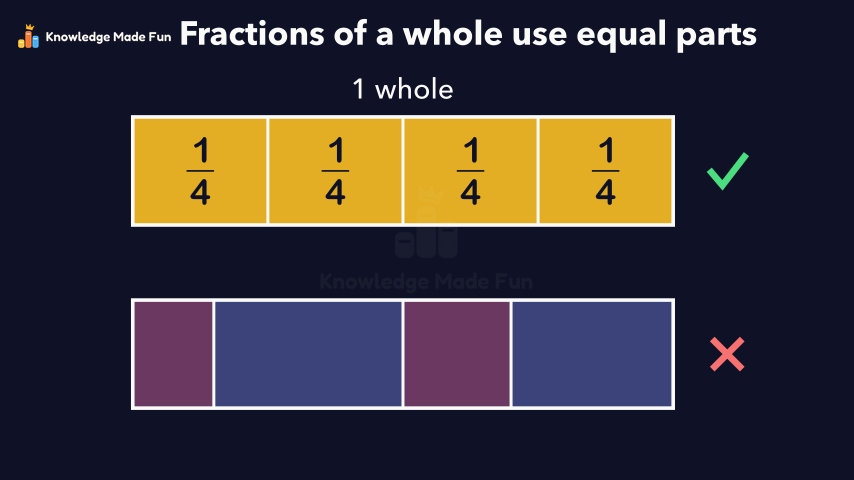 56 s
A Fraction Is Equal Parts of One Whole
Grade 3 · 56 s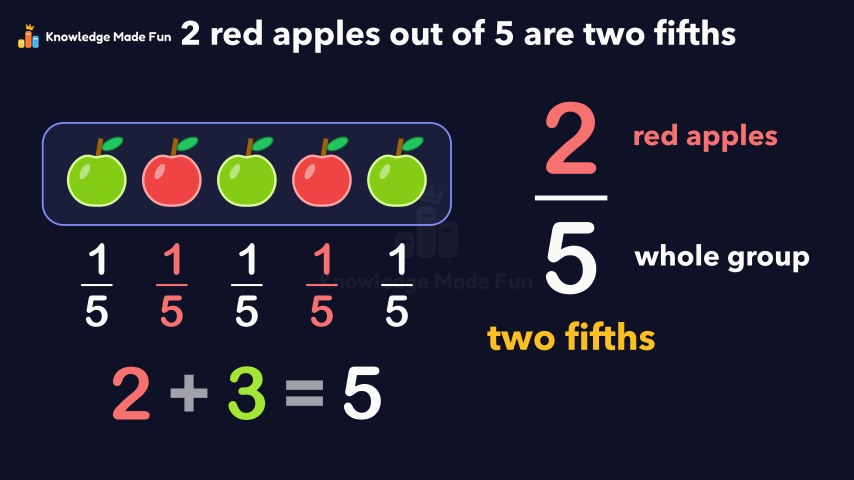 57 s
A Fraction of a Group
Grade 3 · 57 s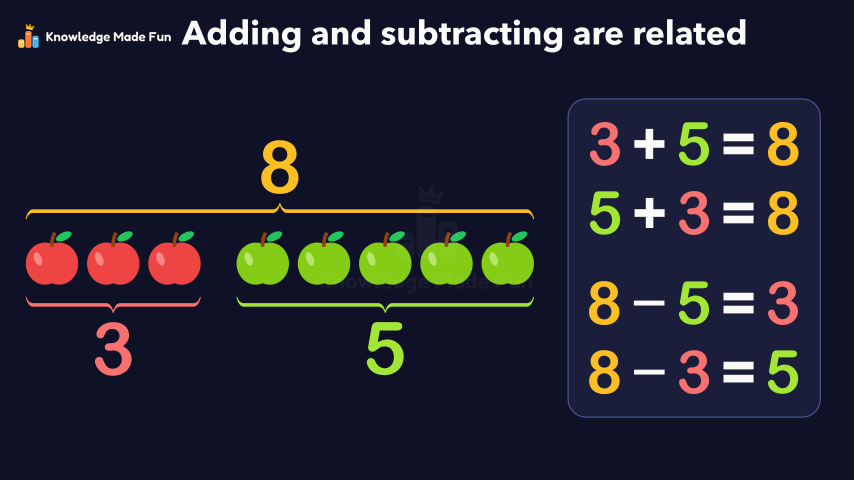 1 min 23 s
Adding and subtracting are related
Grade 1 · 1 min 23 s
- All Grade 6 Mathematics lessons
- Teachers: the maths worksheets for Grade 6 are in the dashboard, each with a worked example and a proven answer key.
- Try the graph paper, free for everyone, no account needed.
- Create a free account to watch three lessons a day, no payment and no card.