Lesson · Grade 4 · Mathematics
3 × 7 = 7 × 3: Equal Groups, Skip Counting and Arrays
- Grade 4
- Mathematics
- 1 min 4 s
- British Columbia
- BC4-MA-16
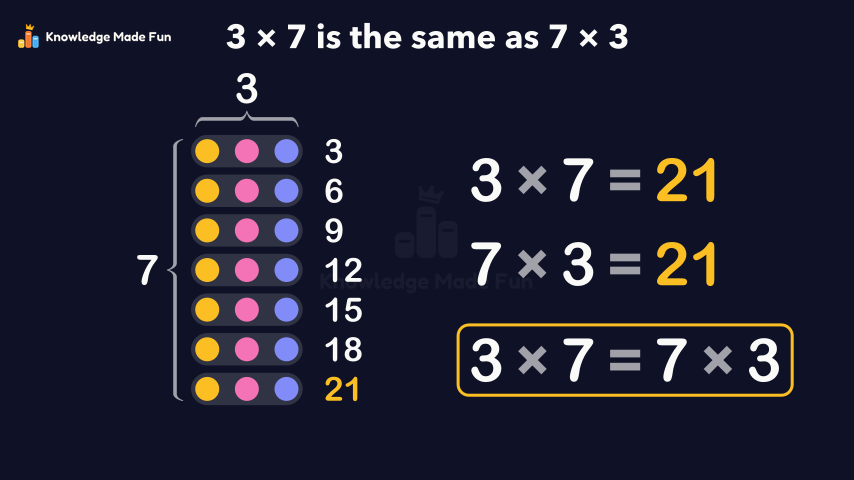
Three plates of 7 dots show 3 equal groups of 7, written 3 × 7, and skip counting by 7s (7, 14, 21) gives 21. The groups then line up as the rows of an array, which turns a quarter turn into 7 rows of 3, and skip counting by 3s gives 21 again, so 3 × 7 is the same as 7 × 3.
Concept: Multiplication as equal groups, skip counting and arrays
Anyone can watch two lessons on the website without an account. Signing in is free, no payment and no card, and opens three a day; Plus has no limit.
Loading
In one sentence
The question this lesson answers
How many dots are there in all?
There are 3 equal groups, with 7 dots in each group.
Transcript
What the lesson says
How many dots are there in all?
There are 3 equal groups, with 7 dots in each group.
We can write 3 groups of 7 as 3 times 7.
Skip count by 7s: 7, 14, 21.
So 3 times 7 is 21.
Now put each group in a row to make an array.
This array has 3 rows of 7, so it shows 3 times 7.
Now give the array a quarter turn.
Now there are 7 rows, with 3 dots in each row.
Skip count by 3s: 3, 6, 9, 12, 15, 18, 21.
So 7 times 3 is 21 too.
It is the same 21 dots, just turned.
So 3 times 7 is the same as 7 times 3.
Curriculum
Where this fits
- British Columbia, Grade 4
Mathematics, Number: multiplication and division facts to 100 (introductory computational strategies)BC4-MA-16
Previous: 15.2 − 7.85Next: Division facts from multiplication facts
The outcomes and strands follow the British Columbia curriculum.
Keep going
 1 min 26 s
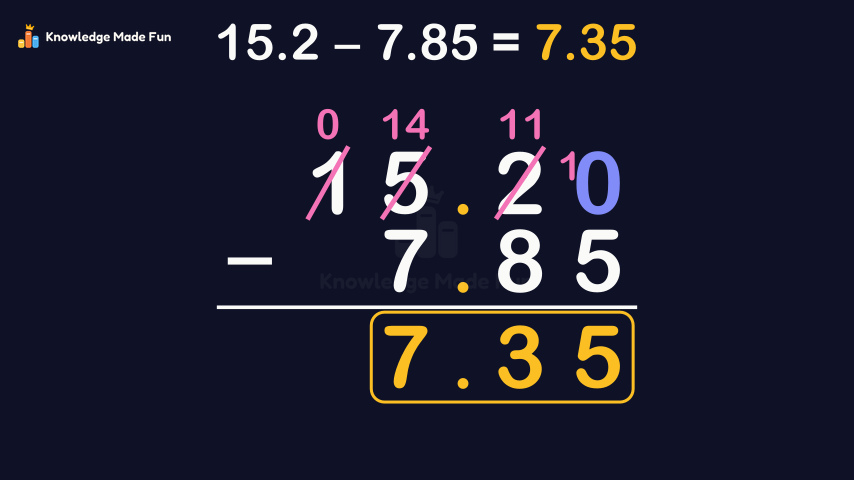
15.2 − 7.85
Grade 4 · 1 min 26 s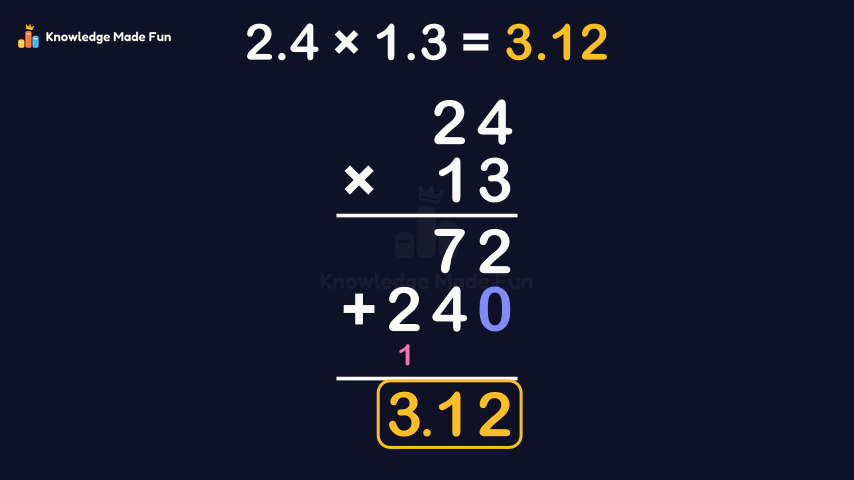 1 min 37 s
2.4 × 1.3
Grade 7 · 1 min 37 s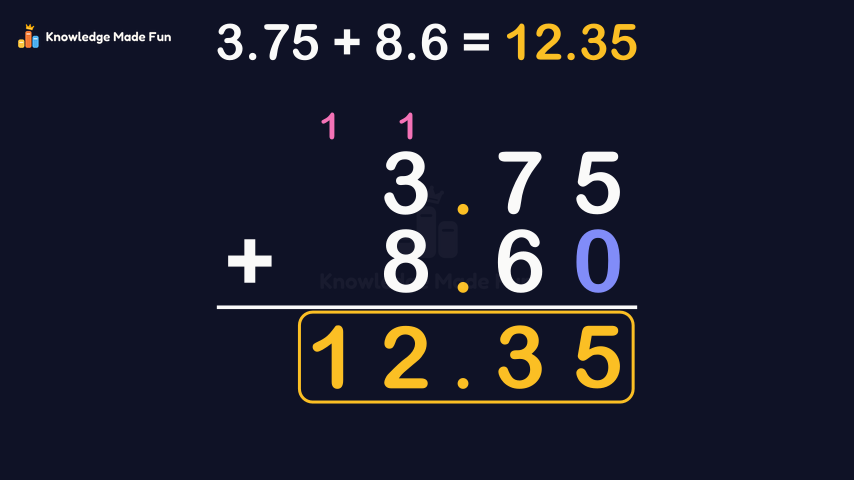 59 s
3.75 + 8.6
Grade 4 · 59 s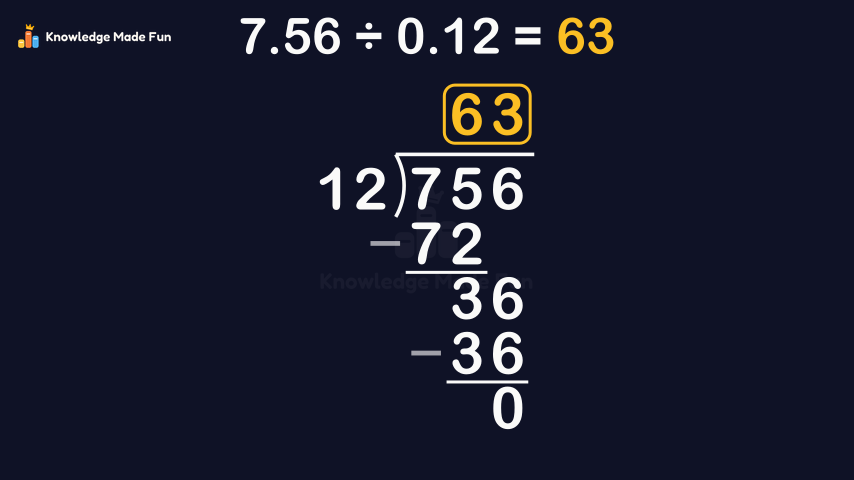 1 min 32 s
7.56 ÷ 0.12
Grade 7 · 1 min 32 s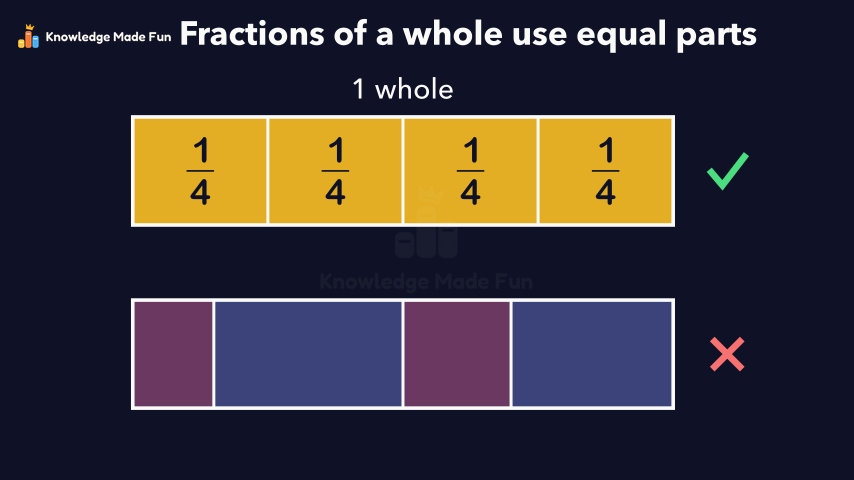 56 s
A Fraction Is Equal Parts of One Whole
Grade 3 · 56 s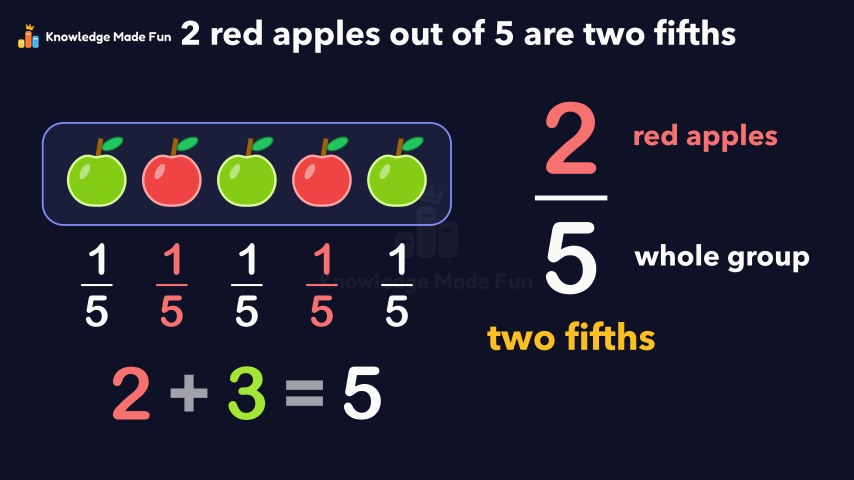 57 s
A Fraction of a Group
Grade 3 · 57 s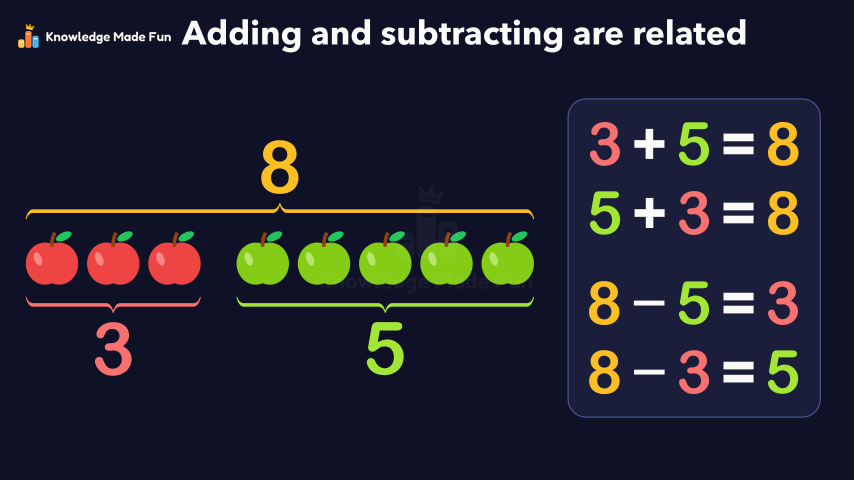 1 min 23 s
Adding and subtracting are related
Grade 1 · 1 min 23 s 2 min 9 s
Adding and Subtracting Fractions with Different Denominators
Grade 8 · 2 min 9 s
- All Grade 4 Mathematics lessons
- Teachers: the maths worksheets for Grade 4 are in the dashboard, each with a worked example and a proven answer key.
- Try the graph paper, free for everyone, no account needed.
- Create a free account to watch three lessons a day, no payment and no card.